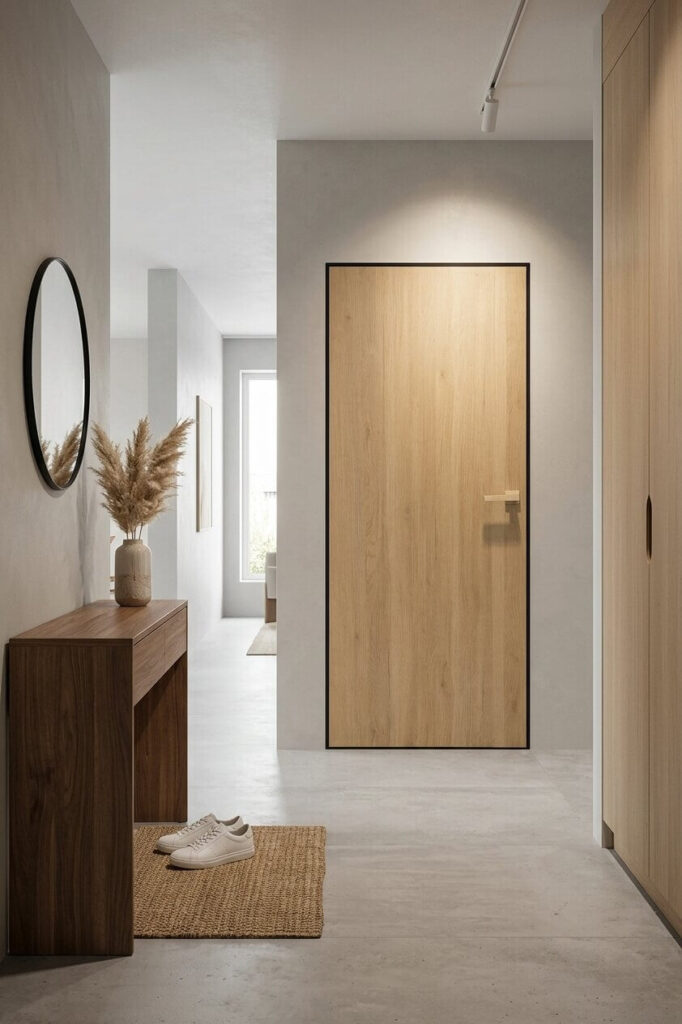

You rarely notice silence until it disappears.
A dog barks somewhere down the street. Someone starts blending a smoothie with what sounds like a jet engine. The washing machine begins its spin cycle. A teenager slams a bedroom door with enough enthusiasm to make physics briefly reconsider its rules.
Then you close a really good door. Not just any door. A heavy one. Solid. Well-built.
The room changes almost instantly. The noise doesn’t vanish but it softens. Edges blur. Voices become muffled. The television downstairs turns into little more than a suggestion. That’s usually the moment people begin searching for soundproof interior doors.
And that’s also where marketing becomes creative. Some companies promise complete silence. Others imply you’ll never hear another argument, barking dog, or a Zoom meeting again. The truth is that soundproof interior doors absolutely work. They just don’t work through magic. They work through physics, careful engineering, proper installation, and a surprisingly boring obsession with tiny gaps measured in millimeters.
Let’s separate the myths from the genuinely useful information.
Can Interior Doors Really Be Soundproof?
Short answer? Yes, but it depends. Technically speaking, almost nothing inside a normal home is completely soundproof.
Recording studios come close. Luxury cinemas. Some medical facilities. Even those require specialized wall assemblies, insulation, floating floors, acoustic seals, multiple layers of construction—it’s an entire ecosystem, not just one heroic door trying to save the day.
Homes operate differently. The goal isn’t absolute silence. It’s meaningful quietness. There’s a difference.
Good Doors Don’t Eliminate Noise. They Change It.
Think about standing outside during a rainstorm. Heavy rain. Now step under a covered porch. You still know it’s raining. You still hear it. But the sharpness disappears. The constant drumming becomes background instead of interruption.
Quality soundproof interior doors create a similar effect. The barking dog becomes distant. Conversations fade into soft murmurs. Television noise loses its sharp edges. Children playing upstairs stop sounding like they’re rearranging the furniture with medieval siege equipment.
Usually.
The Biggest Surprise
Most people assume the door itself is the weakest link. Sometimes it isn’t. Sometimes the culprit is the tiny gap underneath. Or the space around the frame. Or poorly adjusted hinges.
Sound is surprisingly determined. It behaves a little like cold air on a winter morning. Leave even the smallest opening and somehow it always finds it.
Why Standard Interior Doors Let So Much Sound Through
Let’s not blame them too harshly.
Builder-grade doors weren’t designed to be acoustic barriers. They were designed to divide rooms efficiently and affordably. Mission accomplished.
Acoustics simply weren’t invited to the meeting.
Hollow-Core Construction
This is probably the biggest difference. Most production homes use hollow-core interior doors because they’re lightweight, economical, and easy to install. Nothing wrong with that.
Until someone starts practicing drums. Or working from home. Or discovering late-night true crime documentaries.
A hollow-core door contains very little mass. And sound dislikes very little mass. Actually, it loves it: noise passes through remarkably easily. Almost as if the door politely waves it inside.
Thin Materials Vibrate More Easily
Here’s something interesting. Sound doesn’t only travel through openings. It travels through materials themselves.
Lightweight doors vibrate more readily. Those vibrations become sound again on the opposite side. It’s almost like whispering through a paper cup telephone. Except your house accidentally built several.
Hardware Matters Too
Loose handles, basic latches, standard hinges, tiny rattles, tiny vibrations, tiny annoyances: individually they’re barely noticeable. Together they create a door that feels and sounds less substantial.
Luxury often begins by removing dozens of tiny imperfections instead of adding flashy features.
What Actually Makes Soundproof Interior Doors Work?
Now we get to the good part. Not marketing. Engineering.
It turns out physics has excellent taste.
Solid-Core Construction
Weight changes everything. Or almost everything.
One of the biggest improvements found in premium soundproof interior doors is solid-core construction. Instead of an empty interior, the door contains dense engineered materials that resist vibration and absorb significantly more sound energy.
Close one. Then close a hollow-core door. Your hands understand the difference before your brain finishes processing it. Weight communicates quality remarkably well.
Humans have trusted heavy things forever. Cast iron. Solid wood furniture. Real books. Good doors. Maybe we’re onto something.
Precision Manufacturing
Door. Frame. Hardware. Alignment. Clearances. Tiny reveals around the perimeter. When everything fits precisely, sound has fewer opportunities to sneak through.
It’s a little like building a boat. One microscopic leak seems insignificant until the ocean disagrees.
Better Door Frames
Oddly enough, premium frames receive far less attention than they deserve. Yet they’re doing half the work. Warped frames create uneven gaps. Uneven gaps leak sound.
Quality frames maintain consistent spacing around the entire door, improving both operation and acoustic performance. Invisible work. Important work.
Acoustic Seals
Here’s where premium systems quietly outperform ordinary ones.
Flexible acoustic seals compress when the door closes, dramatically reducing the tiny pathways where sound loves to travel.
Not Instagram-worthy. Exceptionally effective.
Magnetic Latches
This surprises people. Magnetic latches aren’t just quieter. They also help pull the door into its correct closed position with remarkable consistency. That tighter closure improves sealing. Better sealing means better acoustic performance.
Everything starts connecting. Literally.
Which Rooms Benefit Most?
Not every room needs premium acoustic performance. Though, once people experience quieter rooms, they tend to want more of them.
Expectations evolve.
Home Offices
Remote work changed houses forever. Kitchen tables became temporary desks. Guest rooms became offices. Spare bedrooms suddenly hosted meetings with people scattered across four continents.
Sound matters now.
A solid-core European door can mean the difference between hearing your children’s cartoon marathon and hearing only the person speaking during your presentation. Your coworkers will never know. That’s the goal.
Primary Bedrooms
Bedrooms should feel like retreat spaces. Not observation decks overlooking household chaos. Premium soundproof interior doors reduce hallway conversations, televisions, laundry noise, and everyday household movement.
It matters a lot, especially after midnight.
Nurseries
Parents become unexpectedly interested in acoustics. One successful nap can change an entire afternoon. Heavy doors with proper seals help preserve those precious quiet moments.
Not perfectly. Nothing defeats an enthusiastic toddler forever. Still, every little bit helps.
Media Rooms
Watching movies becomes more enjoyable when explosions stay inside the media room instead of announcing themselves to the kitchen.
Likewise, the kitchen shouldn’t interrupt the movie. Mutual respect. Everyone wins.
Installation Matters More Than Most People Realize
Let’s say something mildly controversial. The world’s best acoustic door can perform surprisingly poorly if installed carelessly.
That’s not criticism. It’s geometry.
Gaps Defeat Good Materials
Imagine wearing an expensive winter coat. Now leave it unzipped when it’s 5 degrees outside. Same principle.
If light passes through gaps around a door, sound usually does too. Tiny openings create surprisingly large acoustic compromises. Millimeters matter. Quite a lot.
Proper Adjustment
Doors settle. Homes shift. Hardware occasionally requires adjustment. Premium installation includes fine-tuning until the door closes consistently against every seal.
It’s patient work. The kind people rarely photograph. The results, however, are very noticeable.
Common Myths About Soundproof Doors
Let’s clear away a few persistent misunderstandings.
“Thicker Means Better”
Not automatically. Construction quality matters more than thickness alone. A thoughtfully engineered solid-core European door often outperforms much thicker but poorly designed alternatives.
Engineering beats bulk surprisingly often.
“Any Solid Door Is Soundproof”
Not exactly. Solid construction helps enormously. But gaps, hardware, frames, seals, and installation remain equally important.
Think orchestra. Not solo performance.
“Interior Doors Can’t Make Much Difference”
Actually, they often make one of the most noticeable differences inside a home because they’re replacing one of the weakest acoustic links in the house. Especially when upgrading from hollow-core builder-grade doors.
The contrast can be dramatic. Not miraculous. Just noticeable enough.
Why European Doors Excel at Acoustic Performance
European manufacturers have spent decades refining complete door systems instead of isolated products. That distinction matters. A lot.
The slab. The frame. Hidden hinges. Magnetic latches. Precision tolerances. Everything is designed to work together. Like a well-rehearsed quartet instead of four talented musicians meeting for the first time five minutes before the concert.
Premium European soundproof interior doors don’t only reduce noise. They close more smoothly. Feel more substantial. Maintain alignment longer. Age gracefully. Acoustic benefits become part of a much broader improvement in everyday living.
That’s the pleasant surprise. You came looking for quiet and accidentally upgraded the entire experience.
Why Diana Doors Recommends Premium Acoustic Door Systems
At Diana Doors, conversations about soundproof interior doors usually begin with a practical problem. “My office is too noisy.” “We can hear everything from the hallway.” “The kids wake each other up.” Real situations, not marketing scenarios.
Our approach is equally practical.
We help homeowners choose complete European door systems that combine solid-core construction, premium hardware, precision manufacturing, concealed hinges, and high-quality frame systems designed to perform together—not separately.
Because that’s how good engineering works. No single component tries to be the hero. They simply support one another until the finished result feels effortless.
Conclusion
People often imagine silence as the absence of sound. Maybe it isn’t.
Maybe real quiet is simply the absence of unnecessary noise. The television becoming a distant hum instead of an interruption. A conference call staying inside the office. A bedroom feeling like it belongs to the people sleeping there instead of the dishwasher two rooms away. Those aren’t dramatic changes. They’re subtle. But subtle things have a peculiar habit of shaping everyday life far more than spectacular ones.
That’s why soundproof interior doors continue growing in popularity among homeowners who care about more than appearances. They aren’t chasing perfection. They’re chasing comfort. The kind you notice on an ordinary Tuesday morning when someone starts making breakfast downstairs, another person takes a work call across the hall, the dog decides the mail carrier is once again an international emergency and somehow your room stays calm enough that you almost forget the rest of the house is already awake.