San Diego has a reputation for being quiet. Mostly. Then the neighbor decides today is the perfect day to trim every shrub within a three-mile radius. Leaf blowers wake up before some people do. Military aircraft occasionally cross the sky with absolute confidence. Traffic hums along the interstate. Kids sprint through hallways. Dogs hold passionate debates with delivery drivers. Someone in the house discovers a new podcast and, for reasons known only to them, believes everyone else should enjoy it too.
Homes make noise. Good homes manage it.
That’s one reason more homeowners have started looking for soundproof interior doors San Diego homes and apartments really deserve. They aren’t trying to turn their house into a recording studio. They aren’t expecting complete silence where you could hear a pin land three rooms away. Life isn’t built that way.
They’re after something much more realistic. They want bedrooms that actually feel restful. Home offices where conference calls don’t compete with cartoons. Guest rooms that remain peaceful after everyone else has gone to bed.
Many people start by searching for acoustic panels or expensive insulation. Sometimes those are necessary. Sometimes they’re absolutely the right answer. Other times? The weakest point isn’t the wall at all. It’s the door.
A standard hollow-core interior door is surprisingly generous with sound. Almost welcoming. It hears noise approaching and seems to say, “Come on through.” Premium European door systems behave differently. They make sound work harder. Sometimes much harder.
Let’s sort through what genuinely improves acoustic comfort.
Why San Diego Homeowners Are Paying More Attention to Interior Noise
For years, interior acoustics barely entered the conversation. People focused on curb appeal, kitchens, bathrooms, flooring. Doors were simply there. Useful. Reliable, hopefully.
Then life changed. Homes became offices. Gyms. Classrooms. Streaming studios. Places where someone is attending an important client meeting while another family member is enthusiastically learning drums downstairs. Timing can be cruel.
Noise suddenly mattered. Quite a bit.
Open Floor Plans Have Advantages
They also have consequences. Open layouts create beautiful sightlines. Wonderful natural light. Fantastic entertaining spaces. They also allow sound to wander around the house like it forgot where it was supposed to be.
Without solid room separation, voices travel farther. Televisions carry. Kitchen activity reaches bedrooms. The architecture we love occasionally asks for a little acoustic help.
San Diego Homes Often Blend Indoor and Outdoor Living
Sliding doors stay open. Windows welcome ocean breezes. Patios become extensions of the living room. It’s one of the best things about Southern California. It also introduces another layer of sound.
Neighborhood activity. Traffic. Gardening equipment. Children playing outside. Even the ocean, oddly enough, can be surprisingly loud on certain evenings.
Nobody complains about waves until they’re trying to sleep.
Remote Work Isn’t Going Anywhere
Many homeowners discovered something unexpected over the last few years. A dining room isn’t necessarily an office. A spare bedroom becomes one much more easily.
The moment work entered the home permanently, privacy became valuable in entirely new ways. That’s why soundproof interior doors San Diego homes really deserve have moved from luxury wish list to practical home upgrade.
What Actually Makes a Door Good at Blocking Sound?
This is where the internet becomes wonderfully confusing. You’ll read about acoustic ratings. Foam cores. Mass-loaded vinyl. Exotic insulation. Some of it matters. Some of it, well, let’s just say marketing departments occasionally deserve creative writing awards.
The fundamentals remain surprisingly simple.
Solid-Core Construction Changes Everything
A hollow-core door is light because there’s very little inside it. Convenient for manufacturing. Less convenient for privacy.
Premium solid-core doors contain dense engineered materials that naturally resist vibration and reduce sound transmission. Close one. Then close a hollow-core builder door. Your hands understand before your ears finish processing the difference.
Weight tells stories.
Precision Around the Entire Door
Here’s something homeowners rarely think about. The door itself may be excellent. But if light slips through the edges sound usually does too.
Tiny gaps become surprisingly effective little highways for noise. Millimeters matter. European door systems are manufactured with exceptionally tight tolerances, helping reduce those unwanted pathways.
Invisible details. Very audible results.
Premium Hardware Helps More Than People Expect
Handles attract attention. Concealed hinges deserve it. Magnetic latches probably deserve even more. These components pull the door into consistent alignment every single time it closes.
Consistency improves sealing. Better sealing improves acoustics. One thoughtful detail quietly supports another. Engineering is wonderfully cooperative like that.
Which Rooms Benefit Most From Soundproof Interior Doors?
Not every room requires acoustic upgrades. Although once homeowners experience the difference, well, let’s just say second projects tend to follow first projects.
Home Offices
This is probably the easiest recommendation. Conference calls. Video meetings. Concentration. Privacy. A premium soundproof interior doors San Diego installation can dramatically reduce distractions from the rest of the household.
Your coworkers won’t know someone is making smoothies twenty feet away. Exactly as intended.
Primary Bedrooms
Sleep depends on many things. Comfortable mattresses. Good temperature. Darkness. Quiet. Solid-core European doors help separate sleeping spaces from everyday household activity without making the house feel closed off.
That’s an elegant balance.
Children’s Bedrooms
Parents appreciate acoustic separation. Children appreciate uninterrupted sleep. Teenagers appreciate uninterrupted everything.
Premium interior doors create healthier boundaries inside busy households. Sometimes peaceful homes begin with quieter hallways.
Guest Rooms
Nothing makes guests feel more comfortable than genuine privacy. Not staged privacy. Real privacy.
A thoughtfully selected acoustic door allows visitors to relax without hearing every conversation happening in the kitchen. Hospitality often lives inside details.
Best Door Styles for San Diego Homes in 2026
Acoustic performance doesn’t require sacrificing design. Thankfully.
Those days are largely behind us.
Flush European Doors
Minimal. Clean. Architectural. Flush doors continue leading modern interior design because they simplify visual spaces while supporting exceptional engineering.
They feel current without trying too hard. That’s harder than it sounds.
Wood Veneer Doors
Natural oak, walnut, ash, smoked finishes. Beautiful grain adds warmth while solid-core construction quietly improves acoustic comfort.
Function meets aesthetics. Rarely a bad combination.
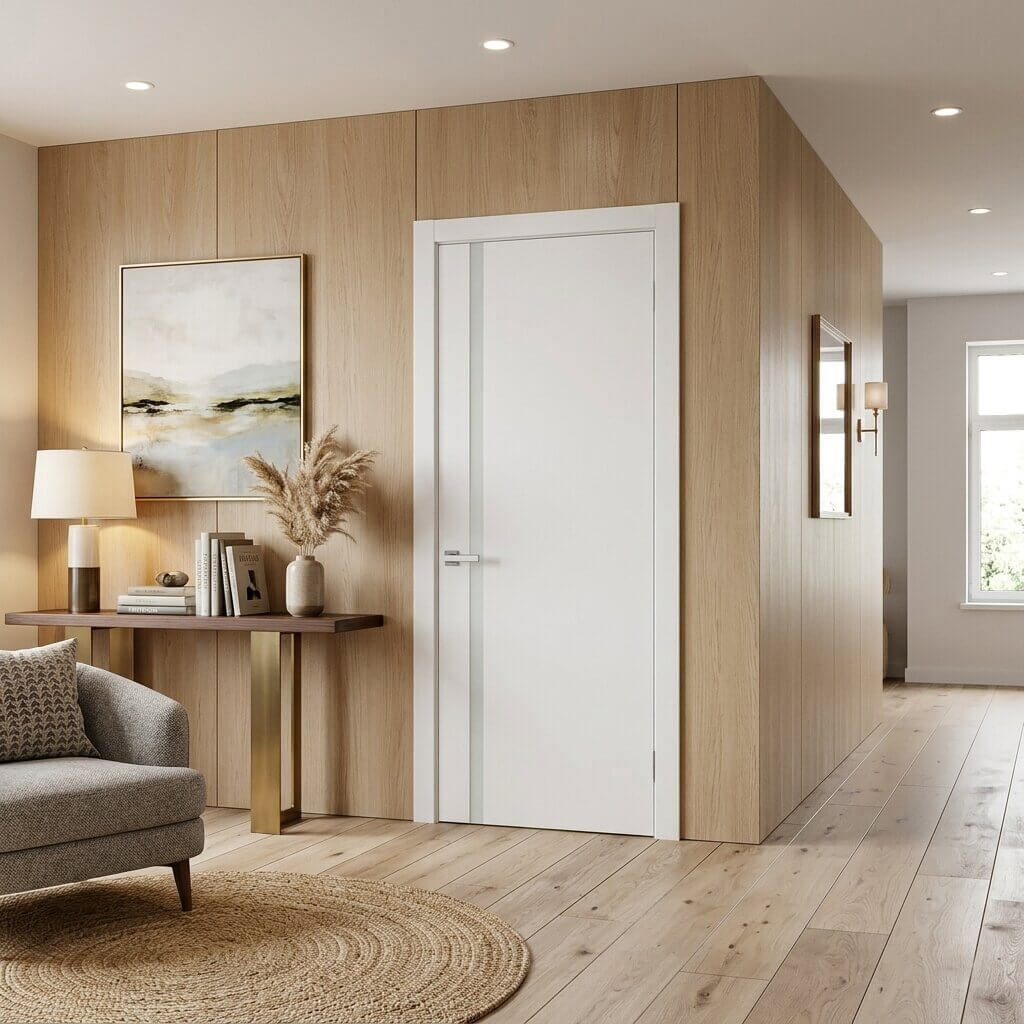
Painted Contemporary Doors
Matte white. Soft taupe. Warm gray. Painted premium doors fit beautifully into coastal and contemporary San Diego homes where clean architecture takes center stage.
Sometimes restraint creates stronger design than decoration.
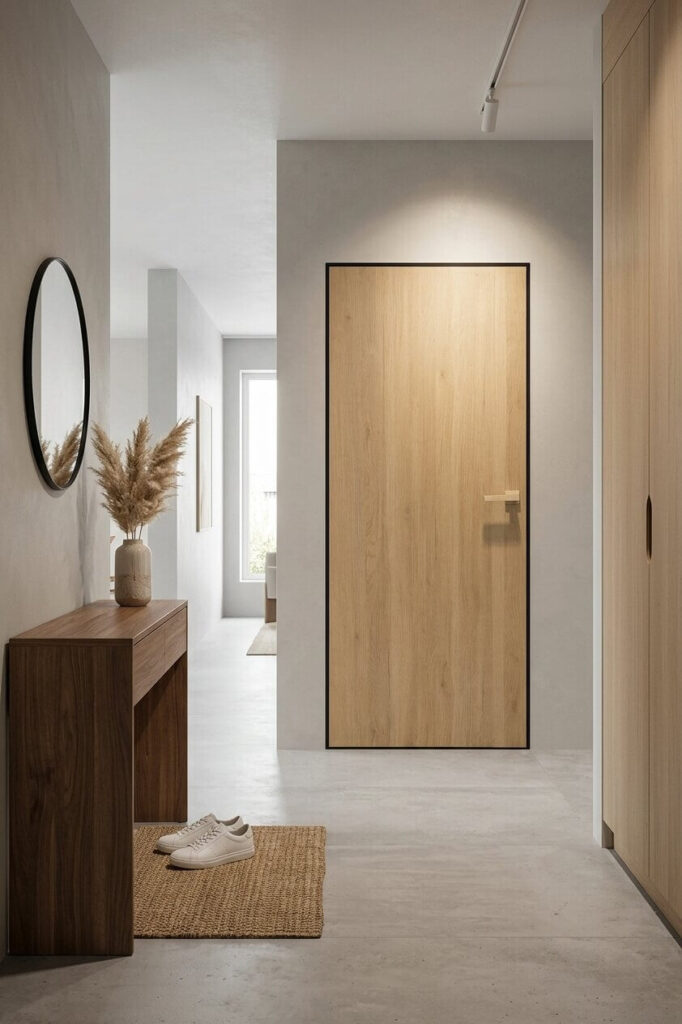
Hidden Frame Systems
One of the most sophisticated options available.
Hidden frames allow doors to blend seamlessly into surrounding walls, creating remarkably clean architectural lines. They’re visually subtle. Technically impressive.
A combination that never seems to get old.
Why Installation Is Half the Job
Let’s say you purchase one of the finest acoustic doors available anywhere. Beautifully engineered. Premium hardware. Solid-core construction. Outstanding materials. Then it’s installed poorly. That’s like buying an expensive piano and never tuning it.
Potential remains. Performance doesn’t.
Alignment Matters
Doors should close evenly. Compress seals consistently. Latch smoothly. Remain square. Every adjustment contributes to long-term acoustic performance.
Good installers don’t simply hang doors. They refine them. Patiently. Sometimes repeatedly.
Frames Matter Too
A premium slab deserves an equally premium frame. Warped frames. Loose installation. Uneven spacing. All reduce acoustic effectiveness regardless of door quality.
Complete systems outperform isolated products almost every time.
Why European Door Systems Continue Leading the Market
European manufacturers have approached interior doors differently for decades. Instead of selling individual pieces, they engineer complete systems. Door, frame, hardware, concealed hinges, magnetic latches—everything is developed together.
That philosophy produces better long-term performance because each component supports the others rather than merely existing nearby. It’s surprisingly logical.
The nicest surprise isn’t necessarily reduced noise. It’s how refined everything feels. Smooth movement. Precise alignment. Quiet closing. Reliable operation. The acoustic improvement becomes part of a larger experience rather than the entire story.
Good design rarely solves just one problem.
Choosing the Right Soundproof Interior Doors in San Diego
There isn’t one perfect door for every house. A coastal contemporary home asks different questions than a Spanish Colonial renovation. Ceiling heights matter. Wall construction matters. Interior style matters. Budget matters too. Naturally.
The goal isn’t buying the most expensive option. It’s choosing the right system for the way you actually live. Some families prioritize bedrooms. Others focus on offices. Some renovate the entire home. Others improve one hallway at a time.
There’s no universal blueprint. Only thoughtful decisions.
Why Homeowners Choose Diana Doors
At Diana Doors, conversations about soundproof interior doors almost always begin with everyday frustrations. “I can hear every Zoom call.” “The kids wake each other up.” “Our office isn’t private enough.” Real homes. Real people. Real situations.
We help homeowners choose premium European interior door systems designed to improve both aesthetics and acoustic comfort through solid-core construction, precision engineering, concealed hinges, premium hardware, and meticulous installation.
Because sound control shouldn’t look industrial. It should simply feel natural. Almost invisible. Like the house quietly decided to become calmer overnight.
Conclusion
Silence has a funny way of changing how a home feels. Not because everything suddenly becomes perfectly quiet but because the right sounds stay where they belong. Morning conversations remain in the kitchen. Late-night movies don’t wander into the guest bedroom. Someone can answer emails behind a closed office door while the rest of the family goes about an entirely ordinary day without feeling like they’re all sharing the same room.
That’s really what people are searching for. They’re not buying silence. They’re buying separation. Breathing room. A little pocket of calm inside houses that are, thankfully, still full of life. And maybe that’s the whole point.
The best homes aren’t the quietest ones—they’re simply the ones where every room gets the chance to sound like itself.