There’s a particular moment that happens during almost every custom home project. It doesn’t happen when someone chooses flooring. Or cabinet pulls. Or paint colors with names that sound suspiciously like boutique coffee drinks. It happens later.
Someone stands in the hallway, looks around, and quietly says, “The builder doors don’t feel right.” That’s usually how it starts. Not with measurements. With a feeling.
The kitchen is extraordinary. The lighting was carefully planned. The furniture has finally arrived after waiting fourteen weeks because apparently sofas now travel by sea like migrating whales. Everything fits together beautifully.
Except the doors. They’re perfectly functional. Nobody’s arguing that. But they don’t belong.
Custom luxury doors San Diego homes and apartments really deserve are engineered to fit the architecture. The lifestyle. Sometimes even the personality of the people living there. A custom door isn’t just another product—it’s one of the few elements in a home that’s touched every single day. Hundreds of times. Thousands, eventually.
Let’s talk about how custom luxury doors actually work.
Why Go Custom Instead of Buying Standard Doors?
Standard doors solve standard problems. There’s absolutely nothing wrong with that. Most production homes rely on standard sizing because it keeps construction predictable and affordable.
Custom homes ask different questions. Questions standard products aren’t always prepared to answer.
Every Home Has Its Own Rhythm
Walk through two houses built on the same street. One feels balanced. The other somehow doesn’t. Maybe the ceilings are higher. Maybe the hallway is wider. Maybe the rooms simply have better proportions.
Custom doors respond to those proportions instead of forcing architecture to adjust around pre-manufactured sizes. A few extra inches can completely change a room.
Modern Architecture Rarely Likes Compromise
Contemporary homes tend to embrace larger openings. Taller ceilings. Minimalist walls. Long uninterrupted sightlines. A standard six-foot-eight-inch door can occasionally look, well, undersized. Almost apologetic.
Eight-foot doors, nine-foot doors, pivot systems, flush installations—suddenly everything feels intentional again. Architecture appreciates confidence.
Custom Doesn’t Always Mean Wildly Expensive
Custom immediately sounds extravagant. Sometimes it is. Sometimes it’s simply specific.
Ordering a premium European door in the right height, finish, hardware configuration, and frame system isn’t necessarily comparable to commissioning a hand-carved palace entrance.
Words occasionally scare us more than reality does.
What Can Actually Be Customized?
Almost everything. Well, almost. Gravity still wins.
Beyond that, quite a lot becomes possible.
Size
This usually comes first. Not because it’s the most exciting but because everything else depends on it.
Extra height, wider openings, double doors, pivot doors, hidden frames, floor-to-ceiling installations: the proportions begin here. Get this part right and the rest becomes surprisingly straightforward.
Materials
One homeowner loves natural walnut. Another prefers painted matte white. Someone else wants smoked oak with almost invisible grain. None are objectively better.
Materials change the personality of a room more than people often expect. Wood feels warm. Painted finishes feel architectural. Glass introduces light. Each tells a different story.
Surface Finishes
Matte, textured, natural veneer, lacquer, paint. Ultra-matte coatings that practically absorb reflections. Light behaves differently across every surface.
Morning sunlight tells one story. Late afternoon tells another. Good finishes enjoy both.
Hardware
This deserves more attention than it usually receives. Handles, hidden hinges, magnetic latches, privacy locks, soft-close mechanisms—people interact with hardware more than the door itself.
Every opening begins there. Every closing ends there. Tiny decisions repeated thousands of times.
The Design Process
People sometimes imagine custom projects involving endless meetings, giant blueprints, and dramatic architectural debates.
Reality is usually calmer. Thankfully.
Understanding the Home
Before discussing finishes or handles, it’s important to understand the house. Contemporary? Coastal? Mediterranean? Minimalist? Transitional?
Good doors don’t exist in isolation. They belong to architecture.
Choosing the Collection
European manufacturers offer remarkably diverse collections. Minimal flush doors. Wood veneer systems. Painted contemporary panels. Glass doors. Hidden frame designs.
The objective isn’t finding the fanciest option. It’s finding the one that feels inevitable. Like it couldn’t possibly have been anything else.
Measurements
This is where precision quietly becomes everything. Door openings, wall thickness, flooring heights, hardware preparation, frame systems. Tiny measurement errors have surprisingly large consequences.
Mathematics rarely forgives guesswork.
Production
Quality manufacturing requires patience. Custom products aren’t waiting in warehouses—they’re produced specifically for the project.
That takes time. Worth remembering. The nicest things in construction generally refuse to hurry.
Professional Installation
Here’s an uncomfortable truth. An extraordinary door installed carelessly becomes an ordinary experience. Installation matters. Quite a bit.
Hidden hinges require precision. Flush systems demand alignment. Magnetic latches expect accuracy. Good installers don’t simply mount doors. They fine-tune them. There’s a difference.
Popular Styles for Southern California Homes
San Diego architecture enjoys variety. Fortunately.
Otherwise every neighborhood would feel like a movie set built from three repeating templates.
Minimalist European Doors
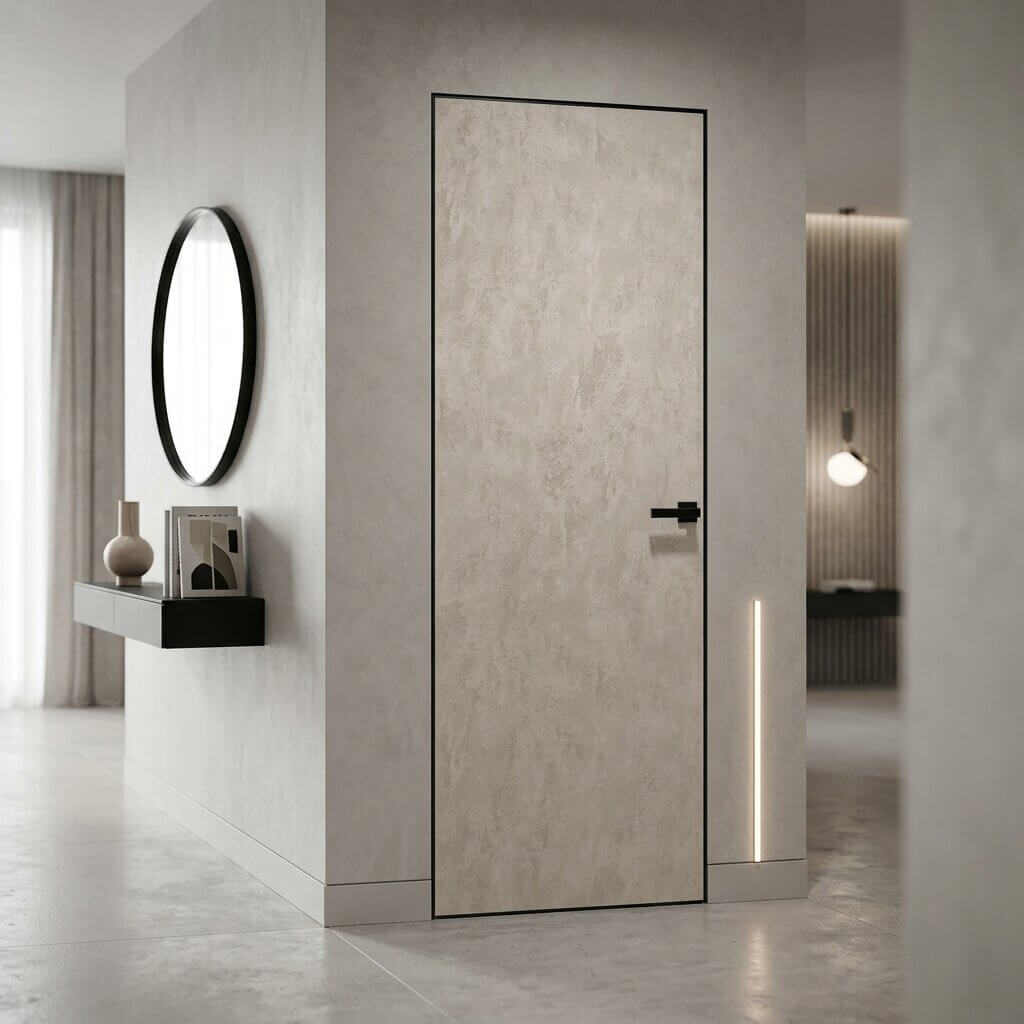
Probably the fastest-growing category. Flush surfaces, hidden hinges, simple proportions, architectural hardware.
Less decoration, more confidence. Minimalism isn’t empty—it’s edited.
Natural Wood Veneers
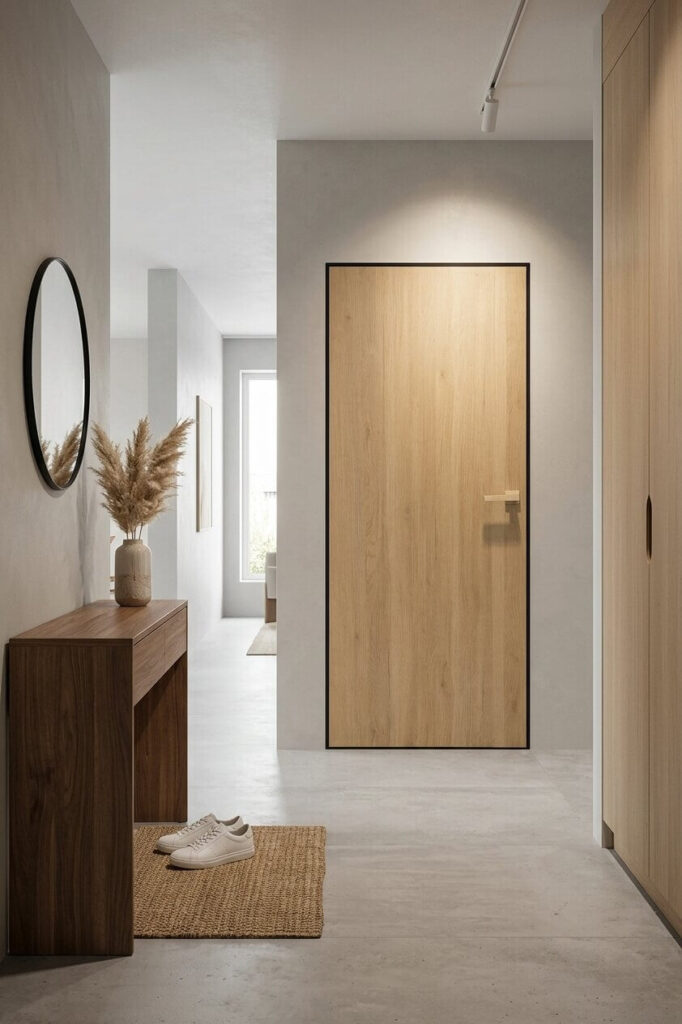
Walnut, oak, ash. Smoked finishes. Warmth arrives almost automatically. Especially against white walls and abundant California sunlight.
Wood ages gracefully. Most trends don’t.
Painted Contemporary Doors
White remains timeless. Soft gray. Warm taupe. Occasionally black. Painted finishes emphasize shape over grain, making them particularly suitable for modern architecture.
They’re surprisingly versatile. Kind of like good denim.
Glass Interior Doors
Some rooms deserve borrowed light. Home offices, libraries, dining rooms—glass inserts maintain openness while preserving practical separation.
Not every room wants complete privacy. Not every room should surrender it either.
Understanding Pricing
Let’s address the question everyone eventually asks. Usually after pretending not to think about it for twenty minutes. “What do custom luxury doors actually cost?”
Reasonable question. Complicated answer.
Size Influences Cost
Larger doors require more material. More engineering. Heavier hardware. Sometimes different frame systems entirely.
Eight-foot doors differ from standard sizes in more ways than simple mathematics.
Materials Matter
Painted finishes, natural veneers, premium woods, glass, special textures—material selection significantly influences pricing.
Not because manufacturers enjoy complexity. Because different materials genuinely require different production methods.
Hardware Quality
Premium magnetic latches. Concealed hinges. Designer handles. European locking systems. Hardware represents a meaningful portion of the overall investment.
Worth every penny? No doubt. Considering you’ll touch it daily.
Installation
Precision installation protects the investment. It’s tempting to view installation as a separate expense. Really, it’s part of the product.
Without proper installation, premium doors can’t perform as intended.
Why Diana Doors Focuses on European Custom Doors
At Diana Doors, we believe choosing custom luxury doors San Diego homes and apartments really deserve should feel collaborative rather than intimidating.
This isn’t simply about filling openings in walls. It’s about completing homes.
Curated European Collections
Rather than overwhelming homeowners with endless catalogs, we carefully select manufacturers known for engineering excellence, refined aesthetics, and long-term reliability.
Choice remains important. Confusion isn’t.
Guidance Throughout the Process
Most clients haven’t purchased custom interior doors before. Questions are expected. Actually, questions are encouraged.
Door systems, hidden frames, flush installation, finish durability, hardware—we enjoy explaining these things. Construction becomes much less intimidating once someone translates the vocabulary.
Designed for Everyday Living
Luxury shouldn’t exist only for photographs. Beautiful custom doors should improve ordinary Tuesday mornings.
Quiet bedrooms. Smooth home office doors. Comfortable routines. Daily satisfaction. Remarkably ordinary moments. Those are usually the ones that last.
Conclusion
People often imagine luxury arriving all at once. One spectacular chandelier. One breathtaking staircase. One enormous wall of glass overlooking the ocean.
Real luxury behaves differently. It accumulates. A little here, a thoughtful decision there. Then another until one afternoon you walk through your own hallway carrying a cup of coffee, reach for a door without thinking, feel the solid weight, hear the soft magnetic latch settle into place, and realize something almost impossible to measure has changed.
The house feels calmer. More complete.
That’s why homeowners searching for custom luxury doors in San Diego aren’t simply shopping for doors anymore. They’re investing in architecture that feels intentional from room to room, in craftsmanship that improves with daily use rather than merely surviving it, and in design choices that remain satisfying for decades.
When everything is done well, it stops feeling custom. It simply feels right.
Frequently Asked Questions
Are custom doors only for new construction?
Not at all.
Many homeowners install custom luxury doors during renovations or whole-home remodeling projects. Existing homes often benefit just as much as newly built properties.
How long does the process take?
Because custom doors are manufactured specifically for each project, lead times vary depending on design, materials, finishes, and manufacturer.
Planning ahead almost always produces the best results.
Can I customize every door differently?
Technically, yes. Design-wise, usually not.
Consistency creates visual harmony throughout the home while allowing subtle variations where appropriate.
Are European custom doors compatible with American homes?
Sure.
Modern European systems are designed to integrate beautifully into American construction while maintaining their distinctive engineering and aesthetic advantages.
Is custom worth the investment?
If you plan to enjoy your home for years, premium custom doors offer improvements you’ll experience every single day. Not occasionally. Daily. That’s an important distinction.