Walk into a beautifully designed home and try something a little odd. Don’t look at the furniture. Ignore the light fixtures. Pretend the kitchen island isn’t there, even if it’s wrapped in marble the size of a small continent. Skip the artwork. Resist the urge.
Instead, look at the doors. Strange assignment, no doubt, but after about thirty seconds you’ll start noticing things that somehow escaped you before. The way the door lines up with the frame. The almost invisible gap around the edges. The handle doesn’t wiggle. The hinges seem to have vanished. The door closes with a soft little click, like it already knows exactly where it’s supposed to be.
It’s one of those details people rarely mention when describing a luxury home.
Yet remove it, replace those doors with hollow builder-grade slabs, and the entire house loses something difficult to define. It’s like listening to a vinyl record with a tiny scratch. The song is still there. Mostly. But your brain keeps circling back to the interruption.
That’s why more homeowners throughout Southern California have started paying attention to high end interior doors. Not because doors suddenly became fashionable. They didn’t. Good doors have simply stopped pretending to be invisible. Architects noticed first. Interior designers followed. Homeowners eventually caught up.
A little late, perhaps. Better late than never.
If you’re renovating, building a custom home, or simply replacing tired interior doors that have survived one too many decades, understanding what separates premium products from ordinary ones can save you a lot of money.
Let’s begin where most people don’t. Not with appearance—with expectations.
What Makes a Door “High End”
The answer isn’t price. Well, not only price. Anyone can make something expensive. Making it genuinely better takes considerably more effort.
A high end interior doors collection isn’t defined by decorative carvings or glossy finishes. Luxury has slowly drifted away from excess. These days, it usually arrives wearing simpler clothes.
Think precision. Balance. Materials that feel reassuring the moment your hand touches them. The sort of craftsmanship that doesn’t announce itself every five minutes.
They Feel Different Before They Look Different
Close two doors. One came with a production home. The other belongs to a premium European system. Close your eyes and you’ll probably identify the better door anyway.
The swing feels smoother. The resistance feels controlled. The latch engages without protest. Oddly satisfying. Humans trust touch more than we admit.
Precision Is Surprisingly Emotional
Numbers don’t usually create emotions. Door manufacturing somehow found an exception. Perfectly even reveals around the frame.
Consistent spacing, flush alignment, straight lines—none of these things sound particularly exciting. Yet they create harmony. Visual noise disappears. Rooms stop arguing with themselves. Architecture settles down.
It’s almost like making a bed. The room didn’t get bigger, it simply feels more comfortable.
Construction Comes Before Finish
Paint can hide many things. For a while. Eventually, poor construction introduces itself.
Warping, loose joints, panels shifting. Tiny movements that slowly become impossible to ignore. Premium doors begin with engineering, not cosmetics. Beautiful finishes simply happen to live on top of that foundation.
Southern California Homes Ask More From Interior Doors Than You Might Think
People often assume Southern California offers ideal conditions for building materials. Mostly true. But “mostly” is doing a surprising amount of work in that sentence.
Coastal moisture, dry inland heat, air conditioning, large sliding glass walls, bright sun, seasonal expansion and contraction—homes here ask a lot from their interior finishes.
Good doors respond differently.
Light Changes Everything
Southern California sunlight is relentless. In the nicest possible way.
It spills across walls for hours, revealing every uneven surface, every inconsistent paint finish, every crooked line. Cheap construction hides poorly in good lighting. Premium craftsmanship actually benefits from it.
Flush surfaces become cleaner. Wood grain becomes richer. Matte finishes develop quiet depth instead of glare. Sunlight becomes part of the design.
Open Floor Plans Need Calm
Many Southern California homes embrace openness. Living rooms merge into kitchens, hallways stretch toward outdoor spaces. Everything connects.
That openness makes visual clutter much more noticeable. Traditional raised-panel doors can interrupt those long sightlines. Modern high end interior doors, particularly minimalist European designs, reduce those interruptions.
Walls read as architecture instead of decoration. The house breathes. Strange expression, though an accurate one.
Sound Matters More Than People Expect
Open homes create another challenge. Noise. Children playing, video meetings, kitchen conversations. Solid-core premium doors don’t eliminate sound entirely. Nothing realistic does. But they soften it.
Bedrooms become quieter. Home offices become genuinely useful. Bathrooms become, well, more private. Nobody complains about extra privacy.
Materials Separate Good Doors From Great Ones
This is where many buying decisions either quietly succeed or quietly disappoint. Two doors can appear nearly identical from across the room. Inside? Completely different stories.
Engineered Solid Cores
Premium European doors frequently rely on engineered solid-core construction. Not because it sounds impressive—because it works.
Weight increases. Sound transmission decreases. Daily operation feels more substantial. There’s a confidence to solid construction you notice every time you close the door.
High-Quality Veneers
People hear “veneer” and occasionally picture inexpensive furniture from decades ago. Modern veneers deserve better public relations.
Exceptional wood veneers allow manufacturers to showcase beautiful natural grain while maintaining dimensional stability that solid lumber sometimes struggles to provide.
Best of both worlds. Nature and engineering shaking hands.
Premium Painted Finishes
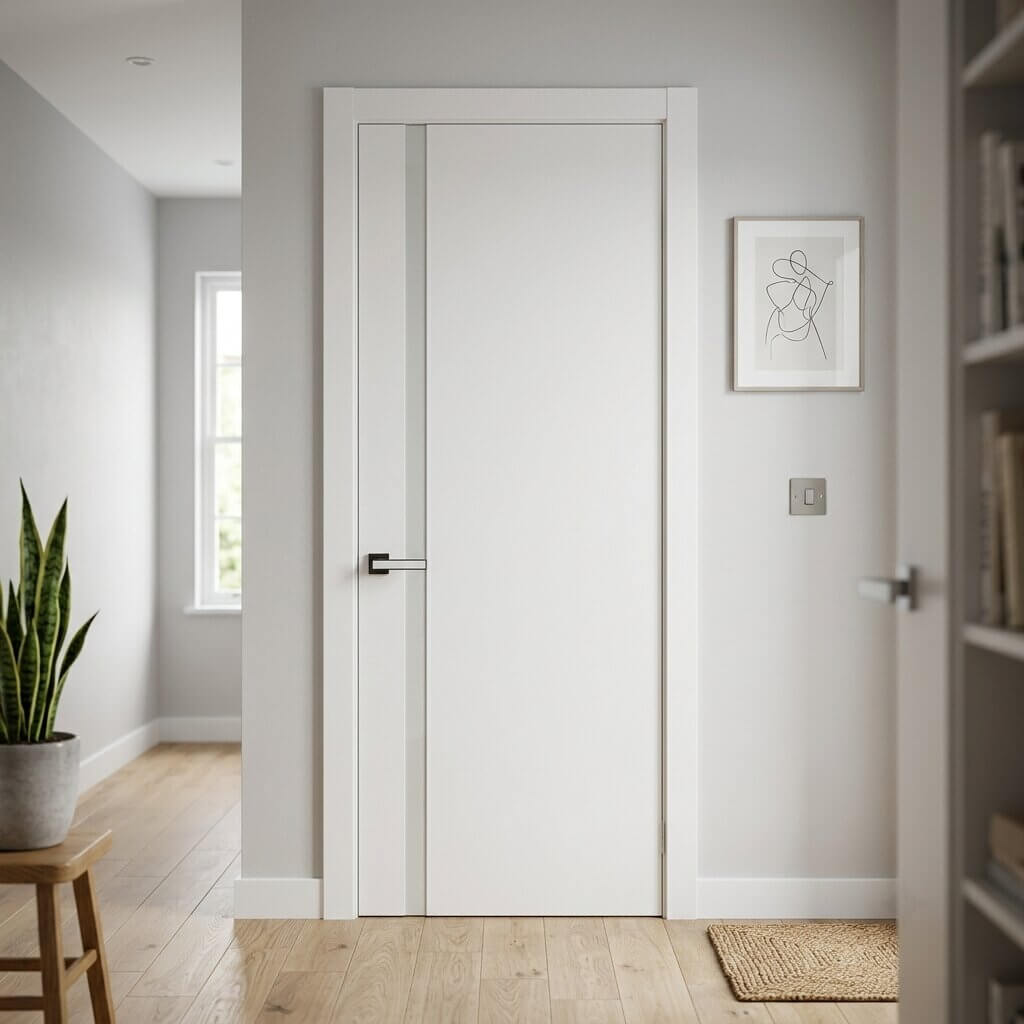
White isn’t just white. Spend ten minutes comparing premium painted doors and you’ll understand.
Smoothness. Consistency. Durability. Depth. Lower-quality finishes often reveal brush marks, orange peel textures, or uneven sheen after a few years. High-end painted surfaces continue looking refined long after installation day excitement has faded.
Hardware Quietly Defines the Experience
Here’s an odd thought. You don’t actually interact with the door very much. You interact with the hardware. The handle, the latch, the hinges.
Thousands of times. Every year. Suddenly hardware seems much less like an accessory.
Visible hinges perform perfectly well. Hidden hinges simply disappear. Literally. Once the door closes, they’re gone. The wall feels uninterrupted. Minimalism isn’t about removing function—it’s about removing distractions.
Traditional latches announce every successful closing. Click. Metal. Tiny vibration. Magnetic systems approach the task differently. Gentler. Quieter. Less dramatic. Luxury often sounds softer.
Cheap handles become loose surprisingly quickly. Premium hardware maintains precision. No rattling, no wobbling. Just reassuring consistency.
Matching High-End Doors to Different Southern California Styles
One misconception refuses to disappear. “European doors only belong in ultra-modern homes.”
Not true. Not even close. They simply adapt differently.
Coastal Contemporary
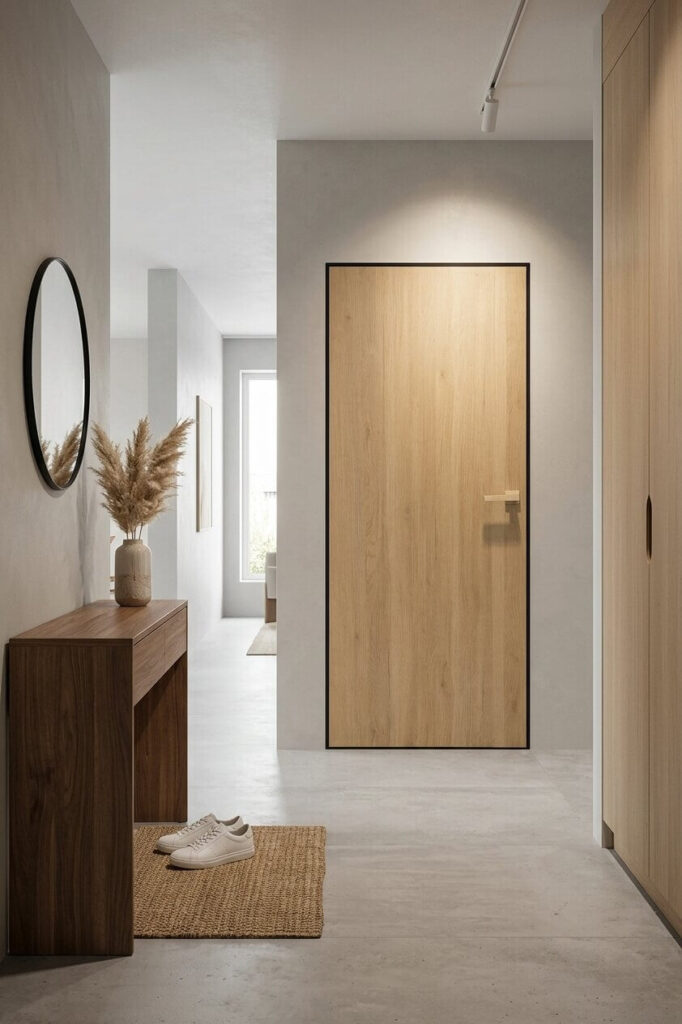
Minimalist white doors. Oak veneers. Hidden hinges. Matte black hardware.
Natural light does most of the decorating—the doors simply support it.
Spanish Revival
Cleaner door profiles can beautifully balance traditional architecture.
Instead of competing with decorative ceilings, tile work, or exposed beams, premium interior doors quietly frame those elements.
Sometimes restraint creates stronger contrast than ornament.
Transitional Homes
Transitional interiors borrow from both classic and contemporary design. High-end doors fit comfortably because they’re based on proportion rather than trends.
Good proportions don’t expire. Thankfully.
Common Buying Mistakes
People rarely regret buying quality. They do regret buying quickly quite often.
Choosing Only by Appearance
A beautiful showroom door tells only half the story. Ask about construction, core material, hardware, frame systems, finish durability.
Luxury without engineering ages terribly.
Mixing Premium Doors With Budget Hardware
This happens more often than you’d expect. Premium doors deserve premium hardware. Otherwise the weakest component gradually becomes the entire experience.
Forgetting Installation
The finest door ever manufactured can perform poorly if installed carelessly. Precision products require precision installation.
That’s not marketing. That’s geometry.
Why Diana Doors Focuses on European Craftsmanship
At Diana Doors, we believe high end interior doors should improve everyday living in ways that become almost invisible.
Not invisible because they lack beauty—invisible because everything simply works. Quietly. Reliably. Elegantly.
Curated Instead of Overwhelming
Hundreds of options don’t automatically create better decisions. Sometimes they create headaches.
We carefully select European collections that consistently deliver exceptional quality, thoughtful engineering, and timeless design. Less guessing, more confidence.
Guidance Matters
Interior doors aren’t everyday purchases. Questions are natural. Flush systems, hidden hinges, wood finishes, painted collections. Room-to-room consistency.
Our goal is helping homeowners understand why certain products fit certain projects—not simply pointing toward the most expensive model.
Luxury should make sense.
Built to Last
The real evaluation doesn’t happen during installation. It happens five years later. Ten years later. When the doors still align beautifully. Still close smoothly. Still feel exactly as they did on day one.
Durability isn’t exciting. Living without problems usually isn’t. Until you’ve experienced both.
Conclusion
People love searching for one magical upgrade that transforms an entire home. There usually isn’t one.
Beautiful houses are assembled the way good conversations happen: one thoughtful sentence at a time, with pauses in the right places and nothing trying too hard to steal the spotlight. High end interior doors happen to be one of those quiet sentences. Easy to overlook while choosing flooring or countertops. Surprisingly impossible to ignore once they’re installed.
Some upgrades impress your guests. Others improve Tuesday morning. There’s a difference. The second kind tends to be the one people appreciate longest. Perhaps that’s the nicest thing about thoughtfully designed interior doors. They don’t spend years asking to be admired—they simply keep making every room feel a little more complete, every hallway a little calmer, every closing door a tiny reminder that good craftsmanship rarely needs to raise its voice.