Why “Just Paint It White” Is No Longer the Only Safe Answer
For a long time, white was the default answer to the question of what color interior doors should be. Safe, timeless, universally “fine.” And there’s nothing wrong with that – white still works beautifully in the right home.
But 2026 has brought a real shift in how homeowners and designers think about interior doors. They’re no longer treated as a background element to be painted the same color as the trim and forgotten. Increasingly, doors are being chosen the way a piece of furniture would be – for the mood they set, the contrast they create, and the character they add to a room.
At Diana Doors, we get asked constantly which color is “best.” The honest answer: it depends on your home’s style, lighting, and the statement you want each room to make. Below, we break down the leading directions for 2026 – from the enduring classics to the bolder looks gaining ground in San Diego and Orange County homes.
White and Soft Neutrals: Still a Smart, Safe Choice
White hasn’t gone anywhere, and for good reason. It reflects both natural and artificial light, which makes rooms feel larger and brighter – a real advantage in smaller bedrooms, hallways, and interior spaces without much window exposure. It’s also the easiest color to work with when it comes to resale: buyers rarely object to white or soft neutral doors, and they pair effortlessly with almost any wall color, flooring, or design style.
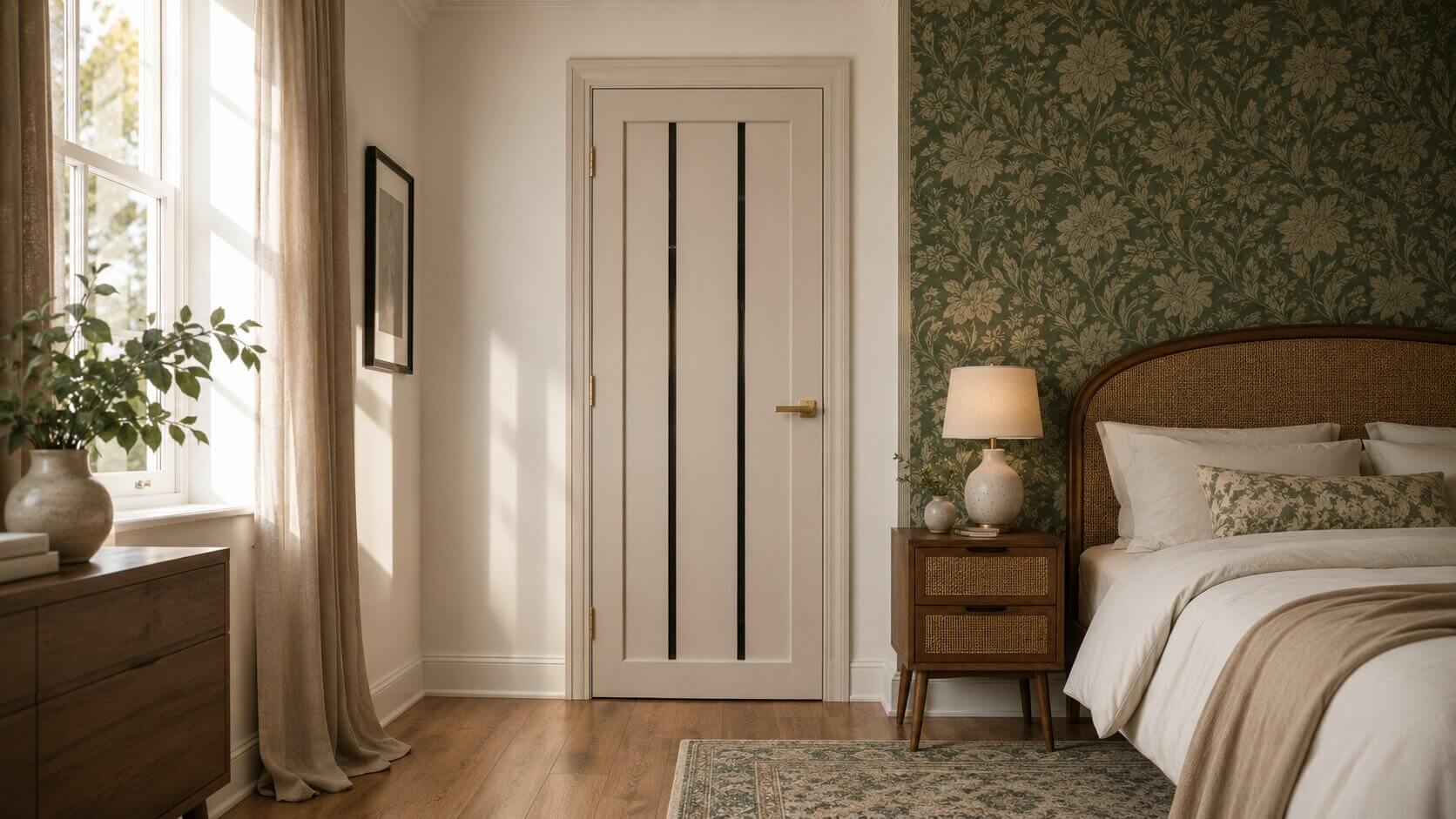
That said, “white” in 2026 isn’t a single shade anymore. Design-forward homeowners are choosing warmer, more layered whites – soft ivory, warm greige, and muted taupe tones – over the flat, cool white that dominated the past decade. Diana Doors’ Magnolia (LV-04) finish captures this shift well: a warm, soft white with enough depth to feel intentional rather than default.
If you love the safety of neutral doors but want something with more texture and sophistication, this is where to look first.
Matte Black: Still the Boldest Trend Around
If there’s one color defining premium interior design right now, it’s matte black. Design experts and hardware manufacturers alike point to matte black as the dominant interior door trend of 2026, prized for its versatility and its natural fit with minimalist, modern interiors.
What makes matte black doors so effective is contrast. Against white walls, light flooring, or marble-look tile – increasingly popular in San Diego coastal homes – a black door becomes an architectural focal point rather than just a functional element. It grounds a room, adds a sense of intentional design, and photographs beautifully, which matters more than ever in a market where buyers browse listings online before ever stepping inside.
A few things to know if you’re considering black doors for your home:
- Finish matters more than color. Matte and satin finishes read as modern and current; high-gloss black can feel dated or overly formal. Diana Doors’ Black Matt (LV-04) model is designed specifically around this soft, non-reflective finish.
- Pair thoughtfully with hardware. Graphite, gunmetal, and satin brass hardware finishes tend to complement dark doors best, offering contrast without competing for attention.
- Balance is key. Black doors work best with lighter walls and flooring nearby. In an already dark or low-light room, they can make the space feel smaller rather than more dramatic.
- Consider glass inserts if you’re using black doors in a room that needs natural light to pass through, such as a home office or laundry nook.
Matte black is a particularly strong fit for modern coastal architecture across San Diego and Irvine, where clean lines and minimal ornamentation are already part of the design language.
Natural Wood Tones: The Comeback Nobody Saw Coming
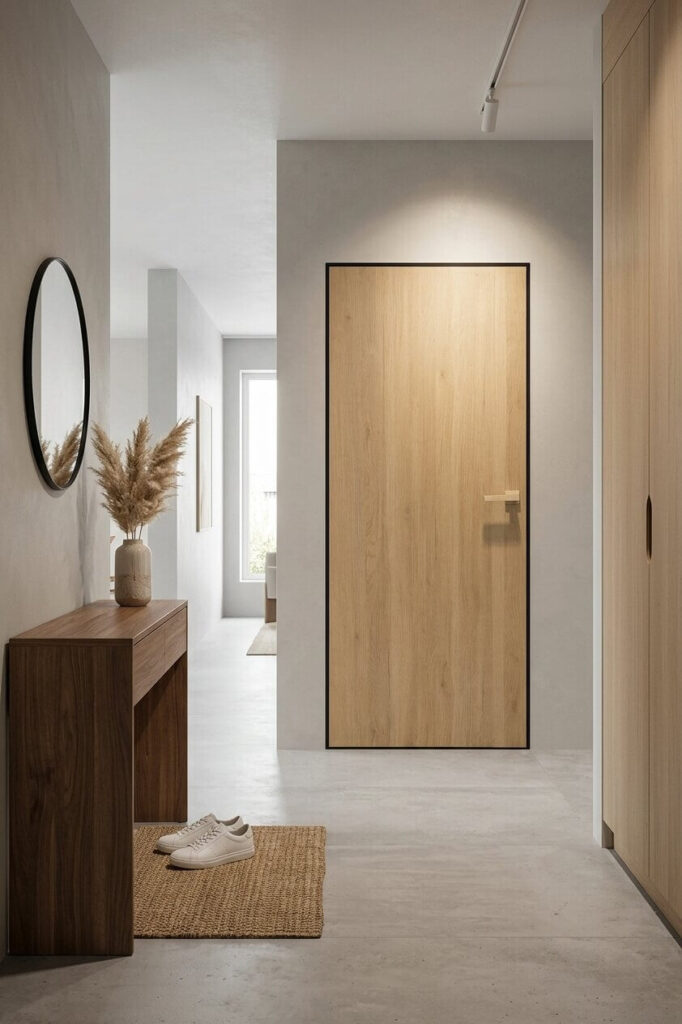
After nearly a decade of painted doors dominating the market, natural wood finishes are having a real resurgence in 2026. Light oak, walnut, and warm honey tones are showing up across new builds and renovations alike, driven by a broader design shift toward organic materials and biophilic interiors – spaces that feel connected to natural textures rather than purely manufactured surfaces.
This is a category where European door manufacturing genuinely shines. Unlike mass-produced doors with printed wood-grain laminate, genuine wood veneer construction shows real grain variation from panel to panel, which is part of the appeal – no two doors look quite identical.
Diana Doors’ SL Golden Oak model reflects this trend directly: a warm, honey-toned finish that adds richness and texture without tipping into a dated, overly rustic look. It works particularly well in transitional interiors, where a home blends modern lines with warmer, more traditional materials – a common combination in San Diego’s older, character-rich neighborhoods being renovated for contemporary living.
Natural wood tones also age exceptionally well. Unlike a painted finish, which can show scuffs and touch-up seams over time, a well-finished wood veneer tends to look intentional even after years of daily use.
Concrete and Stone-Inspired Grays: The Quiet Favorite
Gray has been part of the design conversation for years, but 2026’s version of gray is different from the flat, cool gray that saturated homes in the 2010s. The current direction leans toward warmer, deeper gray tones with subtle undertones – closer to stone, concrete, or graphite than to a sterile, corporate gray.
This is where Diana Doors’ Dark Concrete (LV-18) and Beige Concrete (LV-21) models fit naturally. Both take inspiration from architectural concrete finishes – a texture increasingly popular in modern and industrial-influenced interiors – while remaining warm enough to work in a residential setting rather than feeling cold or commercial.
Concrete-inspired gray doors are an especially strong choice for:
- Open-concept homes where doors need to feel architectural rather than decorative
- Modern minimalist interiors with limited color variation elsewhere
- Homes that want a contemporary look without committing to the drama of full black
Gray also tends to be one of the more resale-friendly bold choices, since it reads as sophisticated rather than trendy in the way a highly saturated color might.
Deep, Rich Colors: Navy, Espresso, and Mocha
For homeowners who want more personality than neutral tones offer, but aren’t ready to commit to black, 2026 has brought a wave of deep, rich color options into the mainstream. Deep navy, warm espresso, and mocha tones are all gaining traction, particularly in primary bedrooms, home offices, and other spaces meant to feel calm and enclosed rather than bright and open.
Diana Doors’ Mocca Matt (LV-20) model sits right in this trend – a warm, deep brown with enough richness to feel luxurious, but enough warmth to avoid feeling heavy or overly formal. It’s an especially good fit for primary suites and studies, where a slightly more intimate, cocooning feel is often exactly what a homeowner is after.
Unlike matte black, these deeper warm tones don’t require as much careful balancing with the rest of the room – they tend to feel cohesive with a wider range of wall colors and flooring types, from warm hardwood to cooler tile.
Choosing the Right Hardware for Your Door Color
Color is only half the equation – hardware finish plays a major role in how a door ultimately reads in a room. As a general guide for 2026:
- White and light doors pair well with almost any hardware finish, but matte black and brushed nickel remain the most popular choices for a clean, modern look.
- Black and dark doors look best with graphite, gunmetal, satin brass, or brushed nickel – finishes that provide contrast without competing with the door itself.
- Wood-tone doors pair beautifully with warm metals like satin brass or oil-rubbed bronze, reinforcing the organic, natural feel of the finish.
- Gray and concrete-inspired doors work well with almost any modern hardware finish, from matte black to brushed steel, since gray is inherently easy to coordinate with.
Mixing metal finishes throughout a home – rather than using one hardware finish everywhere – has also become an accepted, even encouraged, design approach in 2026, as long as it’s done with some intention rather than at random.
How to Actually Choose: Four Practical Considerations
With so many strong options, the real question isn’t which color is “best” in the abstract – it’s which color is right for your specific home. A few practical filters worth applying:
- Test in your actual lighting. Door finishes can look dramatically different under San Diego’s bright coastal daylight versus warm evening lighting. Whenever possible, view sample finishes in the actual room, at different times of day, before committing.
- Think about resale, if it matters to you. If you plan to sell within the next few years, neutral and natural wood tones remain the safest choices. Bold colors like matte black or deep navy can still work well for resale as accent doors in select rooms, but using them throughout an entire home is a more personal design commitment.
- Maintain visual flow between rooms. Using the same door color throughout main living areas – while allowing bedrooms or private spaces more personality – tends to create the most cohesive, intentional-feeling result throughout a home.
- Don’t overlook maintenance. Factory-applied, thermally fused finishes hold up significantly better over time than site-painted doors, particularly in high-traffic hallways and entryways. This is one of the quieter advantages of European-manufactured doors: the finish is baked into the manufacturing process itself, rather than applied on-site and prone to uneven wear.
A Note on Frameless Doors and Color
One trend worth highlighting separately: frameless doors – where the visible casing is eliminated for a flush, seamless look – are becoming increasingly popular in modern U.S. homes, and color choice plays an even bigger role in how they read. Matching a frameless door’s color closely to the surrounding wall creates a nearly invisible, minimalist effect. Choosing a contrasting color, on the other hand, turns the same door into a bold architectural statement.
Diana Doors offers several of its finishes, including Black Matt, Dark Concrete, and Golden Oak, in frameless configurations – a detail still relatively rare among San Diego and Orange County door suppliers, and one worth considering if you’re planning a more architecturally driven renovation.
Final Thoughts
There isn’t a single “best” interior door color for 2026 – there’s a best color for your home, your lighting, and the feeling you want each room to have. What has changed is the range of genuinely strong options available. Warm whites, matte black, natural wood, concrete-inspired grays, and deep rich tones are all having a real moment, each suited to a different kind of space and style.
The finish and craftsmanship behind the color matter just as much as the color itself. A factory-applied European finish will hold its look – and its value – far longer than a site-painted door, regardless of which shade you land on.
Ready to Explore Your Options?
Diana Doors offers a full range of premium European finishes – from Black Matt and Golden Oak to Dark Concrete, Beige Concrete, Magnolia, and Mocca Matt – each available with the option of soundproof cores and frameless configurations. Schedule a consultation to see samples in person and find the right color for your home, whether you’re in San Diego, Irvine, Chula Vista, El Cajon, or La Mesa.