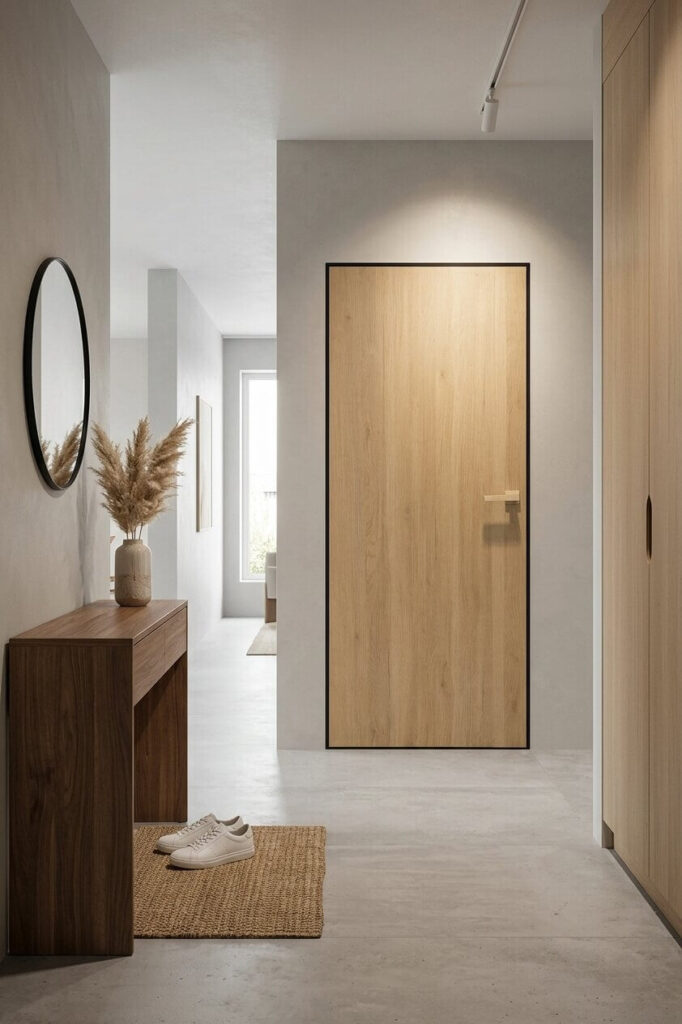
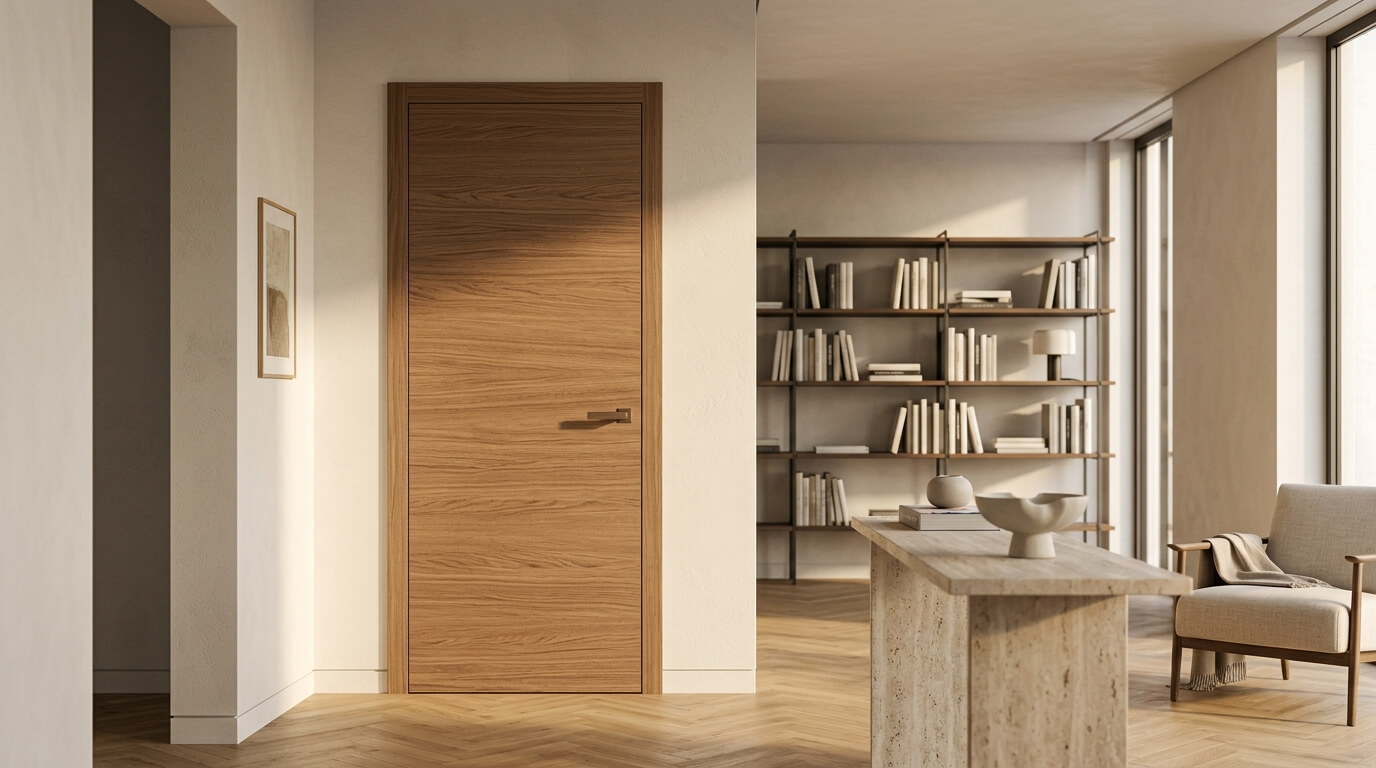
People spend weeks choosing the perfect door. Then they spend about forty-five seconds choosing the finish. It’s very common.
The finish isn’t simply the color sitting on top of the door, though. It’s the way light behaves when it reaches the surface. It’s how your fingertips feel every morning. It’s whether the room feels calm, dramatic, warm, sophisticated, relaxed, or quietly luxurious. One finish can make the exact same door feel completely different.
The discussion around interior door finishes has become much more interesting as European interior doors have grown in popularity across American homes. Modern manufacturing offers extraordinary options that simply weren’t available to most homeowners twenty years ago. Matte lacquers. Satin paints. Deep textured wood veneers. Ultra-smooth architectural coatings. Finishes that almost disappear. Others that become part of the design itself.
None of them are automatically better. They’re simply telling different stories.
The Finish Is the First Thing Your Eyes Notice
People often think they notice the door first. Not really.
Your eyes register the finish before your brain even realizes it. Gloss reflects. Matte absorbs. Wood catches sunlight differently every hour. Paint softens sharp architectural lines. Texture creates tiny shadows that change throughout the day.
Light spends more time talking to finishes than people do. It’s remarkably influential.
Design has become quieter. Cleaner. Less decorated. That means surfaces suddenly carry much more responsibility. When ornate moldings disappear, the finish becomes more important. When trim becomes thinner, the finish becomes more important. Same about doors becoming perfectly flush. The finish becomes even more important.
Minimalism doesn’t reduce design decisions. It simply makes each remaining decision matter more.
Matte Interior Door Finishes: Quiet Confidence
If one finish has defined contemporary architecture over the past decade it’s matte.
Matte doesn’t chase attention. It almost steps out of the way and that’s exactly why people notice it.
Why Matte Feels Modern
Matte surfaces absorb light rather than throwing it back across the room. The result feels softer. Calmer. More architectural. Instead of reflecting every lamp and window, matte finishes allow the shape of the door to become the focus.
It’s almost like listening to acoustic music after spending hours wearing headphones.
Fingerprints Become Less Noticeable
Life happens. Children open doors with sticky hands. Dogs investigate absolutely everything. Someone walks through carrying groceries with one elbow because both hands are occupied. Matte finishes tend to disguise everyday marks better than high-gloss surfaces.
They forgive ordinary living surprisingly well. Homes appreciate forgiveness.
Where Matte Works Best
Contemporary homes. Minimalist interiors. Scandinavian-inspired spaces. Modern farmhouses. Luxury custom homes. Almost anywhere homeowners want understated elegance instead of visual drama.
Matte doesn’t interrupt the room. It participates quietly.
Satin Interior Door Finishes: The Best of Both Worlds
Now imagine matte’s slightly more outgoing cousin. Still relaxed. Just a little brighter. That’s satin. It introduces a gentle sheen without becoming reflective.
Many homeowners eventually settle on satin because it feels wonderfully balanced. Not too flat. Not too glossy. Architecture often rewards moderation.
Easy to Live With
Satin surfaces clean easily. Hold up beautifully. Reflect enough light to feel lively while avoiding the mirror-like appearance of gloss. They’re practical without looking practical.
Which might be the highest compliment a finish can receive.
A Safe Choice That Never Feels Boring
Sometimes homeowners hesitate because satin sounds safe. It is. But safe doesn’t automatically mean ordinary. A beautifully painted satin European door with concealed hinges and premium hardware still feels remarkably sophisticated.
Confidence rarely depends on shouting.
Gloss Interior Door Finishes: Light, Reflection, and Drama
Gloss enjoys making an entrance. It catches sunlight. Reflects lighting fixtures. Highlights every curve and edge.
Sometimes that’s exactly the point.
High-End Contemporary Spaces
Gloss works beautifully in certain interiors. Luxury penthouses. Ultra-modern homes. Architectural showpieces. Minimalist spaces using dramatic contrasts. The reflections become part of the design.
Almost another material entirely.
Gloss Requires Commitment
Here’s the trade-off. Gloss celebrates everything. Beautiful craftsmanship. Elegant lighting. Perfect lines. Also fingerprints, dust, and small scratches. It asks homeowners for slightly more maintenance in exchange for its visual energy.
Fair deal. For the right house.
Textured Wood Finishes: Nature Never Repeats Itself
Wood refuses to behave like paint. Thankfully. Every veneer tells a slightly different story. The grain changes direction. Tiny knots appear. Patterns shift. Morning sunlight discovers details afternoon sunlight somehow missed.
Wood remains alive visually even after the tree’s work is finished. There’s something comforting about that.
Oak Continues Leading Modern Design
White oak. Natural oak. Warm smoked oak. People like that kind of texture for good reason. Oak balances warmth with contemporary simplicity better than almost any other species. It feels relaxed. California understands oak. Always has.
Walnut Adds Quiet Luxury
Walnut doesn’t demand attention. It earns it.
Deep chocolate tones. Rich grain. Remarkable depth. Walnut pairs beautifully with black hardware, concealed hinges, and minimalist architecture.
Textured Veneers Feel Different
Literally. Run your hand across a deeply textured veneer and you’ll understand immediately. The door becomes more than something you see. It becomes something you experience.
Painted vs Natural Wood
People sometimes imagine this decision as modern versus traditional. It isn’t.
Painted European doors feel wonderfully contemporary. Natural wood European doors feel wonderfully contemporary too. Different moods. Same quality.
Painted Doors
Crisp. Architectural. Flexible. Easy to coordinate with changing interiors. Paint emphasizes geometry: lines, proportion, minimalism.
Natural Wood
Warmer. Organic. Timeless. Wood emphasizes material rather than shape. The grain becomes artwork created by nature instead of a designer. Nature remains surprisingly difficult to improve upon—designers keep trying anyway.
How Interior Door Finishes Affect Light
Here’s something homeowners rarely consider. The same room changes dramatically depending on the finish. Matte softens daylight. Gloss amplifies it. Wood filters it visually through natural grain.
Satin quietly balances both worlds. Sunlight becomes an active design partner rather than passive illumination. Every hour edits the room a little differently.
A glossy finish may brighten darker spaces through reflection. Matte may create a calmer atmosphere. Wood introduces warmth even in minimalist interiors. There’s no mathematical formula here. Only atmosphere.
Sometimes that’s harder to measure. Much easier to feel.
Durability Matters
Beautiful finishes should remain beautiful. That’s the goal. Premium European manufacturers invest heavily in finishing technology because the surface protects everything underneath.
Advanced lacquers. UV-cured coatings. Engineered paint systems. Durable wood treatments. Quality begins long before homeowners ever touch the door.
Doors experience remarkable abuse. Backpacks, suitcases, vacuum cleaners, pets, toys, furniture. Holiday decorations somehow finding every corner. Good interior door finishes expect real life. Not showroom life. There’s an important difference.
Matching Finishes Throughout the Home
Here’s a question worth asking. Should every door have the same finish? Usually, yes.
Consistency creates calm. That doesn’t necessarily mean identical materials everywhere. Glass office doors can complement matte painted bedroom doors. Natural oak pantry doors can coordinate beautifully with painted hallway doors. Shared hardware. Similar proportions. Thoughtful transitions.
The home begins speaking one visual language. Different accents, same conversation.
Trends Come and Go, Good Finishes Stay
Gloss once dominated luxury homes. Now matte leads. Twenty years from now? Who knows.
The smartest homeowners rarely choose finishes based solely on trends. They choose what fits the architecture. The lighting. Their lifestyle. The way they actually want the house to feel on an ordinary Tuesday morning.
Ordinary mornings deserve good design too. Perhaps especially ordinary mornings.
Why Diana Doors Helps Homeowners Choose the Right Finish
At Diana Doors, selecting interior door finishes is never treated as an afterthought. The finish influences how the entire door interacts with natural light, surrounding materials, architectural style, and everyday living. That’s why homeowners are encouraged to compare finishes in person, observe them under different lighting conditions, and choose the one that complements both the home and the people living inside it.
Our premium European interior doors are available in sophisticated matte lacquers, elegant satin finishes, contemporary gloss coatings, rich natural wood veneers, and beautifully textured architectural surfaces. Combined with solid-core construction, concealed hinges, magnetic latches, luxury hardware, and professional installation, each finish becomes part of a complete system designed to perform beautifully for years.
Maybe that’s the nicest thing about choosing interior door finishes—there isn’t a finish that’s objectively superior to all the others.
Matte quietly settles into the background and lets architecture speak. Satin catches just enough light to keep a room feeling alive without becoming restless. Gloss turns reflections into part of the design itself. Natural wood changes character every hour as the sun moves across the house, almost like it has its own daily routine. They all tell different stories.
Eventually, one of them simply feels right.
Not because someone on the internet declared it fashionable. Not because it appeared in a magazine. Because you stand in front of it, watch the afternoon light drift across the surface, run your hand along the finish almost without thinking, and realize you aren’t evaluating it anymore. You’re already imagining it at home. That’s usually how the best decisions happen.