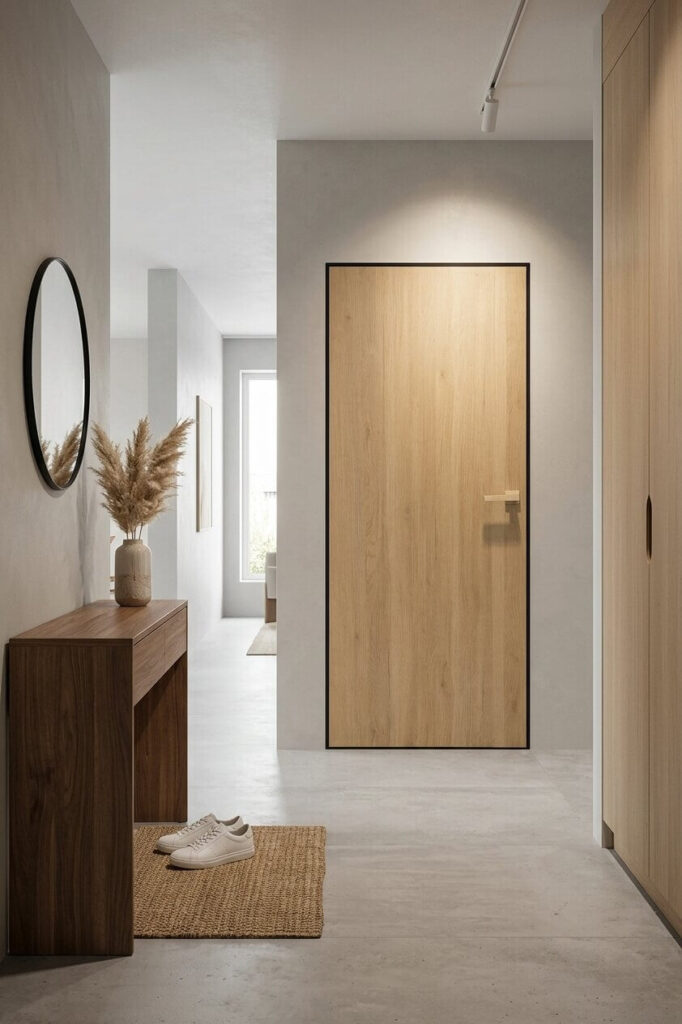
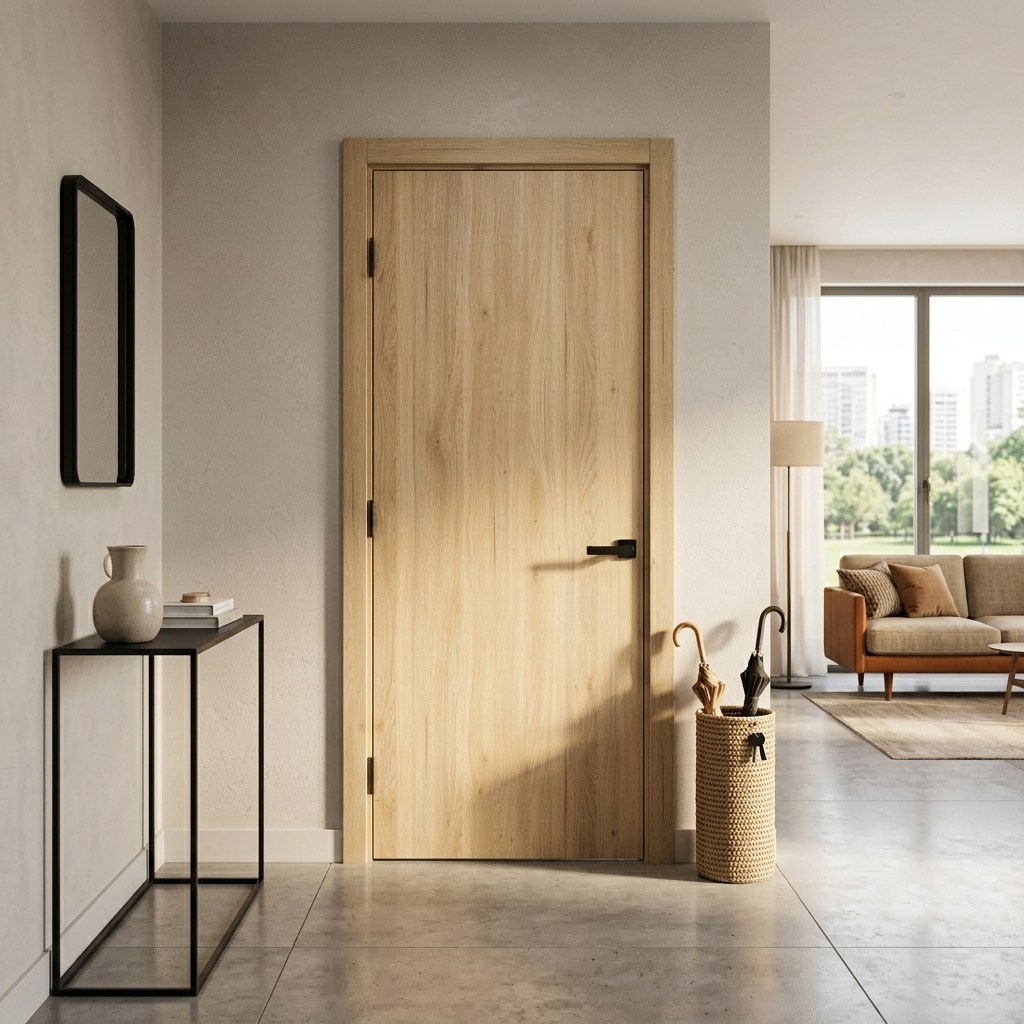
Most people shopping for interior doors spend hours comparing finishes. Oak or walnut? Matte white or black? Flush slab or wood veneer? Then someone asks about the hinges. Silence. “They’re just hinges.” That’s usually the moment an architect smiles a little.
Not because the question is funny. Because it’s the exact point where most homeowners accidentally overlook one of the biggest differences between ordinary interior doors and truly premium ones.
Here’s the thing. You don’t interact with the finish every day — you interact with the hardware. Every single morning. Every evening. Every trip to the laundry room. Every late-night walk to the kitchen for a glass of water. Thousands of times each year, your hand reaches for the handle, the hinges guide the motion, the lock engages, and the door closes. Those few mechanical components quietly determine whether the experience feels smooth, solid, effortless or slightly annoying.
People will spend thousands of dollars choosing natural stone countertops because they appreciate craftsmanship. They’ll obsess over cabinet hardware. They’ll debate faucet finishes for weeks. Then they’ll buy an expensive door with average hardware.
It’s a bit like buying a luxury watch and replacing the movement with a cheap quartz mechanism. Looks impressive. Feels odd.
One of the defining characteristics of premium European doors is that manufacturers rarely treat hardware as an accessory. Instead, it becomes part of the entire system from the very beginning. Understanding European door hardware helps explain why these doors feel so different the first time you use them — and why that feeling doesn’t disappear after the novelty wears off.
Hardware Is What Makes a Premium Door Feel Premium
Imagine two doors. Same dimensions, same wood veneer, same color, same frame. From across the room, they’re almost identical.
Now open both. One swings effortlessly. The movement feels balanced. The handle turns with almost no resistance. The latch closes quietly. Everything aligns perfectly. The other door sticks just slightly. The handle feels loose. The latch scrapes the strike plate.
Nothing is broken. Nothing is terrible. Yet somehow, one feels expensive and the other simply costs money. That’s the difference hardware makes. Premium European door hardware isn’t designed to attract attention — it’s designed to disappear into the experience.
Concealed Hinges: The Detail You Notice by Not Noticing It
Walk through a modern European home. Something seems cleaner. Calmer. You might not immediately understand why. Then you realize you can’t see the hinges.
Traditional butt hinges remain visible whenever a door is closed. Perfectly functional. Perfectly familiar. European concealed hinges disappear entirely inside the frame and door leaf. Nothing interrupts the surface. No exposed metal, no visible screws, no hinge barrels — just uninterrupted architecture. It’s a surprisingly small change.
Yet once every door in a home uses concealed hinges, the effect becomes remarkably powerful. Walls appear simpler. Doorways become more refined. The entire house feels more carefully designed.
Removing details sometimes creates a stronger impression than adding them.
Concealed Hinges Offer More Than Better Looks
People sometimes assume hidden hinges exist purely for aesthetics. Not at all.
Premium concealed hinges offer several functional advantages.
Better Adjustability
Over time, every building settles. Temperature shifts. Humidity changes. Wood framing moves slightly. Quality concealed hinges allow installers to make fine adjustments after installation.
Height, depth, horizontal alignment — tiny corrections keep the reveal perfectly even without removing the door. That’s a gift to installers and also to homeowners years later.
Higher Weight Capacity
Many premium European doors use solid-core construction. They’re heavier. Sometimes significantly heavier. Concealed hinge systems designed for these doors support greater weight while maintaining smooth operation.
The hardware isn’t simply hidden. It’s engineered. Big difference.
Easier Maintenance
Visible hinges collect dust surprisingly well. Paint drips occasionally find them during renovations. Concealed hinges remain largely protected.
Less cleaning. Less maintenance. One fewer thing demanding your attention — homes have enough of those already.
Magnetic Locks: Quiet Engineering That Changes Everything
This is usually the feature people remember. They don’t expect to. They simply do. Traditional latch systems work through friction.
Metal slides against metal. Scrape, click, close, repeat. Thousands of times. European magnetic locks operate differently.
The latch remains recessed until the door aligns with the frame. Then magnetic force gently pulls the mechanism into position. Click. Softly. Almost elegantly. It sounds like a tiny improvement because it really is. Tiny improvements repeated thousands of times become meaningful surprisingly quickly. Especially inside quiet homes.
Magnetic Locks Reduce Everyday Wear
Here’s another overlooked advantage. Traditional latches constantly rub against strike plates. Eventually wear develops, noise increases, alignment becomes more sensitive. Magnetic systems reduce much of that unnecessary contact.
Less friction, cleaner operation, longer service life — mechanical parts generally appreciate not scraping against one another all day.
Door Handles Are About Ergonomics as Much as Style
Handles get surprisingly little respect. People often choose them like jewelry. Silver, black, brass — European manufacturers usually spend far more time considering how a handle actually feels.
Grip shape, lever length, balance, rotation, resistance, surface texture — the goal isn’t decoration. It’s comfort.
You probably open interior doors dozens of times every day without thinking. Good handles support that unconscious interaction. Poor ones remind you they’re there. Usually in annoying ways.
Modern European Handle Designs
European hardware designers often favor clean geometric forms. Straight levers, soft curves, minimal rosettes, integrated escutcheons, simple finishes — nothing excessive, nothing competing with the architecture.
Again, less becomes more.
Soft Closing Is About More Than Luxury
People hear “soft close” and picture kitchen drawers. European doors increasingly incorporate similar thinking.
While not every system includes dedicated soft-close mechanisms, premium hinges and magnetic hardware naturally reduce abrupt closing. Doors settle, rather than slam.
Physics remains undefeated but normal daily use becomes noticeably quieter. Bedrooms appreciate that. Home offices certainly do. Sleeping babies perhaps appreciate it most of all though they rarely write product reviews.
Strike Plates and Small Components Matter Too
No one gets excited about strike plates until they use poorly made ones. Small hardware components determine alignment, durability, noise levels, latch performance. Manufacturers building premium European systems pay remarkable attention to these tiny details.
Every mechanical system is only as strong as its weakest part. Imagine building a luxury sports car with bargain suspension bolts. No good. Doors deserve the same consistency.
Finish Quality Isn’t Just About Color
Black hardware has become incredibly popular. So has brushed brass, matte nickel, satin chrome. The finish itself matters almost as much as the color.
Cheap coatings scratch. Fade. Wear unevenly. High-quality European hardware frequently uses advanced finishing processes that better resist fingerprints, corrosion, and everyday abrasion.
That becomes important after years of constant use. Not every Tuesday — every year. There’s a difference.
Why European Manufacturers Invest So Much in Hardware
Because they understand something important. People experience doors through movement, not photographs. Architectural magazines capture wonderful finishes. Daily life captures functionality. The handle. The hinge. The latch. The closing sound. Those become permanent parts of living inside the home.
Beautiful veneers certainly matter. Premium construction absolutely matters. But without equally refined hardware, the experience remains incomplete. Like listening to an orchestra where one violin plays slightly out of tune. Most people can’t identify exactly what’s wrong — they simply know something feels off.
Hardware Security Inside the Home
Interior doors rarely need high-security locking systems. Entirely different thing about privacy, though. Bedrooms, bathrooms, home offices, guest suites — European lock mechanisms often provide smoother engagement and greater reliability while maintaining elegant appearance.
The lock feels intentional. Not like an afterthought drilled into the door after manufacturing. Integration matters.
Why Hardware Should Match the Door System
Here’s one mistake homeowners occasionally make. Buying premium European doors then installing unrelated hardware because it looks similar. It can work. Sometimes.
It often compromises performance. Concealed hinges require compatible frames. Magnetic locks require matching strike plates. Handle geometry influences lock performance. Everything has been designed together — changing one component occasionally creates a domino effect.
What to Ask Before Buying European Door Hardware
Don’t worry about memorizing technical terminology. Instead, ask practical questions. Are the hinges concealed? Can they be adjusted after installation? Is the lock magnetic? Who manufactures the hardware? How many opening cycles is it rated for? Does the finish resist fingerprints? Will replacement parts remain available years later? Good suppliers welcome these conversations.
Hardware enthusiasts are delightfully passionate people, you may discover that unexpectedly.
Choosing Hardware That Ages Gracefully
Trends come and go. Polished brass fades. Matte black rises. Brushed bronze appears. Then something else. Quality survives fashion remarkably well.
Simple shapes, durable finishes, thoughtful engineering, reliable mechanics — those characteristics rarely become outdated. They’re useful. Useful tends to remain attractive. That’s reassuring. Especially for products expected to stay in your home for decades.
Does European Door Hardware Really Matter?
No doubt. More than many homeowners realize.
The discussion around European door hardware isn’t really about buying prettier handles or hiding hinges behind sleek panels. It’s about understanding that premium doors are complete architectural systems where every component contributes to the final experience.
Concealed hinges create cleaner lines while supporting precise adjustment. Magnetic locks replace scraping metal with quiet, effortless closure. Well-engineered handles feel balanced in the hand instead of merely looking attractive in photographs. High-quality finishes resist years of fingerprints, wear, and constant use. Even the smallest pieces — strike plates, fasteners, adjustment mechanisms — play their role in making a door operate as beautifully after ten years as it did on installation day.
It’s easy to underestimate hardware because it’s familiar.Everyone has opened a door. Thousands of them. The motion becomes automatic. Almost invisible. Yet that’s exactly why good hardware matters so much. You don’t admire it once a month — you experience it dozens of times every single day.Eventually, those tiny moments accumulate.
The smooth swing. The solid feel of the lever. The nearly silent magnetic click as the door settles into place. None of these things changes your life on its own. Together, though, they quietly change how your home feels.
The biggest improvements often come from the smallest parts. And once you’ve lived with thoughtfully engineered European door hardware, ordinary doors start feeling just a little less ordinary — in all the wrong ways.