The High-End Look Isn’t About Budget – It’s About What You Notice First
Walk into a genuinely high-end home, and it rarely takes more than a few seconds to feel it. It’s not usually the biggest, flashiest piece of furniture that gives it away. More often, it’s something quieter: doors that close with a solid, satisfying click. Hardware that matches from room to room. A sense that every detail was chosen on purpose, rather than defaulted to.
That’s the real secret behind homes that “look expensive” – it’s almost never about spending the most money. It’s about consistency, intentionality, and getting the small, overlooked details right. And few details are more overlooked, or more architecturally significant, than interior doors.
At Diana Doors, this is a conversation we have with San Diego and Orange County homeowners constantly: which upgrades actually move the needle on how a home feels, without requiring a full renovation budget. Here’s what we’ve learned works.
Why Interior Doors Punch Above Their Weight
Most homeowners plan renovations room by room – a new kitchen, an updated bathroom, fresh flooring in the living room. Interior doors rarely make the list, mostly because they’re easy to stop noticing once they’re installed.
But that’s exactly what makes them so effective as a design lever. Doors appear in every room, every hallway, every transition point in a home. A kitchen remodel affects one room. Upgrading interior doors touches the entire house – which means a relatively contained project can have an outsized effect on how cohesive and considered a home feels from room to room.
Interior doors do three specific jobs that directly shape perceived value:
- They define your home’s style. Whether your aesthetic leans modern minimalist, warm and organic, or something in between, door design either reinforces that style or quietly undercuts it.
- They create cohesive flow. Consistent doors throughout a home – same style, coordinated finish family – read as curated and intentional. Mismatched styles and finishes, even subtle ones, register as unplanned.
- They carry visual detail. Premium finishes, hardware, and craftsmanship-level detailing draw the eye in a way flat, builder-grade doors simply don’t.
What Actually Makes a Door Look Expensive
When homeowners ask us how to elevate their doors specifically, the answer consistently comes down to three factors – material, finish, and hardware. Get these three right, and even a relatively simple door design reads as high-end.
1. Material: Where “Expensive” Actually Starts
There’s a reason solid, well-engineered doors feel different the moment you touch them. Hollow-core, mass-produced doors – the default in most tract housing – are light, thin, and prone to warping, denting, and sounding hollow when they close. It’s a subtle but real sensory cue, and people register it even if they couldn’t explain why.
European door manufacturing takes a fundamentally different approach. Multi-layer, engineered construction gives each door real weight and dimensional stability – resistant to the warping and swelling that comes with California’s dry heat and coastal humidity swings. That structural difference is what gives a door its substantial, quality feel the moment it closes, rather than a hollow, lightweight one.
2. Finish: The Detail That Separates “Painted” From “Finished”
A door’s finish does more work than almost any other single design choice in a room. A flat, uneven, or dated finish makes even a well-built door look cheap. A smooth, factory-applied finish – in the right tone for the space – makes an ordinary door read as custom.
A few finish principles worth knowing for 2026:
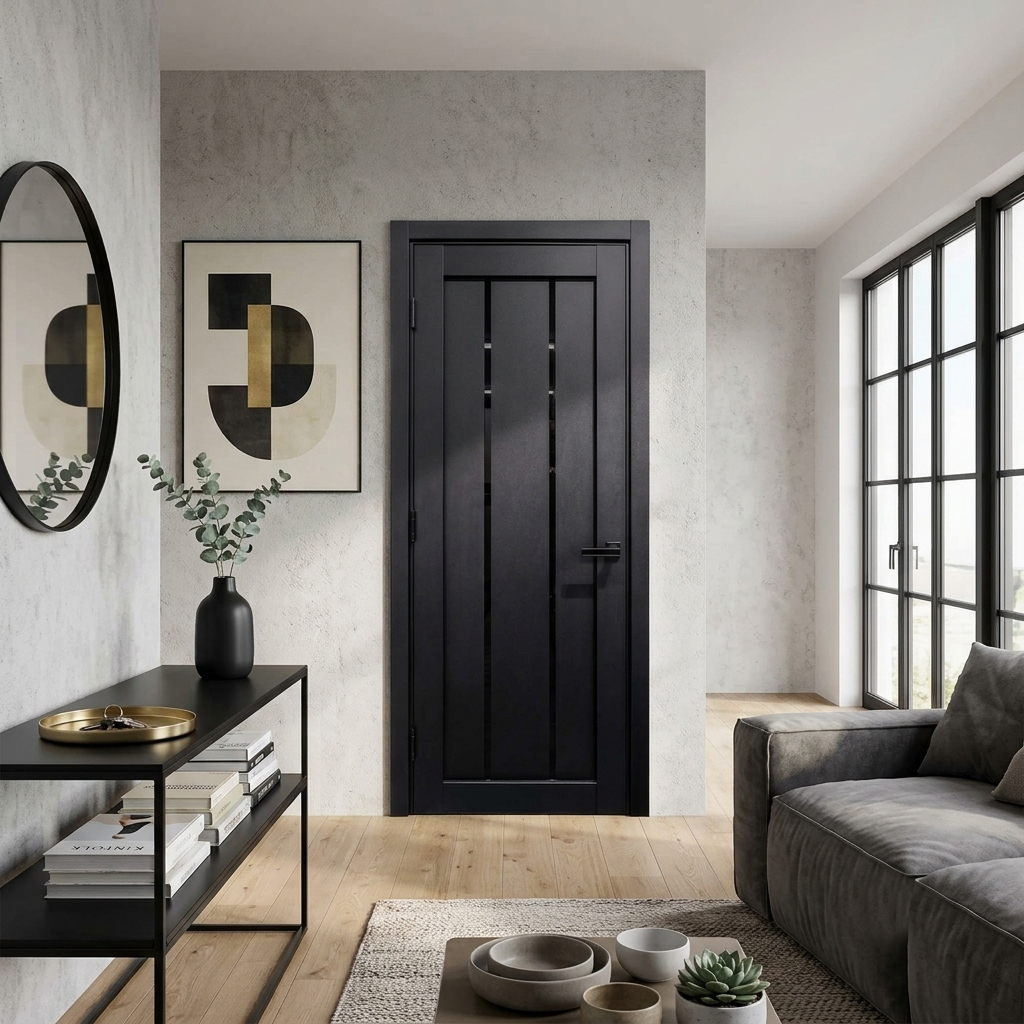
- Matte and satin finishes dominate the high-end market right now, from crisp warm whites to matte black and rich espresso tones. Glossy finishes can look dated fast; matte reads as current and intentional.
- Factory-applied finishes hold up dramatically better than site-painted doors. Site painting is prone to visible roller marks, uneven sheen, and touch-up seams that become obvious over time – the opposite of the flawless surface that signals quality.
- Color consistency across a home matters more than any single color choice. A home with the same door finish family running through main living areas feels cohesive and considered. A home with a different color in every room feels unplanned, no matter how nice any individual door looks.
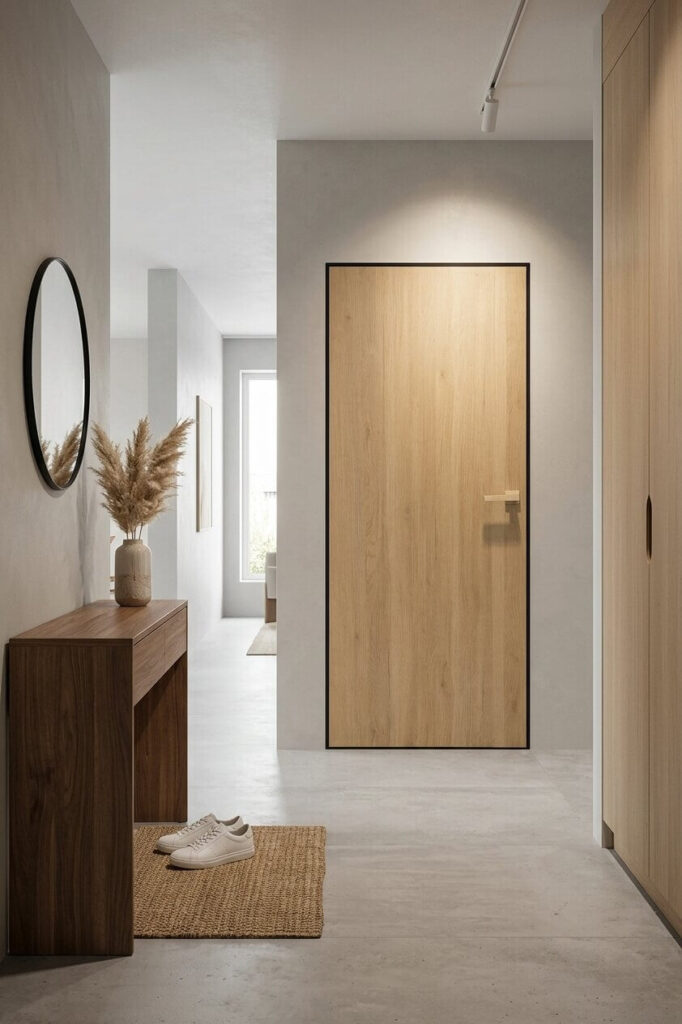
For homeowners who want more drama, a contrasting door color against lighter walls – deep charcoal, matte black, or a rich walnut tone – creates an architectural focal point that reads as a deliberate design choice rather than an afterthought. Diana Doors’ Black Matt and Mocca Matt finishes are built specifically around this effect: soft, non-reflective surfaces that photograph and read as premium in person.
3. Hardware: The Small Detail With an Outsized Effect
If finish is the second layer of a door’s “expensive” quality, hardware is the third – and it’s often the cheapest, fastest upgrade available. Swapping dated brass knobs for sleek matte black, brushed nickel, or satin brass hardware is one of the highest-impact, lowest-cost changes a homeowner can make.
A few pairing principles that consistently work:
- Matte black hardware against a white or light door creates crisp, modern contrast – currently one of the most popular pairings for a clean, high-end look.
- Brushed nickel or satin brass on darker doors softens the contrast while still reading as intentional and elevated.
- Hidden hinges and magnetic locking systems remove visible hardware from the equation entirely, creating an ultra-clean, architectural look that’s become a hallmark of modern European door design.
Consistency matters here too. Mixing several unrelated hardware finishes throughout a home can look intentional when done thoughtfully, but random variation – a different knob style in every room – reads as unplanned rather than curated.
Beyond the Door Itself: What Ties the Whole Look Together
A single beautifully finished door won’t transform a home on its own. What actually creates the high-end effect is consistency and flow – the same principle that runs through nearly every genuinely elevated interior:
- Keep sightlines cohesive. Doors visible from the same vantage point – down a hallway, across an open living space – should share a consistent style and finish family, even if individual rooms vary slightly.
- Let frameless design do quiet work. Eliminating visible casing around a door opening removes a line the eye would otherwise stop on, making hallways and rooms feel larger and more architecturally deliberate. It’s a detail most guests won’t name directly, but they’ll feel it.
- Layer in complementary lighting. Warm, layered lighting – not a single harsh overhead fixture – makes finishes, including door finishes, read richer and more intentional. A well-finished dark door under flat lighting loses much of its impact; under warm, layered light, it becomes a genuine focal point.
- Edit rather than add. A home with fewer, better-chosen details – one well-finished door style throughout, coordinated hardware, clean sightlines – almost always reads as more expensive than one with more ornamentation and less consistency.
Why This Is a Worthwhile Investment, Not Just a Cosmetic One
It’s worth being clear that this isn’t purely about appearances. Upgrading to solid, well-engineered doors is also a functional investment – one that pays off well beyond how a home photographs.
Quality doors with proper acoustic cores measurably reduce sound transfer between rooms, which matters enormously now that remote work and home offices are a permanent fixture in a large share of households. They also operate more smoothly and reliably for years longer than builder-grade doors, closing with a consistent, solid feel rather than gradually sticking, sagging, or rattling.
In other words: the same upgrade that makes a home look more expensive on a walkthrough also makes it function like a genuinely higher-end home, day to day, for years afterward.
The Diana Doors Difference
What separates a genuinely elevated door upgrade from a superficial one comes down to precision – in manufacturing and in installation.
At Diana Doors, that means:
- Precise on-site measurement, so every door is built to match your home’s actual openings – not a generic industry standard.
- European-engineered construction, with multi-layer stability and factory-applied finishes that hold their look far longer than site-painted doors.
- Over 50 premium colors and finishes, including matte, satin, textured wood, and modern minimalist tones, with the ability to color-match existing flooring, trim, or furniture.
- Clean, efficient installation – most doors are installed within one to two hours each, with minimal mess and no extended construction disruption.
- Custom sizing for non-standard openings, ensuring a precise, gap-free fit that reads as intentional rather than adjusted-to-fit.
The result isn’t just doors that look expensive when you first install them – it’s doors that continue to function and look that way years later, which is ultimately what separates a genuinely high-end home from one that simply looks good in the listing photos.
Ready to Elevate Your Home?
Whether you’re refreshing a single room or reimagining your entire home’s flow, Diana Doors brings European craftsmanship, custom sizing, and premium finishes to homeowners across San Diego and Orange County – including Irvine, Chula Vista, El Cajon, and La Mesa. Schedule a consultation to see how the right doors can transform the way your home feels, without the cost or disruption of a full renovation.