The Honest Answer: It’s Complicated – But Yes, in the Ways That Matter Most
If you search for hard data on how much interior doors add to a home’s resale value, you’ll come up mostly empty. Unlike garage doors or entry doors – which appear as clearly tracked line items in national renovation ROI reports, delivering measurable returns of 200%+ in some cases – interior doors don’t get their own category. There’s no dataset that says “replace six interior doors, add $4,000 to your sale price.”
That’s worth being upfront about, because a lot of content on this topic overstates the case. But the absence of a clean ROI number doesn’t mean interior doors don’t matter. It means their value shows up differently – not as a line item an appraiser checks off, but as something that shapes how a buyer feels the moment they walk into a room, and how few objections they raise before making an offer.
Here’s a clear-eyed look at where interior doors actually create value, and where they don’t.
Where the Real Renovation ROI Data Actually Points
To put interior doors in context, it helps to know where they sit relative to other home improvements. According to the most recent national Cost vs. Value data, garage door replacement remains the single highest-ROI home improvement homeowners can make, often recouping well over double its cost at resale. Steel entry doors deliver a similarly strong return, and manufactured stone veneer accents aren’t far behind.
Interior projects tell a more modest story. A minor kitchen refresh – new countertops, updated hardware, a fresh coat of paint on cabinets – recoups somewhere in the range of 96% to 113% of its cost, making it one of the very few interior projects that pays for itself. Full interior repainting in neutral tones performs similarly well, often returning more than 100% of its cost because it’s inexpensive and has an outsized effect on how a home photographs and shows.
Interior doors sit in this same general category: not a headline-grabbing ROI project, but a relatively low-cost, high-visibility upgrade that directly supports how “finished” and “cared for” a home feels – which is precisely what drives buyer perception, even when it doesn’t show up as its own appraisal line.
1. Interior Doors Shape First Impressions in Every Single Room
Unlike a kitchen or bathroom remodel, which affects one or two rooms, doors are present in nearly every room a buyer walks through during a showing. A buyer touring a home doesn’t consciously register “these doors are outdated” – but they do register a subtle, cumulative sense of whether a home feels current or dated, and mismatched, worn interior doors are a quiet contributor to that impression.
Consistency matters here more than any single design choice. A home with cohesive, well-fitted doors throughout main living areas reads as intentional and well-maintained. A home with a mix of hollow-core builder-grade doors, some painted, some not, some sagging slightly on their hinges, sends the opposite signal – even if every other room has been beautifully updated.
This is precisely the effect behind why cosmetic, visibility-driven projects like fresh paint consistently outperform bigger structural projects on ROI: buyers respond to what they see and feel in the moment, not to what’s technically been fixed behind the walls.
2. Functionality Buyers Actually Notice During a Showing
Interior doors do real functional work that becomes obvious the moment something’s wrong with it – a door that sticks, doesn’t latch properly, or lets noise and light leak around the edges. None of these are dramatic, deal-breaking issues on their own. But during a showing, small friction points add up, and buyers form judgments quickly.
Quality European-engineered doors like those in the Diana Doors collection address several of these friction points directly, through:
- Acoustic performance. Solid-core and soundproof-core doors noticeably reduce sound transfer between rooms – something buyers increasingly value, especially with remote work now a permanent fixture for a large share of the workforce. A home office or bedroom that stays genuinely quiet is a real, felt benefit during a walkthrough.
- Smooth, precise operation. A door that closes with a solid, quiet click rather than a loose rattle or a stubborn drag reads as quality, even to a buyer who couldn’t articulate why.
- Consistent finish and fit. Factory-applied finishes hold up better over years of daily use than site-painted doors, which means the doors still look genuinely new – not just recently touched up – by the time a home goes on the market.
None of these are things an appraiser lists on a report. All of them are things a buyer notices, even if only subconsciously.
3. The “Subtle Luxury” Effect – And Why It’s More Real in Some Markets Than Others
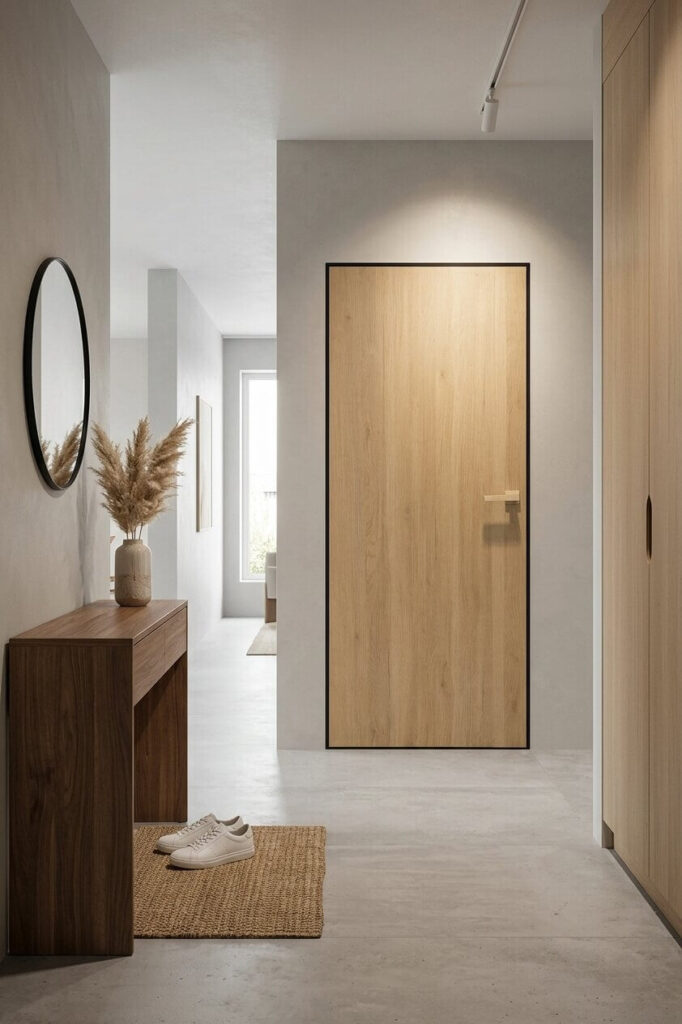
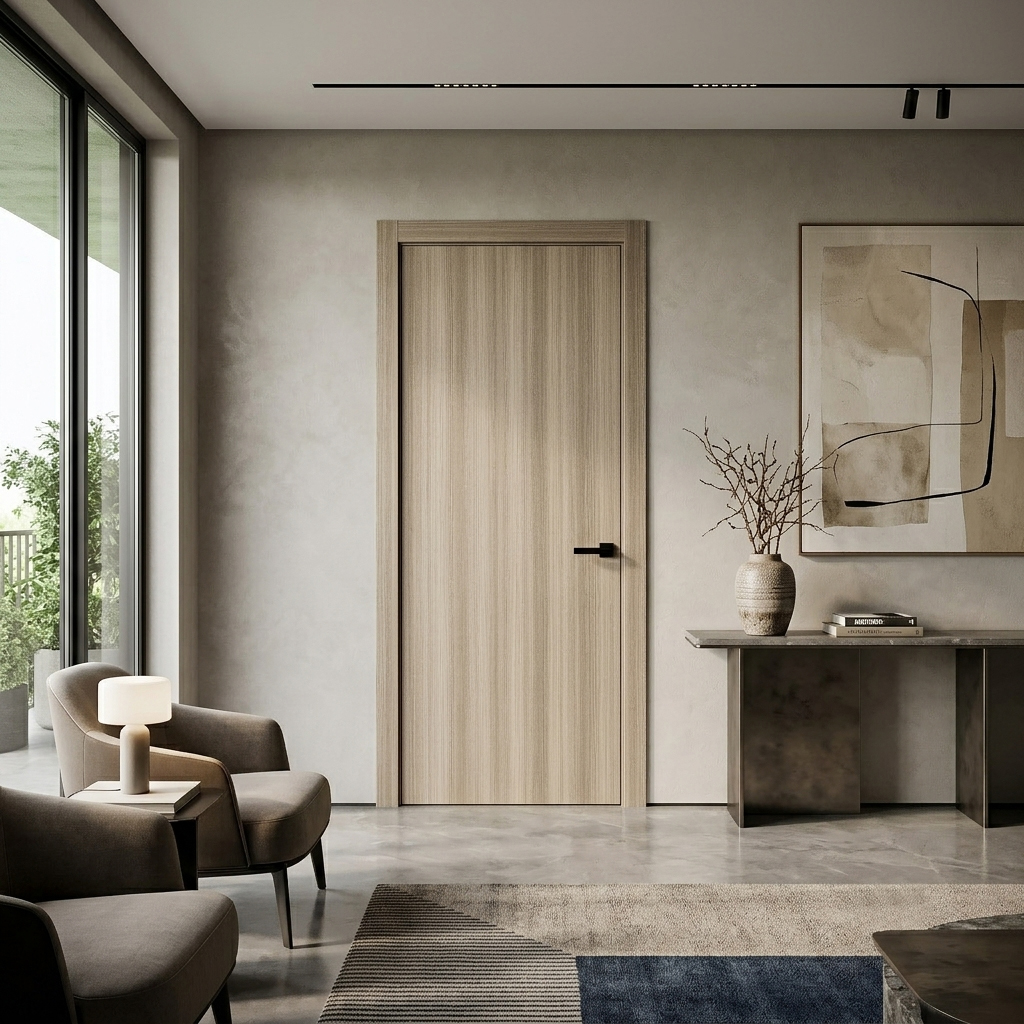
There’s a reason high-end interior designers pay close attention to door selection: it’s one of the more effective ways to signal quality without an enormous budget. Flush, minimalist doors, true frameless designs, and glass panel doors in the right spaces create a sense of custom, considered design – the kind of detail that makes a buyer say a home feels “special,” even if they can’t immediately explain why.
This effect is particularly relevant in competitive markets like San Diego and Orange County, where buyers are touring multiple similarly priced homes in a single afternoon and forming fast, largely emotional comparisons between them. In a market with tight inventory and well-informed buyers, small differentiators – the kind that don’t show up in square footage or bedroom count – genuinely move the needle on how competitive a listing feels.
It’s worth being realistic here too: this effect is strongest in mid-to-upper price bands, where buyers are actively comparing design quality between comparable homes. In more budget-driven segments of the market, buyers are focused primarily on price and condition, and interior door finish matters comparatively less. Matching the level of investment to your home’s price point and neighborhood comps – the same principle that governs kitchen and bathroom ROI – applies here too.
4. Durability: The Value That Shows Up Over Years, Not at Closing
Even setting resale aside, there’s a durability argument for upgrading interior doors that’s easy to overlook. Hollow-core builder-grade doors – the default in most tract housing – are inexpensive to manufacture but don’t hold up well over time. They dent easily, warp with humidity changes, and rarely operate as smoothly after several years of daily use.
Solid, European-manufactured doors are built differently: multi-layer construction for dimensional stability, factory-applied finishes that resist wear far better than site-applied paint, and precision hardware designed for a longer service life. For homeowners planning to stay in a home for years rather than sell soon, this is where the real, tangible payoff shows up – not as a resale number, but as doors that still look and function like new a decade later, in a climate that puts real stress on materials through dry heat, coastal humidity, and temperature swings.
5. Trend-Aligned Design Without a Full Renovation Commitment
One of the more practical advantages of an interior door upgrade is scope. Unlike a kitchen or bathroom remodel, which typically requires committing to a full renovation timeline and budget, replacing interior doors is a contained, relatively fast project that can meaningfully update a home’s look without touching layout, plumbing, or electrical.
For homeowners wanting a more current look – clean minimalist panels, a frameless design, richer wood or matte finishes – this is one of the lower-risk ways to modernize a home’s feel room by room, without the disruption or expense of a structural remodel.
So, Should You Upgrade Your Interior Doors Before Selling?
The honest, data-grounded answer: it depends on your specific home and market position.
It’s likely worth it if:
- Your current doors are visibly outdated, damaged, or inconsistent from room to room
- You’re in a competitive price bracket where buyers are comparing multiple similar homes
- You’re already planning other cosmetic updates (paint, flooring) and can bundle the work efficiently
- You plan to stay in the home for years and want the durability and comfort benefits regardless of resale
It’s less critical if:
- Your existing doors are in good working condition and stylistically neutral
- You’re in a price segment where buyers are prioritizing price over design details
- Your renovation budget is better spent on higher-ROI projects first – exterior curb appeal, a minor kitchen refresh, or fresh interior paint, all of which carry stronger, better-documented returns
A useful rule of thumb, consistent with how the broader renovation ROI data behaves: prioritize the cheap, highly visible fixes first (paint, fixtures, door hardware) before committing to a full interior door replacement, unless your current doors are genuinely holding the home back.
The Bottom Line
Interior doors won’t top a resale ROI ranking the way a garage door or a steel entry door will – there’s simply no dataset that tracks them that precisely. But dismissing them as low-impact would be a mistake. They’re present in every room, they shape a buyer’s moment-to-moment impression of quality and care, and – done well, with genuine European craftsmanship rather than a builder-grade swap – they deliver real, lasting functional benefits whether or not you’re selling anytime soon.
The honest framing is this: interior doors are a supporting player in a home’s overall impression, not a headline renovation. But in a market where buyers are comparing homes down to the smallest details, supporting players matter more than they used to.
Considering an Upgrade?
Diana Doors helps homeowners across San Diego and Orange County – including Irvine, Chula Vista, El Cajon, and La Mesa – upgrade to premium European interior doors, with custom sizing, over 50 finishes, and precise, low-disruption installation. Schedule a consultation to see which upgrade makes the most sense for your home and your goals.