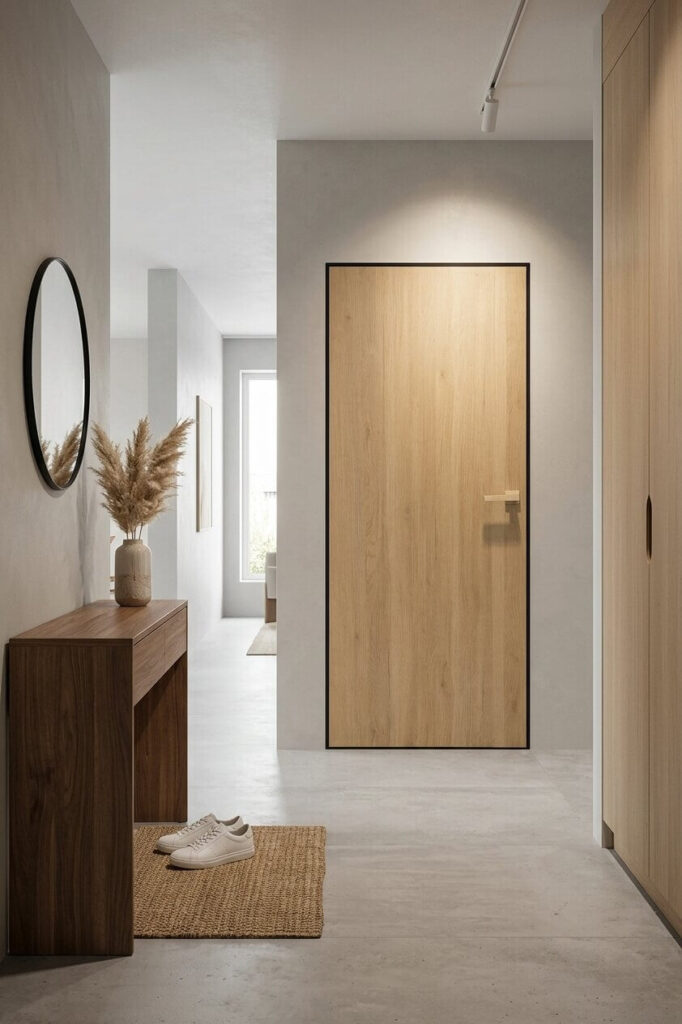
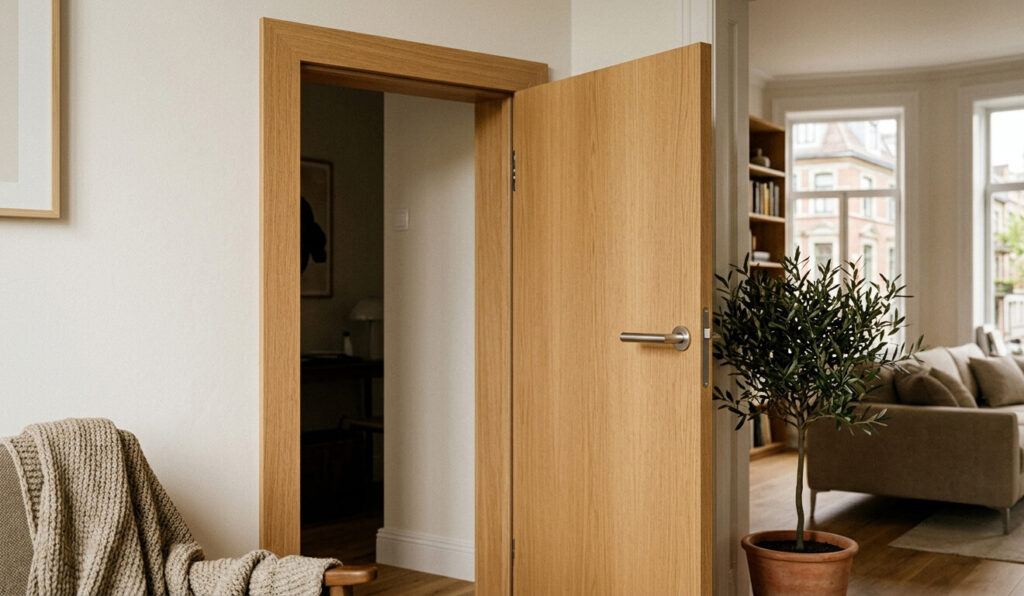
If you’ve ever walked into a beautifully designed home and noticed how the doors feel different — heavier, quieter, more refined — there’s a good chance those were European doors.
In the United States, interior doors are often treated as an afterthought. Builders install the cheapest option that meets code, and homeowners rarely question it. But as more people invest in high-end renovations and premium living spaces, the gap between standard American interior doors and their European counterparts is becoming impossible to ignore.
This guide breaks down exactly what makes European interior doors superior — across materials, soundproofing, hardware, security, design, and long-term value. If you’re renovating a home in San Diego or Southern California and want to make the right decision, this is what you need to know.
What We Mean by “European Doors”
European interior doors are manufactured in countries like Poland, Italy, Germany, and Spain under strict quality standards that simply don’t exist in the mass-market American door industry. These doors are designed for dense urban housing and high-end residential construction where quality, acoustics, and aesthetics all matter equally.
They are sold and installed across Western Europe as a standard — not a luxury upgrade. In the US market, they represent a genuine premium alternative to what most builders offer by default.
1. Materials: Density, Stability, and Longevity
The most fundamental difference between European and American interior doors starts with what’s inside them.
American hollow-core doors — the type installed in the vast majority of US new construction — consist of two thin sheets of wood veneer or MDF stretched over a cardboard honeycomb interior. They are lightweight, inexpensive, and easy to produce at scale. They are also fragile, acoustically useless, and prone to damage from everyday use.
European interior doors are built with high-density MDF (Medium Density Fiberboard) or HDF (High Density Fiberboard) cores. Some premium lines use engineered solid wood or real wood veneer over a dense composite core. The result is a door that:
- Feels solid and substantial when opened or closed
- Resists dents, scuffs, and impact damage
- Holds hardware firmly without wobbling or loosening over time
- Maintains its shape and dimensions across temperature and humidity changes
In San Diego’s climate — where coastal humidity and temperature swings are a reality — door stability matters. A hollow-core door can warp or swell seasonally. A properly constructed European door with an HDF core will hold its geometry for decades.
2. Soundproofing: The Difference You’ll Notice Every Day
This is where the gap between European and American doors becomes most obvious — and most consequential for everyday life.
A standard hollow-core American interior door has an STC (Sound Transmission Class) rating of approximately 20–25. To put that in plain language: voices from the next room are clearly audible. A normal conversation sounds almost as if the door isn’t there. For home offices, bedrooms, children’s rooms, or any space where privacy matters, this is a significant problem.
European interior doors with solid HDF or MDF cores typically achieve STC ratings of 32–42, depending on the model and installation. That’s the difference between hearing a conversation and hearing a faint murmur. At the higher end, it’s the difference between hearing anything at all.
This matters particularly in:
- Home offices — where Zoom calls and focus work require acoustic separation
- Master bedrooms — where sleep quality depends on noise reduction
- Children’s rooms — where parents and kids both need quiet
- Open-plan homes — where zoning without walls requires doors that actually block sound
The soundproofing advantage of European doors isn’t a marketing claim. It’s a direct result of door mass and density — physics that hollow-core construction simply cannot replicate.
3. Hardware: The Part Most Buyers Overlook
A door is only as good as the hardware it runs on. This is an area where European manufacturing philosophy diverges sharply from American market norms.
Standard American door hardware is typically selected for cost. Hinges are surface-mounted and visible. Latches are basic spring mechanisms. Handles are often made from zinc alloy with a thin chrome or brushed finish that wears within a few years.
European door hardware — particularly from German and Italian manufacturers — operates on a different standard entirely:
- Concealed (hidden) hinges are common in European door systems. They are adjustable in three dimensions, completely invisible when the door is closed, and designed to carry heavy door weight without sagging over years of use.
- Magnetic latches replace traditional spring latches in many premium European lines. They close silently, require no mechanical force, and eliminate the rattling and clicking of conventional hardware.
- Handle sets are typically solid brass or stainless steel with a durable PVD coating that resists scratching and corrosion for the lifetime of the door.
For homeowners who’ve replaced cheap hinges or handles on American doors every few years, this difference translates directly into lower long-term maintenance costs — and a noticeably more refined daily experience.
4. Locks and Security
Interior door security in American residential construction is minimal by design. Most hollow-core doors with standard locksets offer negligible resistance to forced entry — the door itself would fail before the lock.
European interior doors, particularly those with solid cores and proper locksets, offer significantly better resistance. More importantly, European-standard lock mechanisms — including multi-point locking systems available on premium lines — are engineered to higher tolerances with better materials.
For rooms where security or privacy genuinely matters — a home office with sensitive documents, a personal safe room, or simply a bedroom where privacy is expected — the lock quality difference between European and American door systems is meaningful.
5. Design and Aesthetics
Walk through a European design showroom and then through an American home center, and the aesthetic contrast is immediate.
American interior doors tend to follow a limited set of traditional profiles: six-panel colonial, flat hollow-core, basic French door. The design vocabulary is narrow, driven by production efficiency and builder-grade cost targets.
European door design reflects decades of collaboration between architects, interior designers, and manufacturers. The result is a far broader design language:
- Flush doors with perfectly flat surfaces and seamless finishes
- Frameless systems where the door and wall appear as a continuous plane
- Lacquered finishes in matte, satin, or high-gloss in virtually any RAL color
- Textured wood-effect surfaces that provide the warmth of natural wood without the maintenance
- Integrated glass panels in frosted, smoked, or clear variants with clean European profiles
For modern, minimalist, or contemporary interiors — which represent the dominant design direction in Southern California luxury residential — European doors are the natural choice. They are designed to disappear into architecture or become a deliberate design feature, rather than being a visual leftover from builder-grade construction.
6. Longevity and Long-Term Value
A hollow-core American door installed in new construction might last 10–15 years before it shows significant wear — damaged surfaces, sagging hardware, warped edges, faded finish.
A well-made European interior door, properly installed, is realistically a 30–50 year product. The materials don’t degrade the same way. The hardware doesn’t wear out. The finishes — particularly matte lacquer on HDF — resist everyday contact damage far better than veneer or paint on hollow-core substrates.
When you factor in replacement costs, installation labor, and the disruption of renovating a door that failed prematurely, the price difference between a quality European door and a builder-grade American door narrows considerably. Over the life of a home, premium European doors are frequently the more economical choice.
Side-by-Side Comparison
| Feature | American Hollow-Core | European Interior Door |
| Core material | Cardboard honeycomb | HDF / MDF / Solid core |
| STC (soundproofing) | 20–25 | 32–42 |
| Weight | 15–25 lbs | 40–90+ lbs |
| Hardware | Basic zinc alloy | Solid brass / steel, concealed |
| Finish durability | Low | High |
| Design options | Limited | Extensive |
| Expected lifespan | 10–15 years | 30–50 years |
| Typical cost | $80–$200 | $400–$1,500+ |
Who Should Consider European Interior Doors?
European interior doors are the right choice for:
- Homeowners renovating a primary residence and want to do it right once
- Anyone building or remodeling a home office, master suite, or high-use living space
- Buyers of luxury homes in San Diego, Irvine, Newport Beach, or the broader Southern California market
- Interior designers and architects specifying doors for clients who expect premium quality
- Anyone who has replaced hollow-core doors before and doesn’t want to do it again
They are not the right choice if you’re flipping a property on a tight margin and need the lowest possible door cost per unit. For everything else, the investment is justified.
European Interior Doors in San Diego
Diana Doors specializes exclusively in premium European interior doors for San Diego and Orange County homeowners. Every door in our collection is sourced from European manufacturers with a documented production standard — not mass-market imports with a European-sounding name.
We handle the full process: consultation, measurement, delivery, and professional installation. Most projects are completed in a single day.
If you’re ready to see what European doors look like in a real interior, browse our collections or contact us to schedule a consultation at your home.