Working from home sounded wonderfully simple a few years ago. Open the laptop. Pour some coffee. Answer emails. Maybe admire the view for a second before pretending not to notice the laundry basket sitting three feet away.
Reality had other plans.
Dogs bark. Coffee grinders develop the personality of small jet engines. Someone decides this exact moment is perfect for vacuuming the hallway. A delivery driver appears precisely when you’re halfway through explaining quarterly projections to twelve people whose microphones should probably remain muted forever.
The room matters. More specifically, the door matters.
We obsess over standing desks, ergonomic chairs, expensive monitors with color accuracy so perfect they could probably identify fruits in a grocery store, yet the thing separating work from the rest of the house sometimes gets chosen in about six minutes. That’s beginning to change.
For the modern interior doors home office requirements make an amazing yet challenging task of perfect integration. The possible solutions aren’t simply filling an opening in the wall—they’re shaping how people concentrate, communicate, and, perhaps most importantly, escape. Not forever. Just until the meeting ends.
The Office Is No Longer Temporary
There was a period when people believed working from home would be temporary. A folding table. A dining chair that slowly became an orthopedic concern. One extension cord doing far more than it was emotionally prepared to handle. Now home offices are becoming permanent architectural spaces. They deserve the same level of thought as kitchens, bedrooms, or living rooms because they’re expected to perform every single day.
A door isn’t merely something that closes anymore. It helps establish professional boundaries inside a personal environment, which sounds almost philosophical until you’re trying to negotiate a contract while somebody downstairs discovers the blender’s highest setting.
Perspective arrives quickly.
Silence Has Become Surprisingly Expensive
People often imagine luxury through materials. Natural stone. Custom cabinetry. Beautiful hardwood floors. Those things matter, but genuine silence? That has quietly become one of the most desirable features in modern homes.
Sound behaves like an overly curious neighbor. It wanders into places where nobody invited it. Hallways amplify conversations. Open floor plans carry every laugh, every television commercial, every attempt at learning the drums. Some hobbies really should come with architectural warnings.
High-quality interior doors for home offices help interrupt that journey. Sound always finds creative solutions eventually but they do enough to transform a distracting workspace into one where concentration feels almost effortless.
Privacy Isn’t Just About Closing the Door
Privacy gets misunderstood. People picture complete isolation, as though productivity only happens inside tiny sealed boxes where nobody can find you until dinner.
That’s rarely the goal.
Most professionals simply want control. Control over interruptions. Control over conversations. Control over the moment when work begins and the equally important moment when it ends.
Well-designed interior doors for home offices create that psychological boundary as much as the physical one. Crossing the doorway starts feeling like stepping into a different mode of thinking. The kitchen remains the kitchen. The office becomes, well, a workplace.
Our minds enjoy little rituals like that.
Good Design Lowers the Volume
The visual atmosphere of an office influences concentration just as much as background noise. Decorative panels, heavy moldings, oversized hardware—there’s nothing inherently wrong with them. They simply ask for attention more often.
Clean architecture asks less.
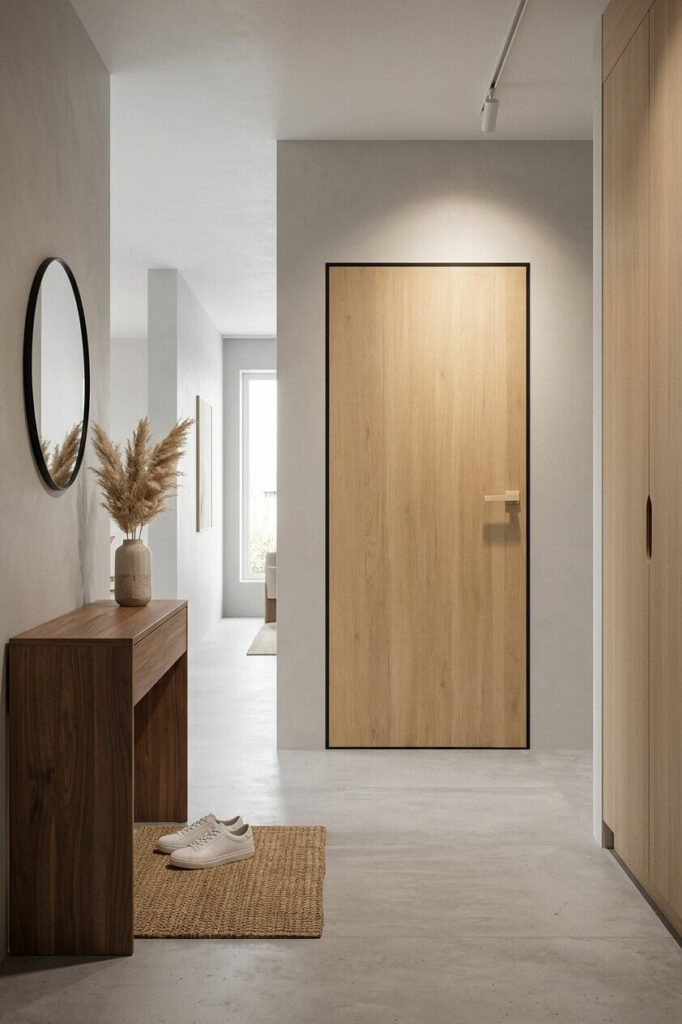
That’s one reason contemporary interior doors home office designs continue leaning toward flush surfaces, concealed frames, and subtle finishes. They reduce visual clutter, allowing the mind to spend slightly less energy processing unnecessary details.
It’s difficult to measure. Easy to feel. Architecture has always preferred feelings over spreadsheets, even though engineers pretend otherwise.
Glass Doesn’t Automatically Destroy Privacy
Mention glass office doors and somebody inevitably says the same thing. “But everyone can see inside.” Sometimes. Not always.
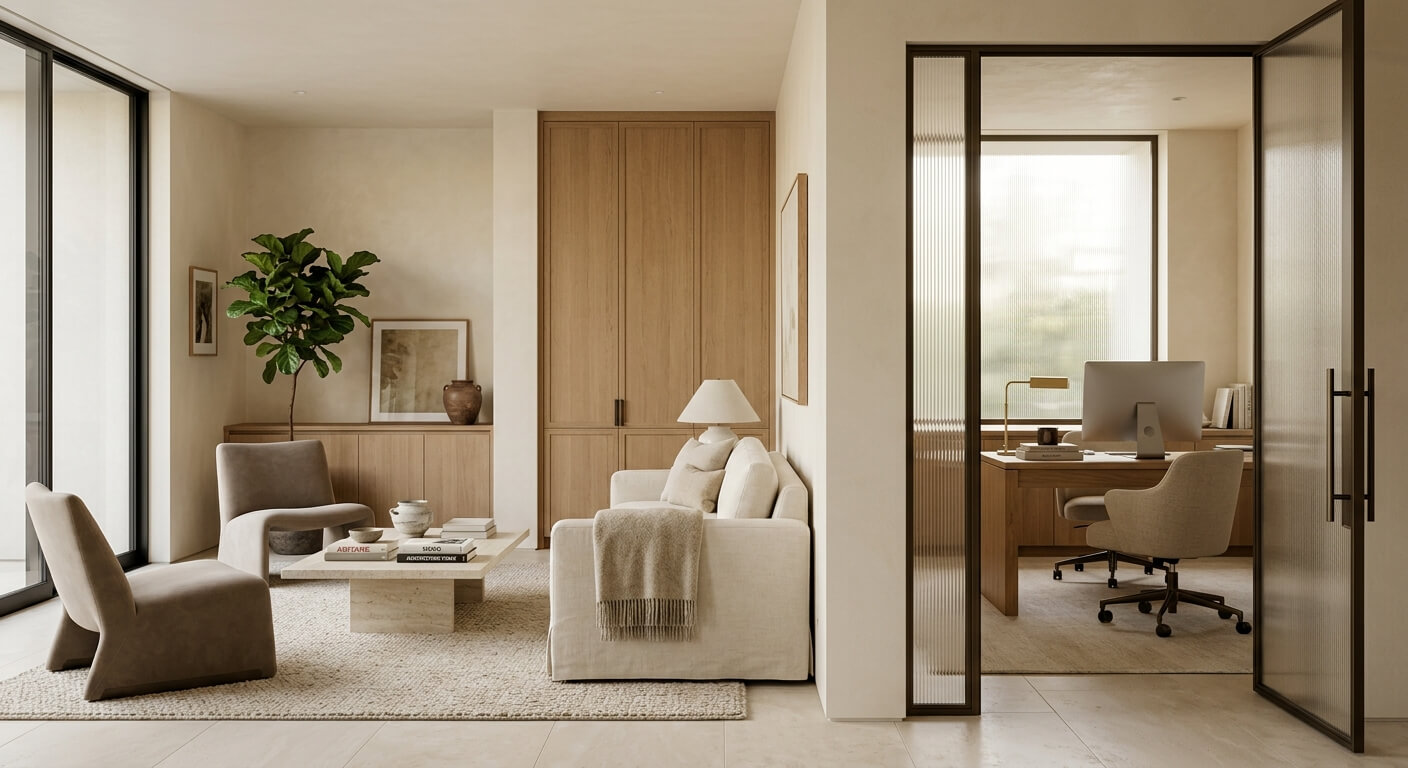
Glass has become much more sophisticated than people remember. Soft frosted finishes, textured surfaces, carefully controlled transparency, and slim framing systems allow daylight to travel freely while still preserving a comfortable sense of separation.
That’s the interesting balance. You remain connected to the rest of the house without feeling permanently on display.
Modern interior doors often achieve privacy by carefully filtering visibility rather than eliminating it altogether. There’s something oddly elegant about that approach. Life doesn’t always require absolute answers.
Light Deserves Its Own Workspace
Natural daylight changes everything. Mood. Energy. Attention span. Even coffee tastes marginally better beside a bright window. No scientific evidence whatsoever, just personal experience accumulated over too many mornings.
A thoughtfully positioned office door helps distribute daylight throughout the home instead of trapping it inside one room. Glass panels, narrow sidelights, or carefully aligned openings allow sunlight to continue drifting through adjacent spaces, creating interiors that remain bright without becoming exposed.
The best interior doors don’t interrupt light. They negotiate with it. Sunlight usually wins, by the way.
Materials Quietly Influence Productivity
It’s strange how different materials create different emotional responses. Natural oak feels relaxed. Walnut introduces warmth with a little more confidence. Painted finishes become wonderfully understated when paired with clean architectural lines. Matte surfaces absorb reflections in a way glossy coatings never quite manage.
None of these choices directly improve productivity. Or maybe they do. A comfortable room invites longer periods of focused work simply because it stops distracting you every five minutes. The surrounding environment fades into the background, exactly where good design prefers to live.
That’s why premium interior doors home office projects lean toward increasingly focus on texture, proportion, and craftsmanship instead of decorative flourishes that lose their novelty somewhere around the third Tuesday.
The Office Should Still Feel Like Home
Here’s an easy mistake—trying to make a home office resemble a corporate office.
Gray carpet. Harsh lighting. Enough glass to make you wonder whether birds approve of the design. No thanks. Working from home succeeds precisely because home doesn’t feel like headquarters.
The door should support that atmosphere rather than contradict it. Interior doors should be designed to echo the rest of the home’s architecture to create continuity instead of interruption. The workspace feels connected to everyday life while still maintaining its own identity. It’s a delicate balance.
Small Details Carry More Weight Than You Expect
Doors spend most of their lives opening and closing. Thousands of times. Eventually you stop noticing the movement itself and begin noticing everything surrounding it.
A handle that feels solid. A latch that closes quietly instead of announcing itself to three neighboring rooms. Hinges that remain invisible. Edges that line up so precisely they almost seem imaginary. Those tiny experiences accumulate over months and years.
High-end interior doors home office projects usually get aren’t really about one spectacular feature. It’s about dozens of thoughtful decisions quietly cooperating every single day. Nobody compliments perfect alignment during a video call—they benefit from it anyway.
The Door Becomes Part of Your Routine
Opening the office door each morning becomes a ritual. Closing it at the end of the day becomes another one. Those small transitions help separate professional responsibilities from personal time in ways that software never will.
Computers shut down. Meetings end. Notifications eventually stop multiplying like particularly determined rabbits. The physical act of leaving the office matters because it tells your mind something digital tools cannot quite communicate. The work is done, time to get some rest.
Good interior doors quietly support that daily rhythm without demanding recognition for it. The best decisions usually disappear into ordinary life until you imagine living without them. Then you suddenly notice how much work they were doing all along.
A home office doesn’t need to feel isolated from the rest of the house, and it certainly shouldn’t resemble a corporate cubicle transported into your spare bedroom. It simply needs a doorway that understands both worlds. One side belongs to meetings, deadlines, and concentrated thought. The other belongs to ordinary life, where coffee grows cold, somebody inevitably asks where the charger went, and evening sunlight slowly replaces the glow of the monitor. Somewhere between those two worlds sits a door, quietly doing much more than anyone gives it credit for.