
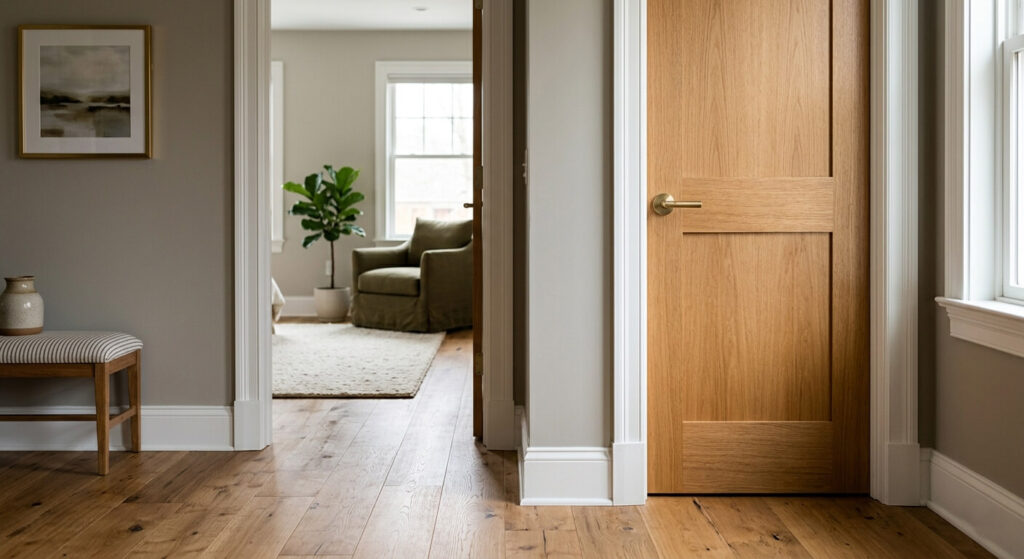
Doors are bigger than people think. Not physically, well, yes — physically too, but visually. They take up a decent chunk of your wall, so whatever color or finish you choose, it sets a tone.
You change the door, you change the room. Simple as that.
Imagine walking into a finished apartment with nice flooring, soft wall tones, everything balanced — and then these dark, glossy doors just pull all the attention. Not in a good way. Feels like they are arguing with the rest of the space. We’ve been there, we know how it is.
What we usually do is swap such nonsense for a matte, neutral finish from Diana’s Doors, and suddenly everything settles down. Like the room exhales.
Matching Doors with Flooring Tones
Now, floors — this is where things can go sideways fast if you’re not careful.
A simple rule, but not a strict one: doors don’t have to match the floor exactly, but they should relate to it. Same temperature, similar undertones. Warm with warm, cool with cool.
Oak flooring? Works well with soft beige or natural wood doors. Dark walnut floors? You can go lighter for contrast, but keep it in the same tonal family.
We’ve seen people try to match everything perfectly. Floor, door, trim — it usually ends up feeling flat. A little variation helps. Not chaos, just controlled difference.
Diana’s Doors offers a wide range of finishes, so finding that middle ground isn’t too hard. The key is seeing samples in your actual space. Lighting changes everything.
Should Doors Match the Walls or Stand Out?
This one depends on what you’re going for.
If you want a calm, minimal look, then match the doors to the walls. Especially with frameless designs. The door kind of disappears, and the space feels larger, cleaner. Works great in smaller apartments.
If you want contrast — go for it, but keep it intentional. A darker door against lighter walls can add depth, but it needs to tie into something else in the room. Flooring, furniture, maybe trim. Otherwise, it feels random.
We once had a client insisting on bold black doors in a very light interior. Looked striking at first, sure. But over time, it felt a bit heavy. We softened the contrast later — still defined, just less aggressive.
How Trim and Baseboards Affect the Final Look
Trim and baseboards: easy to overlook, but they frame everything. Literally.
Traditional setups use visible casing around doors. That can work, especially in classic interiors. But in modern spaces, people are leaning toward minimal or even no trim, a thing known as frameless installations.
Baseboards should connect the door to the floor visually. If they clash, the whole composition feels off. Matching baseboards to the door can create a clean line. Matching them to the wall keeps things subtle.
Diana’s Doors often works with frameless systems, where trim disappears completely. It’s a different look — more architectural, less decorative. Not better or worse, simply more precise.
Popular Safe Combinations for Modern Interiors
If you’re unsure, there are a few combinations that tend to work consistently.
- Light walls, light doors, and natural wood floor: Clean, bright, hard to mess up.
- Neutral walls, slightly darker doors, matching baseboards: Adds depth without overwhelming the space.
- Monochrome setups: Same tone for walls and doors, minimal trim — very modern, very calm.
We’ve used all of these across projects, and they hold up well over time. Not flashy, but reliable. And honestly, reliability in design is underrated.
When Samples Help Avoid Costly Mistakes
Colors and finishes look different in showrooms. Lighting, surrounding materials, even time of day — it all changes perception.
Bringing samples into your space, placing them against floors and walls, seeing how they behave — that’s where real decisions happen.
Diana’s Doors usually supports this process, along with on-site measurements and consultation. Helps connect all the elements before anything is produced or installed. Because once doors are installed, changing them isn’t exactly a quick fix. Better to pause, test, and be sure.
If you’re planning to upgrade your interior doors, Diana Doors can help with product selection, custom sizing, and professional installation in San Diego.