People love attaching countries to products. German cars. Swiss watches. Japanese motorcycles. Somewhere along the way we decided geography could summarize craftsmanship in a single word. Convenient. Also occasionally misleading.
The same thing happens with interior doors. Someone says, “We only want Italian doors.” Someone else immediately replies, “I heard German ones are better.” Then another homeowner quietly asks, “What about Poland?” Now the banter gets interesting.
The Italian vs European doors comparison isn’t really about deciding which country wins some invisible championship. Europe isn’t one giant factory where everyone builds the same thing with different accents. Every country developed its own manufacturing traditions, design priorities, engineering philosophies, and architectural influences.
Some focus on elegance. Some obsess over precision. Others quietly become manufacturing powerhouses without telling the entire world about it. The best choice usually has less to do with passports than people imagine. And much more to do with what kind of home you’re creating.
Why Country of Origin Matters But Not in the Way Most People Think
Here’s a little secret. Many homeowners ask where a door comes from. Very few ask how it was built. Honestly, the second question is usually more important.
A beautifully engineered Polish door will outperform a poorly made Italian one every single time. Likewise, an exceptional German manufacturer can produce extraordinary products while another factory, just down the road, delivers something entirely average.
Countries don’t build doors. Companies do. Still, national traditions absolutely influence design. That’s where things become fascinating.
Europe Never Had One Design Philosophy
Imagine asking, “What’s American food?” Where do you even begin? Texas barbecue? New England lobsters? Idaho venison? Chicago pizza? They’re all American. They’re also wildly different. Europe works the same way.
Italian architecture evolved differently than German architecture. Polish manufacturing developed different strengths than Scandinavian minimalism. Those histories still shape today’s interior doors.
Italian Doors: Design Comes First
If Italy had a design philosophy, it might sound something like this: “If you’re going to make something functional, why shouldn’t it also be beautiful?” It’s a compelling argument.
Italian manufacturers have long emphasized elegance, proportion, texture, and refined finishes. Sometimes flashy but the best Italian doors usually feel restrained rather than extravagant. Luxury doesn’t always need gold handles and carved moldings. Sometimes luxury is simply perfect balance.
Italian interior doors often feature exceptional veneers. Beautiful lacquer finishes. Warm natural wood. Subtle textures. Everything feels intentional, nothing appears accidental. Touch an Italian wood veneer and you immediately understand something. Good materials don’t need explanations since they introduce themselves.
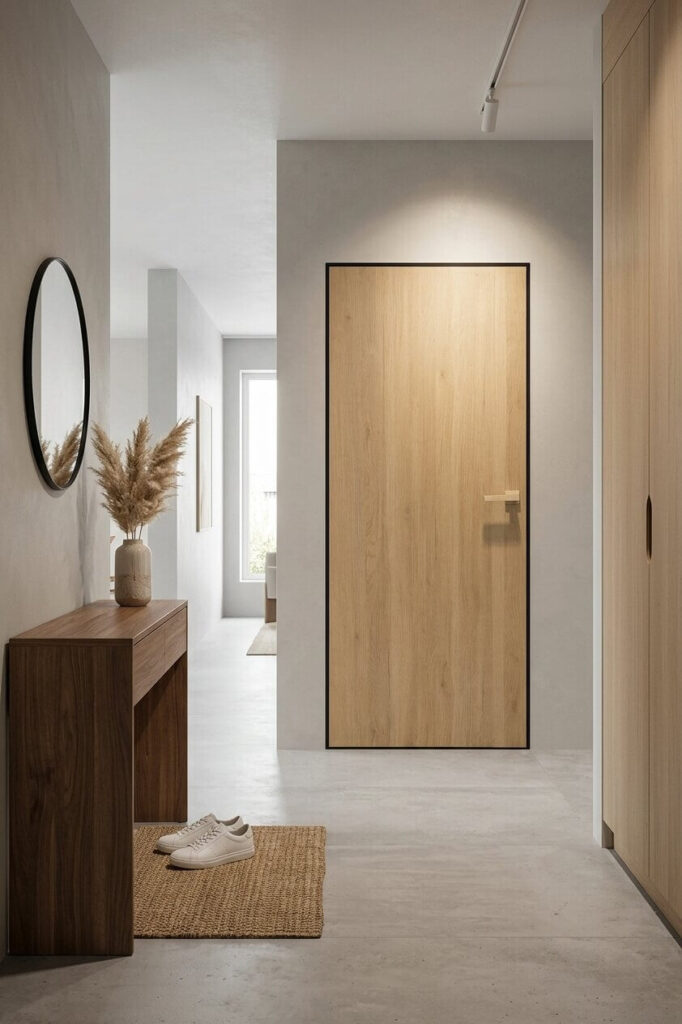
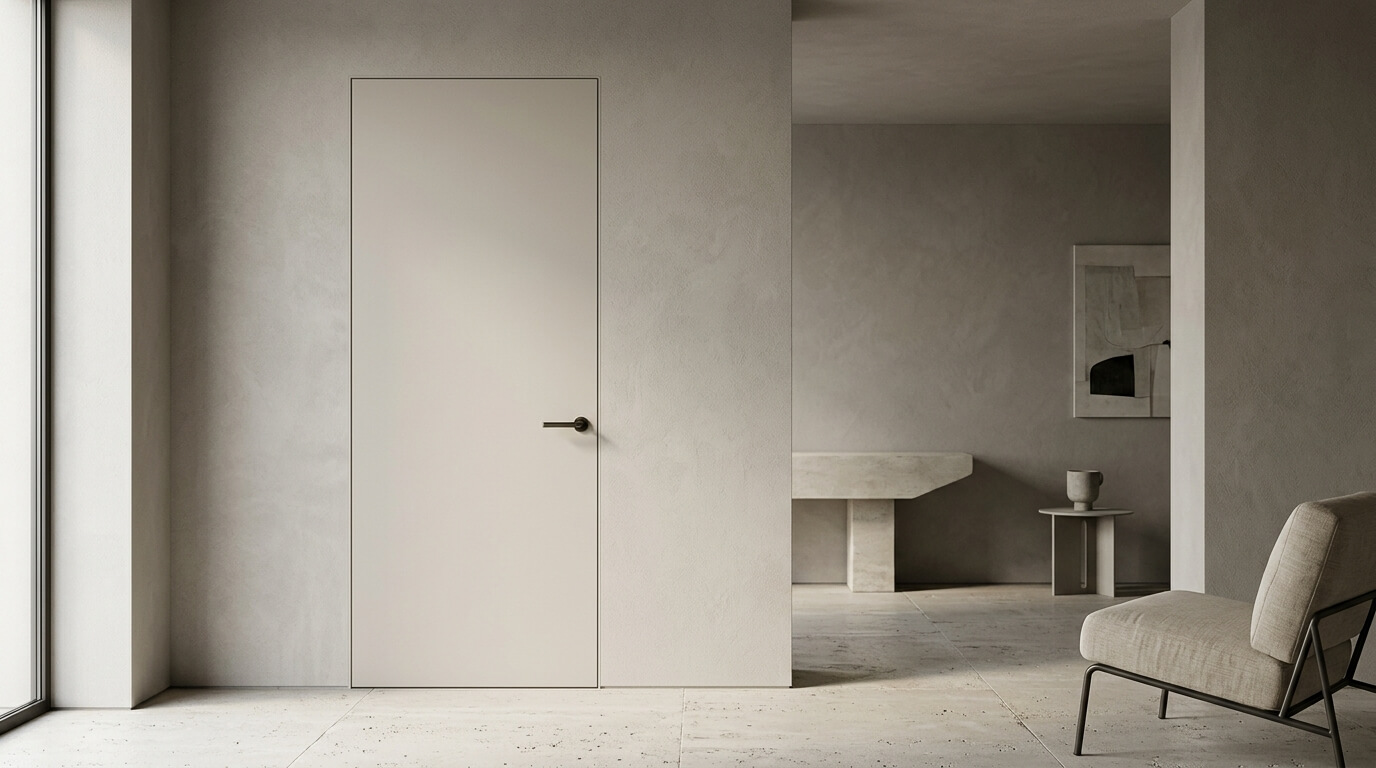
Today’s Italian interiors rarely resemble the ornate European homes people imagine from old movies. Instead they’re remarkably contemporary. Flush surfaces, minimal hardware, architectural proportions, slim details, simple geometry—Italian designers have an unusual ability to make restraint feel luxurious.
German Doors: Engineering Before Everything Else
Germany approaches manufacturing rather differently. Engineers tend to receive more admiration than decorators. That’s not criticism. It’s a compliment.
German products often prioritize function with extraordinary discipline. If something moves, it should move perfectly. Every time. For decades.
There’s something deeply satisfying about that philosophy.
German manufacturers obsess over tolerances. Alignment. Mechanical performance. Consistency. Those invisible measurements homeowners never notice directly often determine whether a premium door still operates beautifully twenty years later.
Engineering hides remarkably well. Until something isn’t engineered properly—then suddenly everyone notices.
German interior doors often emphasize longevity over trends. Finishes remain timeless. Hardware feels substantial. Construction focuses on reliability. Some products almost seem built with the quiet assumption that nobody should ever need to replace them.
Ambitious. Admirable.
Polish Doors: Europe’s Quiet Success Story
Here’s where many American homeowners become surprised. Poland has become one of Europe’s most respected interior door manufacturing centers. While Italy built its reputation through design and Germany through engineering, Poland developed something equally valuable. Balance.
Polish manufacturers now produce premium European doors combining exceptional engineering, beautiful contemporary design, advanced manufacturing technology, and competitive value.
It’s one of Europe’s best-kept architectural secrets. Although perhaps not for much longer.
People sometimes carry outdated assumptions. They imagine Polish manufacturing based on memories from decades ago. Today’s reality looks completely different. Modern Polish factories utilize sophisticated CNC machining, automated finishing systems, precision quality control, engineered wood technology, and advanced European hardware. Many manufacture doors for internationally recognized luxury brands. Sometimes the label changes. The craftsmanship doesn’t.
One reason homeowners searching “Italian vs European doors” online increasingly discover Polish manufacturers is simple. They often receive extraordinary quality for the investment. Premium materials. Solid-core construction. Architectural finishes. Hidden hinges. Magnetic latches. European engineering. Without unnecessary marketing mythology attached to the country of origin.
Italian vs European Doors: The Comparison Everyone Asks About
Here’s where the discussion usually lands. Someone says, “Are Italian doors actually better?” The honest answer? Sometimes.
Let’s slow down for a moment.
Design Philosophy
Italian doors generally place enormous emphasis on visual elegance. German doors emphasize technical refinement. Polish manufacturers increasingly combine both approaches. One isn’t superior—they’re simply solving the same problem differently.
Like three excellent chefs cooking completely different meals from equally good ingredients. Taste enters the conversation.
Construction Quality
Premium manufacturers from all three countries produce exceptional products. Solid-core construction. Engineered stability. Luxury veneers. High-quality finishes. Precision machining.
The important distinction isn’t Italy versus Germany versus Poland. It’s premium manufacturer versus average manufacturer. That’s a much more useful comparison.
Hardware
Most premium European manufacturers source outstanding hardware regardless of country. Concealed hinges. Magnetic latches. Architectural handles. Advanced locking systems.
Interestingly, hardware suppliers often serve manufacturers across multiple countries. The hinge itself rarely cares which language people speak in the factory.
What Actually Matters More Than Country?
Here’s the plot twist: country of origin sometimes isn’t the deciding factor.
Several other questions deserve attention first.
Is the Door Solid-Core?
This influences weight, acoustics, durability, and overall feel more than nationality ever will. Close a properly built solid-core European door. You’ll understand immediately.
Some things don’t require explanation. Only experience.
How Stable Is the Construction?
Premium engineered cores resist warping, swelling, and seasonal movement. Especially important in climates where temperature and humidity fluctuate.
Construction technology often matters more than geography since physics tends to ignore national borders.
What Hardware Is Included?
Beautiful doors deserve equally beautiful hardware. Concealed hinges. Magnetic latches. Quality handles. Smooth adjustment systems. Luxury emerges through dozens of carefully coordinated components, not just one beautiful panel.
Professional Installation
This deserves repeating. An extraordinary Italian door installed poorly becomes disappointing. An extraordinary Polish door installed poorly does exactly the same. Installation quietly determines everything homeowners experience afterward: opening,
closing, alignment, silence, longevity.
Craftsmanship finishes what manufacturing begins.
Why European Standards Matter More Than National Stereotypes
European manufacturers generally operate under rigorous production standards regardless of country. Advanced machinery. Precision machining. Engineered wood technology. Sophisticated quality control. Sustainable forestry practices. Premium finishing techniques. The continent shares knowledge remarkably well. Innovation travels fast.
A clever manufacturing idea developed in Italy doesn’t politely remain inside Italian borders forever. German engineering influences Polish factories. Italian design inspires German manufacturers. Everyone learns from everyone else.
Competition has a wonderful habit of improving everybody.
Choosing Doors for Your Home, Not Your Passport Collection
Imagine buying wine based only on the country. Possible? Certainly. Wise? Probably not.
Manufacturer matters. Vintage matters. Craftsmanship matters. Doors work similarly. Your home doesn’t need Italian doors because Italy sounds luxurious. It needs exceptional doors because you’ll open them roughly twenty times today. And tomorrow. And next Tuesday.
The country becomes a footnote remarkably quickly. The quality doesn’t.
How Diana Doors Select European Manufacturers
At Diana Doors, conversations about the Italian vs European doors comparison begin with performance rather than nationality. We carefully select European manufacturers based on craftsmanship, engineering, material quality, precision manufacturing, and long-term reliability—not simply because a particular country happens to sound impressive in a brochure.
Our premium European interior door collections include beautifully engineered systems featuring solid-core construction, luxury wood veneers, architectural painted finishes, concealed hinges, magnetic latches, exceptional hardware, and professional installation. Whether a door originates in Italy, Poland, Germany, or another respected European manufacturing region, it earns its place through quality, not geography.
Maybe that’s the nicest thing about today’s European door industry. The old stereotypes have started giving way to something better. Italian manufacturers continue producing breathtaking contemporary designs. German companies keep refining engineering until it borders on obsession. Polish factories quietly build some of the finest interior doors available anywhere, combining precision, beauty, and remarkable value. They compete with one another, borrow ideas from one another, improve because of one another.
So when homeowners ask about European doors, the answer isn’t really hidden inside a map. It’s hidden inside the door itself. Pick it up. Feel its weight. Watch how the grain catches afternoon sunlight. Close it gently and listen to the soft magnetic click settle into silence. Those things don’t speak Italian, German, or Polish. They speak craftsmanship and thankfully craftsmanship sounds exactly the same in every language.