Some home decisions announce themselves immediately. Paint color, kitchen layout, flooring—you know when you like them. Doors are sneakier. Nobody wakes up on a Saturday morning thinking, “Today I shall contemplate the philosophical differences between glass and solid interior doors.” And yet, here we are.
Because somewhere during a renovation, usually after the flooring has been selected and somebody has confidently declared the project “almost finished,” the question appears. “Glass? Or solid?” It sounds simple enough. It actually isn’t.
The discussion around the glass vs solid interior doors comparison isn’t really about picking the prettier option. Both can be beautiful. Both can be modern. Both can be luxurious. The real question is much quieter than that.
How do you want your home to feel? Bright? Private? Open? Cozy? Connected? Peacefully separated? Homes are always like that. They’re built from walls and ceilings and wood and steel, but what people actually remember is the feeling.
A room can feel like a deep breath. Or an airport terminal. Doors have far more influence over that feeling than they ever receive credit for.
Doors Don’t Just Separate Rooms. They Shape Them.
People often think doors are boundaries. They’re also relationships. A solid bedroom door tells the hallway, “You stay over there.” A full-glass office door whispers, “We’re still connected.” Neither message is wrong—they’re simply different conversations.
Architecture has always been about deciding which conversations rooms should have with one another. Sometimes loudly. Sometimes through silence.
Modern Homes Ask Different Questions
Open floor plans changed everything. Suddenly kitchens flowed into living rooms. Dining rooms disappeared into great rooms. Natural light traveled farther than ever before. The walls became fewer. The remaining doors suddenly mattered more.
When something becomes less common, it often becomes more important. That’s exactly why the glass vs solid interior doors comparison has become such a popular discussion in contemporary home design.
Why Glass Interior Doors Have Become So Popular
Today’s European glass interior doors are very different from the frosted office doors or decorative French doors many people imagine. Cleaner, slimmer, more architectural. Less interested in decoration. More interested in light.
There’s a difference.
Natural Light Travels Further
Sunlight is surprisingly generous. It wants to move. Solid walls stop it. Glass doors invite it farther inside.
A hallway that once needed artificial lighting during the afternoon suddenly feels alive. A home office tucked away in the corner borrows daylight from the adjacent living room. An entry corridor begins participating in the rest of the house instead of hiding quietly near the front door.
Light changes mood before it changes appearance. People notice the mood first.
Smaller Homes Feel Bigger
Here’s one of architecture’s oldest tricks. If your eyes can travel farther, the room feels larger. Glass creates visual continuity. Rooms remain separate, yet connected.
You aren’t actually gaining square footage. Your mind simply stops counting walls quite so aggressively.
Modern Design Loves Transparency
Minimalist architecture often favors glass because it reduces visual weight. Instead of another solid surface interrupting the room, you get openness. Airiness. Movement. Furniture becomes more visible. Artwork carries farther. Even shadows become part of the design.
Shadows usually look prettier when sunlight has somewhere to go.
Why Solid Interior Doors Continue Dominating Most Homes
Solid doors have survived for centuries. There’s probably a reason. Several reasons, actually..
Privacy Means More Than Closing a Door
People often think privacy is visual. It isn’t. Not entirely.
Privacy also means hearing less. Feeling separate. Knowing your bedroom actually belongs to you after a long day. Solid-core European doors excel here. Bedrooms become retreats. Bathrooms become comfortable. Home offices become believable workplaces instead of optimistic suggestions.
The door isn’t merely closing. It’s changing the atmosphere.
Better Acoustic Performance
Let’s imagine two situations. Someone’s practicing piano downstairs. Someone else has a Zoom meeting upstairs. Nobody wants to participate in both activities simultaneously.
Solid-core doors reduce sound transmission significantly better than full-glass systems. Not perfectly. Nothing is. But enough to transform everyday living.
Silence isn’t always the goal—boundaries often are.
Bedrooms Usually Prefer Solid Doors
There’s a reason luxury homes continue using solid bedroom doors. Sleep appreciates darkness. Privacy. Quiet.
Glass can certainly work in bedrooms with frosted finishes or specialized glazing, but most homeowners naturally gravitate toward solid doors where rest matters most.
Bedrooms deserve permission to disappear for a while.
Glass vs Solid Interior Doors: Comparing the Trade-Offs
This is where glass vs solid interior doors comparison becomes genuinely interesting.
Every advantage quietly introduces a compromise. That’s not bad design. That’s life.
Privacy
Solid doors win. Pretty clearly. They create complete visual separation while also improving acoustic comfort.
Glass doors, especially clear glass, maintain connection between spaces. That openness feels wonderful in many situations. Hypothetically.
Natural Light
Glass wins. Without question. Light passes through, hallways brighten, interior rooms become more inviting.
Homes feel more spacious. Natural light has an almost magical ability to improve architecture without renovating anything.
Sound Control
Solid-core construction provides noticeably better acoustic performance. Bedrooms, nurseries, media rooms, home offices—solid doors generally provide the stronger solution.
Glass can be engineered for acoustic performance, but standard solid-core systems still maintain an advantage.
Visual Openness
Glass changes how spaces communicate. A home office remains connected to family life. Dining rooms borrow views. Hallways lose that enclosed feeling many older homes struggle with.
Walls become less final. Sometimes that’s exactly the point.
Different Glass Options Change Everything
People often hear “glass door” and imagine complete transparency. Not necessarily.
Glass comes with personality too.
Clear Glass
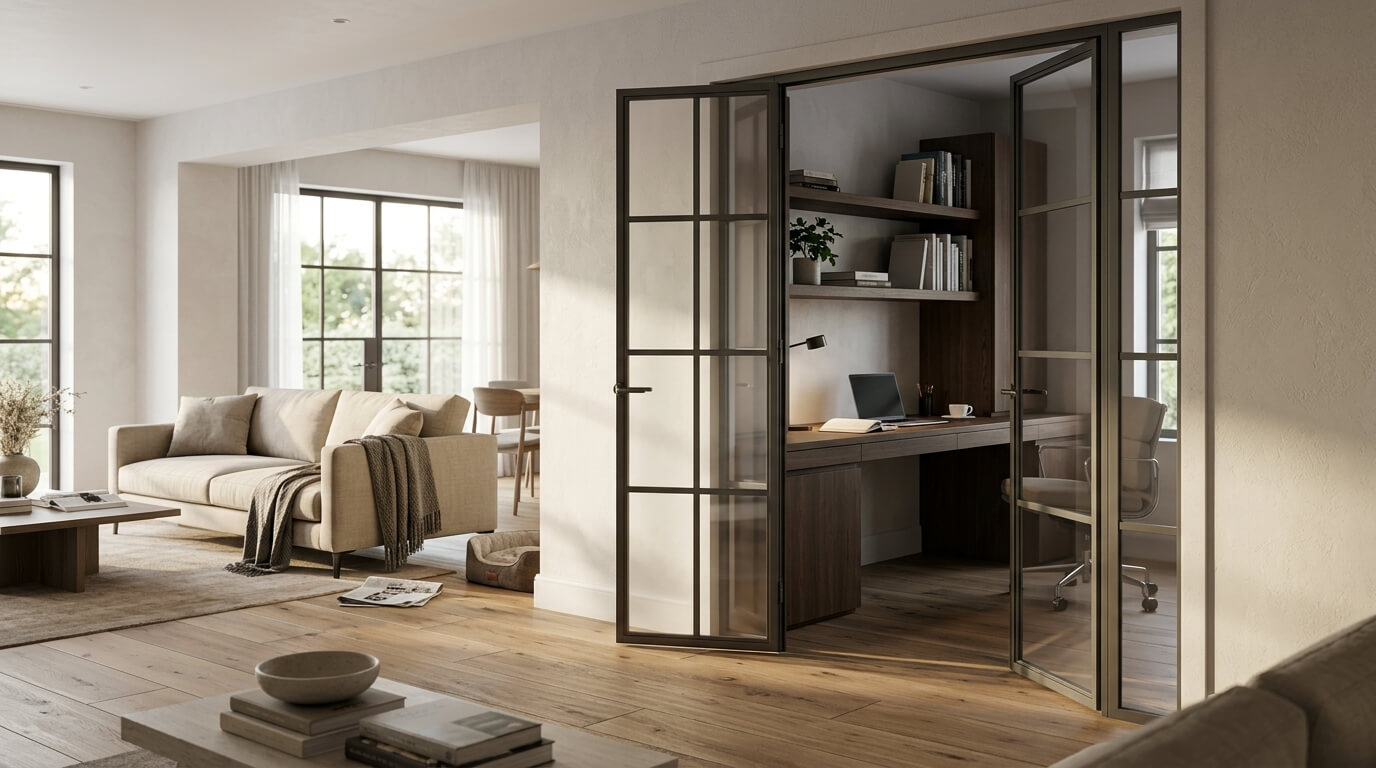
Maximum light. Maximum openness. Best suited for offices, libraries, wine rooms, or spaces where visual connection feels intentional and honest.
Frosted Glass
Privacy improves dramatically while natural light continues flowing through. Bathrooms. Laundry rooms. Certain offices. Frosted glass quietly solves many homeowners’ biggest concerns.
It’s a surprisingly elegant compromise.
Reeded or Fluted Glass
One of the strongest design trends right now. Vertical textures soften visibility while creating remarkable visual character. Light dances differently across reeded glass. Almost like water—exactly like water in certain afternoon sunlight.
Difficult to photograph, easy to appreciate.
Smoked and Bronze Glass
Darker architectural glass introduces mood. Sophistication. A subtle sense of luxury. It pairs beautifully with black aluminum frames and contemporary European interiors.
Not every room wants to feel bright. Some want to feel calm.
Which Rooms Should Have Glass Doors?
Not every room wants transparency. Some absolutely thrive with it, though.
Home Offices
This might be the single best application. You maintain visual connection with the rest of the house while creating enough separation for focused work. Natural light continues moving through the space.
Meetings become quieter. Family members know you’re working. Everyone benefits.
Dining Rooms
Glass creates elegant transitions without making formal dining spaces feel isolated.
Dinner still feels special. The room simply joins the architecture instead of hiding behind another solid wall.
Libraries and Reading Rooms
Books appreciate daylight. Readers usually do too. Glass doors maintain that peaceful atmosphere while allowing light to travel deeper into the home.
Which Rooms Should Stay Solid?
Some rooms don’t need negotiation.
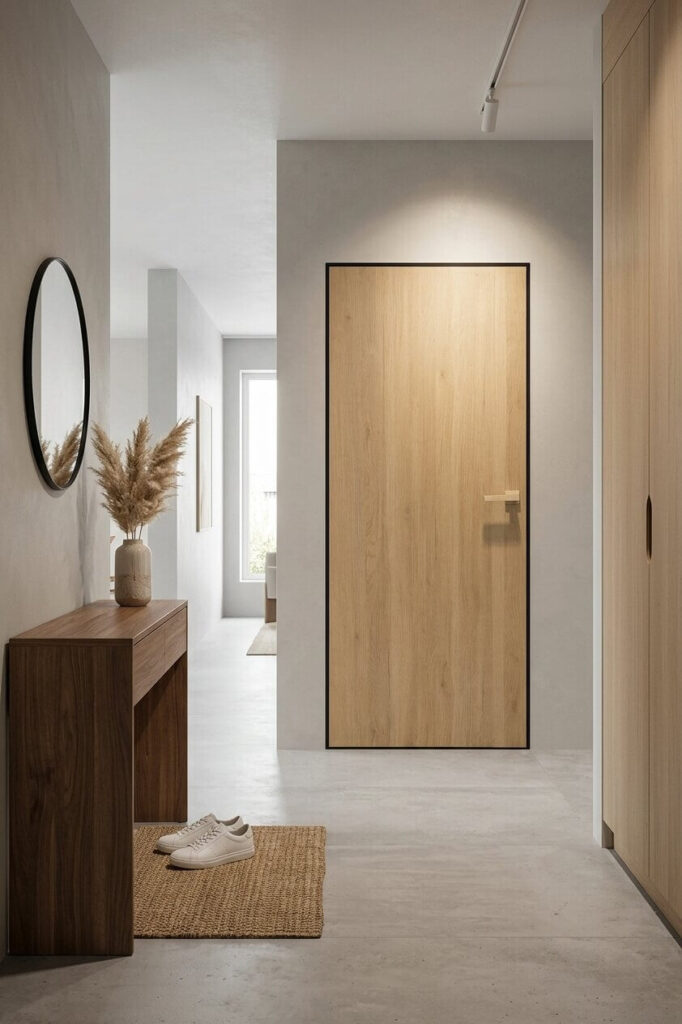
In primary bedrooms, privacy and quiet matter a lot. Solid-core European doors support all that wonderfully. The room becomes its own world. Sometimes that’s exactly what people need.
Children create enough excitement on their own. Doors to their bedrooms don’t need additional responsibilities. Solid construction improves privacy, sound control, and durability. Parents usually appreciate every one of those things.
In bathrooms, frosted glass can certainly work. But for complete privacy, solid doors remain the traditional—and often preferred—choice. Some traditions survive because they continue making perfect sense.
Mixing Glass and Solid Doors Throughout the Home
Here’s the secret. You rarely have to choose only one option. In fact, you probably shouldn’t. Many luxury homes combine both beautifully.
Solid doors for bedrooms. Glass doors for offices. Reeded glass for pantries. Solid oak doors for bathrooms. Consistency comes from shared hardware, finishes, proportions, and craftsmanship rather than identical materials. The doors become members of the same family.
Just with different personalities. Every family has those.
Why Hardware Matters Just as Much
Whether choosing glass or solid European doors, premium hardware transforms the experience. Concealed hinges, magnetic latches, balanced handles, smooth movement—those details remain important regardless of what’s inside the door.
Luxury rarely depends on one feature. It emerges from many small ones quietly cooperating.
Making the Right Choice for Your Home
The conversation around glass vs solid interior doors comparison isn’t about discovering which material wins. Neither does. The architecture is the only winner.
A bright contemporary home filled with natural light may become even more extraordinary through carefully placed glass doors. A peaceful family home focused on comfort and privacy may feel stronger with beautifully crafted solid European doors.
Sometimes the answer is obvious. Other times it’s one glass office door surrounded by twelve solid bedroom doors.
Why Diana Doors Helps Homeowners Find the Right Balance
Every house has different priorities. Every family lives differently. That’s why the conversation always begins with the architecture rather than the catalog.
We offer premium European interior doors in both solid-core and architectural glass configurations, featuring concealed hinges, magnetic latches, luxury hardware, genuine wood veneers, painted finishes, aluminum-framed glass systems, and professional installation. Whether you’re creating a light-filled contemporary home or a quieter, more private retreat, every system is engineered with the same attention to precision and long-term performance.
Maybe that’s the nicest thing about great design. It doesn’t force every room to behave the same way.
A home office can welcome sunlight while a bedroom quietly protects sleep. A dining room can feel open to the rest of the house while a nursery stays peacefully tucked away behind a solid oak door. The hallway doesn’t need to choose one philosophy and apply it everywhere. It can adapt. Breathe. Respond to the people living there.
That’s really what the glass vs solid interior doors debate has always been about. Not choosing one side. Choosing the right conversation for each room and letting the entire home sound beautifully consistent when all those conversations finally come together.