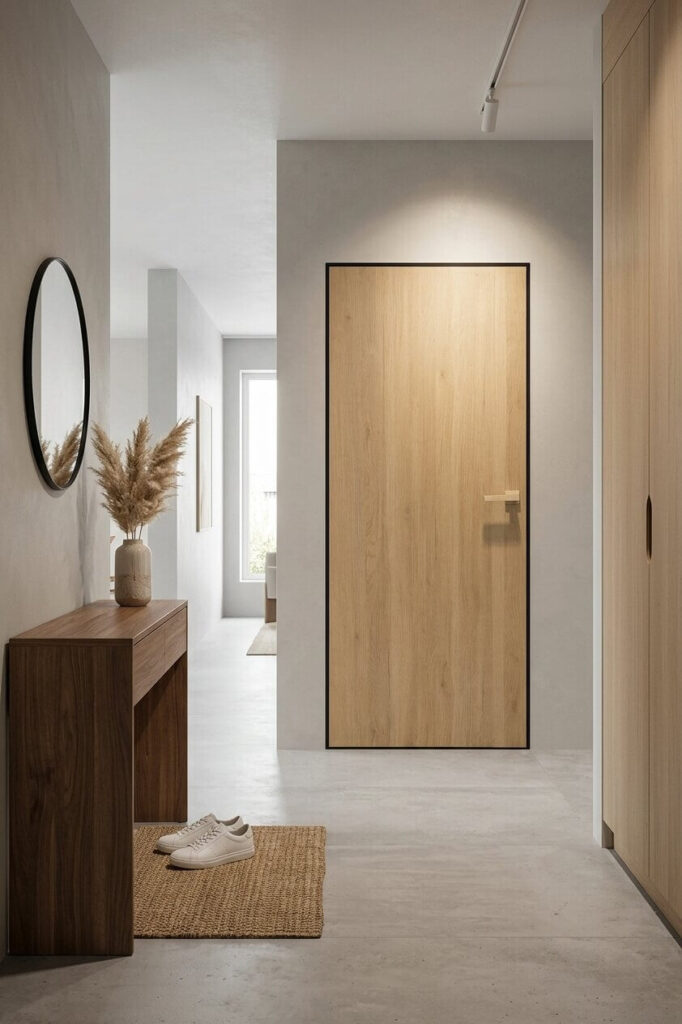
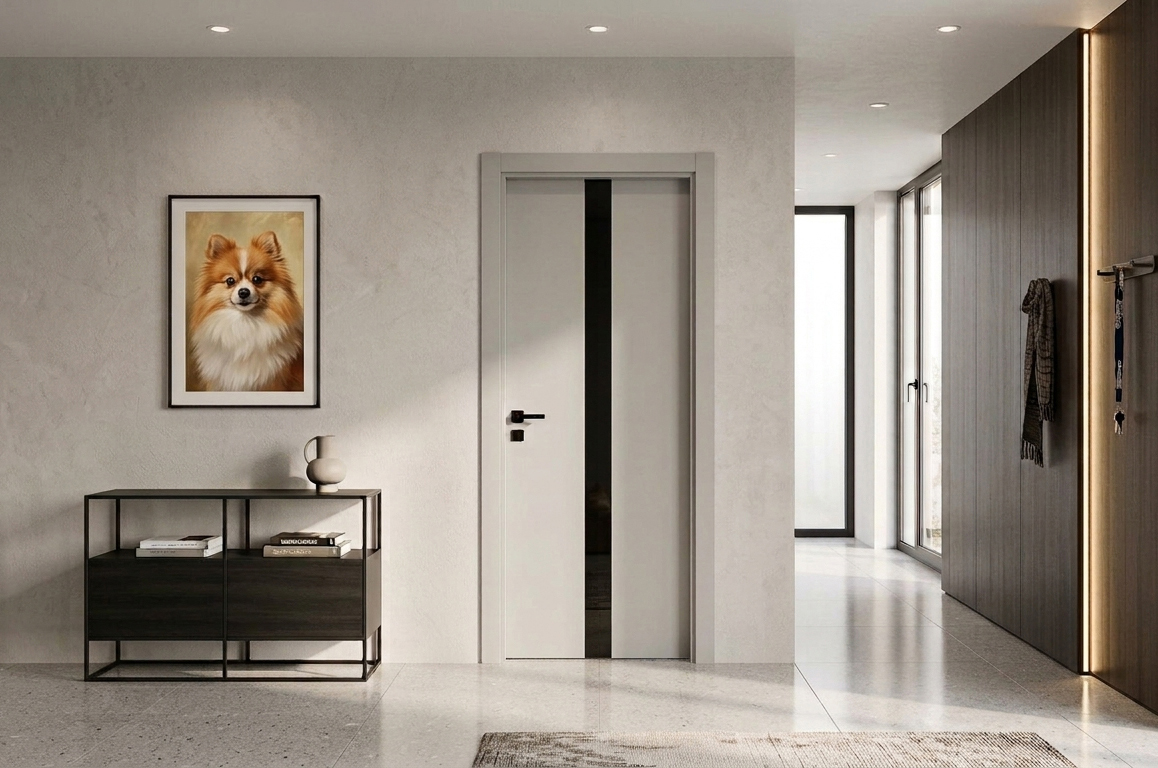
Walk into a luxury showroom and ask a simple question. “What is this door made of?” The answer probably won’t be simple. MDF, HDF, engineered wood, solid wood, composite core, honeycomb, laminates — suddenly it feels less like buying an interior door and more like taking a materials science class you didn’t sign up for. It’s understandable.
Most homeowners aren’t expected to know the difference between high-density fiberboard and engineered timber construction. Until renovation day arrives, “door material” usually ranks somewhere between “cabinet hinge type” and “paint primer chemistry” on the list of exciting topics.
Then you start comparing premium European doors and everything changes. Materials suddenly matter. Not because manufacturers enjoy using complicated terminology. Because what’s inside a door influences almost everything outside it. Weight, durability, acoustic performance, stability, surface quality. How it feels when you close it. How it looks ten years later. How well it survives everyday life — which, let’s be honest, has a habit of testing everything eventually.
Understanding European door materials isn’t about memorizing technical definitions. It’s about knowing why one door costs more than another, why premium manufacturers choose certain materials instead of others, and which construction actually makes sense for your home.
Why Door Materials Matter More Than Most Homeowners Realize
A finished door hides its secrets remarkably well. Two doors can look nearly identical sitting side by side. Same finish, same color, same handle, same dimensions. Then someone opens them. One feels light, the other feels reassuringly solid. One sounds hollow, the other closes with quiet confidence.
The visible surface tells only part of the story. The core, frame, and construction determine how that story unfolds over the next twenty years.
Materials affect more than strength — they influence stability during seasonal humidity changes. Resistance to dents. Sound insulation. Hardware performance. Paint quality. Even the precision of manufacturing. That’s why premium European manufacturers spend so much attention on what’s hidden beneath the finish.
The invisible parts usually deserve the most credit.
MDF: The Material People Love to Misunderstand
Mention MDF and you’ll often hear an immediate reaction. “Right, that’s the cheap stuff.” Not necessarily. Actually, that’s one of the biggest myths in the industry.
Medium Density Fiberboard, commonly known as MDF, is an engineered wood product made by compressing fine wood fibers with resin under high pressure and heat. Sounds industrial. Because it is.
Good MDF isn’t trying to imitate solid wood. It’s solving different problems.
Why Manufacturers Use MDF
Natural wood moves. It expands. Contracts. Responds to humidity. Develops knots. Contains grain variations. Those characteristics create beauty — they can also create challenges.
MDF offers remarkable consistency. No knots. No visible grain telegraphing through painted finishes. No unexpected movement caused by natural imperfections. That’s why high-end painted European doors frequently incorporate MDF components.
Not to reduce quality — to improve the finished result.
Perfect for Painted Doors
If your goal is an ultra-smooth painted surface, MDF becomes extremely attractive. Paint sits beautifully on properly prepared MDF. Edges remain clean, surface texture stays remarkably uniform, the finish often appears smoother than painted solid wood. Especially under modern lighting.
Large windows have a habit of exposing every tiny imperfection. Smooth materials appreciate that honesty.
HDF: MDF’s Stronger, Denser Relative
Think of HDF as MDF after several years at the gym. High Density Fiberboard uses similar manufacturing principles but with greater density and compression. The result? Higher strength. Greater hardness. Improved impact resistance. Better screw holding capability in certain applications.
Premium European door materials frequently include HDF skins surrounding engineered cores because the dense surface resists dents better than softer alternatives.
Daily life isn’t especially gentle on doors. Vacuum cleaners, suitcases, laundry baskets, children, pets. Occasionally adults carrying furniture while insisting, “We’ve got plenty of room.” Usually they don’t.
HDF forgives small accidents better than many softer materials. That’s valuable. Especially in busy households.
Solid Wood: Wonderful, Timeless, and Sometimes Misunderstood
People hear “solid wood” and immediately assume they’ve reached the highest possible quality. Sometimes they’re right. Sometimes they’re comparing marketing instead of engineering.
Solid wood certainly offers undeniable advantages. Natural grain, authentic character, excellent strength, long service life. The warmth that only real lumber seems able to create. There’s something wonderfully honest about wood — no two pieces look exactly alike. Nature refuses repetition which is part of its charm.
The Challenge With Solid Wood
Wood continues reacting to its environment long after the tree has become furniture. Or flooring. Or doors. Humidity changes, temperature shifts, seasonal movement, expansion, contraction — these are natural behaviors. Premium manufacturers account for this movement through engineering, moisture control, and careful construction.
Still, solid wood isn’t automatically the ideal choice for every door component. Sometimes engineered materials outperform it in specific applications. That statement surprises traditionalists. Engineering occasionally wins.
Engineered Wood: Where Modern Technology Quietly Excels
Here’s where European manufacturing differs significantly from many conventional assumptions. Rather than choosing between solid wood or “fake wood”, premium manufacturers often combine materials intelligently.
Engineered wood cores use multiple layers arranged for maximum stability. Each layer helps counteract natural movement in the others — the result becomes remarkably resistant to twisting and warping. This matters, especially inside climate-controlled homes where precision reveals even tiny alignment issues.
A perfectly engineered core can remain stable for decades. That’s exactly what designers want. And installers.
Natural Wood Veneers Deliver Authentic Beauty
Here’s another misconception. People hear the word “veneer” and immediately picture inexpensive furniture from decades ago. Premium wood veneers are something entirely different.
Real wood, very thin, carefully selected, applied over stable engineered cores — the visible surface remains genuine oak, walnut, ash, or another hardwood species while the core provides structural stability. The veneer provides natural beauty. Together they often outperform thick solid boards.
It’s an elegant compromise. Actually, calling it a compromise feels unfair. It’s closer to combining the strengths of two materials while minimizing their weaknesses. That’s smart engineering.
Laminates Have Come a Long Way
If your memory of laminate comes from kitchen cabinets in the 1980s that’s good news. Modern decorative laminates barely resemble those products.
Today’s premium laminates offer exceptional durability: scratch resistance, color consistency, moisture resistance, easy maintenance. Some even reproduce natural wood textures with surprising realism. No, they don’t replace authentic walnut. They aren’t trying to. Instead, they provide another option for homeowners prioritizing durability and consistency.
Commercial spaces particularly appreciate high-performance laminates. Busy families often do too. Dogs generally don’t care what species of wood you selected — their claws remain wonderfully material-independent.
Core Construction Makes a Bigger Difference Than Surface Finish
Here’s an interesting observation. Most buyers spend twenty minutes discussing finishes. They spend about thirty seconds asking about the core.
That’s backwards. The finish determines appearance. The core determines behavior.
Premium European doors frequently use engineered solid cores or dense composite construction instead of lightweight honeycomb interiors commonly found in builder-grade products. The difference becomes obvious immediately.
Heavier doors close more confidently, reduce sound better, feel more substantial, remain more stable. Quality begins from the inside.
Choosing the Right Material for Your Home
No material wins every category. That would be wonderfully convenient.
Reality prefers nuance.
Painted Contemporary Interiors
MDF and HDF often excel. Smooth surfaces. Exceptional paint quality. Minimal maintenance.
Perfectly suited for flush modern doors.
Natural Wood Designs
Wood veneers over engineered cores frequently provide the best balance between beauty and stability.
You enjoy authentic grain without many of the movement challenges associated with large solid wood panels.
High-Traffic Homes
Dense engineered construction paired with HDF surfaces offers excellent durability. Families. Pets. Busy hallways. Rental properties. Vacation homes. Life leaves fewer marks.
Or at least smaller ones.
Luxury Custom Homes
Premium manufacturers often combine multiple European door materials within a single door. Engineered core, natural veneer, solid edge construction, concealed reinforcement. Each material performs the job it handles best.
There’s something satisfying about that philosophy. No unnecessary heroics — just thoughtful engineering.
Why Premium European Manufacturers Rarely Rely on One Material Alone
This surprises many American buyers. The highest-quality European doors usually aren’t “100% solid wood.” Instead, they’re carefully engineered systems.
Each material contributes specific strengths. Solid wood where strength matters. Engineered cores where stability matters. HDF where impact resistance matters. Natural veneers where appearance matters. It’s remarkably similar to modern architecture itself.
Steel, concrete, glass, stone, woodo architect insists a building should be constructed entirely from one material simply because that material sounds prestigious. Doors follow the same logic.
Performance first. Materials chosen with intention.
Looking Beyond the Marketing
Marketing departments adore simple labels. “Solid wood.” “Premium construction.” “Luxury materials.” Real quality takes a little longer to explain.
Ask questions. What is the core made from? Is the veneer real wood? How is the frame constructed? What hardware accompanies the door? How does the manufacturer address humidity and long-term stability? Good suppliers enjoy answering those questions.
The conversation becomes much more interesting after the buzzwords disappear.
Which European Door Material Is Best?
That’s a little like asking which ingredient makes the best bread. Flour? Water? Yeast? Salt?
None accomplish much alone. Great doors work the same way.
The best European door materials aren’t competing against one another — they’re working together. Premium manufacturers understand that every material has strengths, limitations, and ideal applications. MDF creates beautifully smooth painted finishes. HDF provides outstanding surface durability. Engineered wood delivers long-term structural stability. Natural veneers bring warmth and authentic character. Solid wood contributes strength where it’s genuinely beneficial.
The result isn’t a door built from the most expensive material. It’s a door built from the smartest combination of materials. That’s an important distinction. Because homeowners rarely buy doors for next Tuesday. They buy them for the next twenty years. Maybe longer.
Long after the paint colors have changed. Long after the furniture has been replaced. Long after someone forgets exactly which material sits beneath that beautiful walnut veneer. The door simply keeps opening. Keeps closing. Keeps looking remarkably composed while the rest of the house quietly evolves around it. That’s the real purpose of great materials. Not to impress people during the showroom visit — to disappear into everyday life so completely that quality becomes something you experience instead of something you constantly think about.
That’s usually how the very best products work.