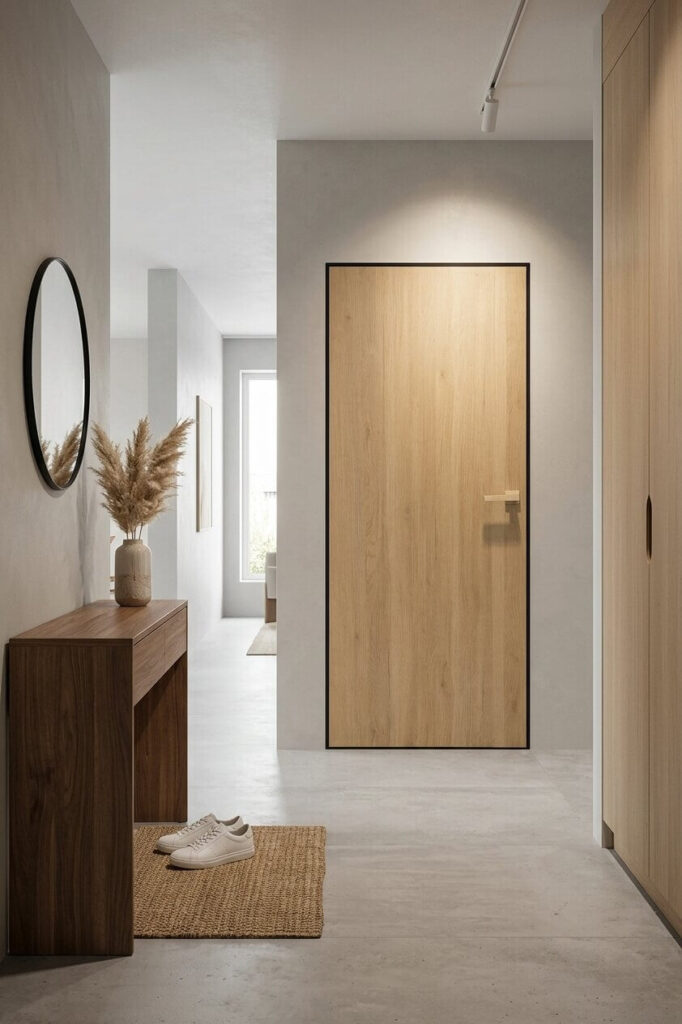
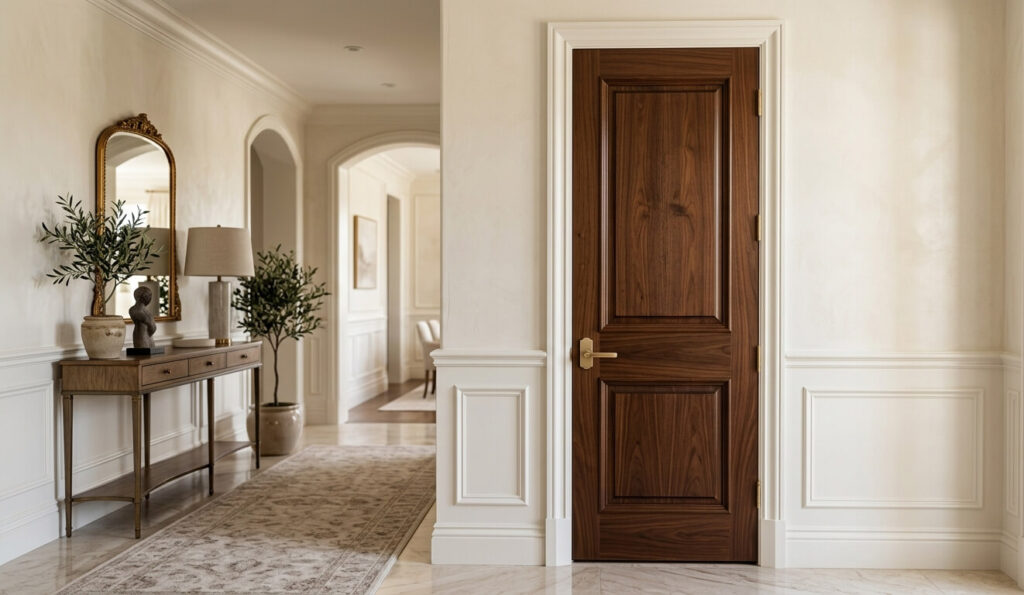
When most people think about upgrading their home, they think about kitchens, bathrooms, and flooring. Interior doors rarely make the list — until someone walks into a space where the doors are genuinely exceptional and realizes immediately that something is different.
In San Diego’s luxury residential market, interior doors have become one of the clearest indicators of a home’s true quality level. The difference between a premium door and a builder-grade one is visible, tactile, and audible the moment you interact with it. And once you know what to look for, you can’t unsee it.
This guide explains exactly what separates luxury interior doors from average ones — and what San Diego homeowners should know before making an investment that will define their interiors for decades.
What Makes an Interior Door “Luxury”?
The word luxury gets used loosely in home improvement marketing. A door with a brushed nickel handle and a coat of paint gets called premium. A hollow-core door with a wood-grain vinyl wrap gets marketed as designer. This makes it genuinely difficult for buyers to know what they’re actually getting.
True luxury in an interior door comes down to five measurable factors: core construction, surface finish, hardware quality, acoustic performance, and installation precision. A door that scores highly on all five is a luxury product. A door that scores highly on only one — say, an attractive surface finish over a hollow core — is not.
1. Core Construction: What’s Actually Inside
The core of an interior door determines almost everything else about its performance. This is the factor that’s impossible to see after installation — which is exactly why it’s the most commonly compromised.
Hollow-core construction uses two thin face sheets stretched over a cardboard or lightweight wood grid. It is inexpensive to produce and light to handle. It is also acoustically transparent, structurally weak, and prone to damage from normal household use. A fist, a doorknob, or a hard knock can puncture the surface. Hardware screws loosen over time because there’s nothing solid for them to grip.
Solid-core and high-density construction — the standard in European luxury door manufacturing — uses HDF (High Density Fiberboard), MDF, or engineered solid wood throughout the door body. The result is a door that:
- Feels immediately different when you open it — there’s weight and resistance that signals quality
- Closes with a clean, quiet click rather than a hollow thud
- Holds hardware screws firmly for the lifetime of the door
- Resists surface damage from everyday contact
- Provides genuine acoustic separation between rooms
In a luxury home in La Jolla, Rancho Santa Fe, or Coronado, installing hollow-core doors is a contradiction. The architecture, the finishes, the appliances — everything else is premium. The doors should match.
2. Surface Finish: Durability Meets Aesthetics
The surface of a luxury door does two things simultaneously: it defines the visual character of the space, and it resists the wear of daily life for decades without showing it.
Low-end doors rely on paper veneer, vinyl wrap, or basic paint over MDF. These finishes look acceptable when new. Within a few years, they show edge wear, surface scuffs, and fading — particularly around handles, edges, and frequently touched areas.
Luxury European doors use finish systems that are engineered for longevity:
- Matte lacquer applied in multiple coats creates a surface that is smooth, consistent, and remarkably resistant to fingerprints and everyday contact. It doesn’t show wear the way painted surfaces do.
- Real wood veneer — genuine sliced veneer from oak, walnut, ash, or other species — provides natural warmth and grain variation that cannot be replicated by synthetic alternatives.
- High-gloss lacquer delivers a mirror-like surface for contemporary interiors where the door is meant to make a visual statement.
- Textured finishes replicate the look and feel of concrete, stone, or weathered wood while maintaining the structural properties of engineered core materials.
The finish also determines how a door interacts with light — and in San Diego’s naturally bright interiors, this matters more than it does in darker climates. A matte European door surface diffuses light beautifully. A glossy vinyl wrap on a hollow-core door reflects it cheaply.
3. Hardware: The Detail That Defines the Experience
Touch a luxury door and you’re not just touching the surface — you’re touching the handle, activating the latch, feeling the hinge resistance. Hardware is where the quality of a door becomes a physical experience rather than a visual one.
Standard builder-grade hardware is selected almost entirely on cost. Handles are zinc alloy with electroplated finishes that wear within years. Hinges are surface-mounted, visible, and sized to the minimum load requirement. Latches are basic spring mechanisms that click and rattle.
Premium European hardware operates on a fundamentally different standard:
Concealed hinges are a hallmark of European door quality. Fully adjustable in height, depth, and lateral position after installation, they allow perfect door alignment and remain invisible when the door is closed. They are engineered to carry door weights that would sag or deform standard hinges within a few years.
Magnetic latches eliminate the mechanical click of a conventional latch entirely. The door closes with a soft, clean seal and stays closed without rattling. In a quiet, high-end interior, this detail is immediately noticeable.
Solid brass and stainless steel handle sets with PVD (Physical Vapor Deposition) coating resist scratching, tarnishing, and corrosion for the lifetime of the door. The weight and feel of a properly manufactured European handle communicates quality before the door is even opened.
These are not decorative upgrades. They are functional differences that affect how the door performs every single day for the next 30 years.
4. Acoustic Performance: Privacy as a Luxury Feature
In a genuinely premium home, privacy is part of the luxury. A master bedroom suite where you can hear everything happening in the hallway is not a luxury space — regardless of what the countertops cost.
The acoustic performance of an interior door is measured by its STC (Sound Transmission Class) rating. Standard hollow-core American doors score STC 20–25, meaning normal conversation from the next room is clearly audible. Premium European solid-core doors achieve STC 32–42, reducing audible sound to a fraction of what passes through a hollow door.
For San Diego homeowners with home offices — a growing priority in the post-pandemic residential market — acoustic separation is not a nice-to-have. It is a functional requirement. The same applies to home theaters, guest suites, children’s rooms, and any space where the separation of sound directly affects quality of life.
Acoustic performance cannot be added to a door after the fact. It is a function of core density and door mass. This is another reason why the choice of door — not just the choice of handle or finish — determines the actual luxury level of a space.
5. Installation Precision: Where Quality Is Won or Lost
A $1,500 European door installed poorly performs worse than its specifications suggest. Gaps around the frame compromise acoustics. Misaligned hinges create uneven closure. An improperly prepared opening causes the door to bind or drag within months.
Professional installation by technicians familiar with European door systems is not optional — it is part of the product. This includes:
- Precise measurement and opening preparation before delivery
- Correct shimming and leveling of the frame
- Proper hardware adjustment after installation
- Final alignment verification so the door closes flush and latches cleanly
At Diana Doors, installation is performed by our own team — not subcontracted to general handymen unfamiliar with European systems. Every installation includes a post-completion adjustment and a walkthrough with the homeowner.
Common Mistakes San Diego Buyers Make
Choosing finish over core. The most common error is selecting a door based on how it looks in a showroom photo without asking what’s inside. A beautiful surface finish on a hollow core is not a luxury door. Always ask about the core material and density before purchasing.
Underestimating hardware quality. Handles and hinges are often the last thing buyers think about — and the first thing that fails. Specifying premium door bodies with cheap hardware is a contradiction that shows up within a few years of use.
Treating doors as a budget line item. In a $2M renovation, allocating $150 per door while spending $800 per square foot on flooring is a mismatch that experienced designers and buyers recognize immediately. The door is the most frequently touched surface in any room. Its quality is noticed every day.
Skipping professional installation. European door systems require experienced installation. The precision required for concealed hinges, magnetic latches, and flush-fit frameless doors is significantly higher than standard door installation. Saving money on installation costs often results in a door that doesn’t perform to its specification.
Luxury Interior Doors for San Diego Homes
Diana Doors supplies and installs premium European interior doors for luxury residential projects across San Diego — from single door replacements to complete whole-home installations.
Our collection includes doors from European manufacturers producing at the highest quality tier: solid HDF cores, matte and gloss lacquer finishes, concealed hardware systems, and acoustic ratings that deliver genuine privacy.
Whether you’re renovating a single room or specifying doors for a complete custom build, we work with homeowners, interior designers, and contractors to deliver results that match the standard of the surrounding architecture.
Browse the Luxury Door Collection Request a Consultation for Your Project