Here’s something people tend to overlook — doors take up space. Not visually at first glance, but functionally they do. Swing radius, wall clearance, light flow. It all adds up, especially in apartments.
That’s where Diana’s Doors come in handy. We measure on site, customize sizing, and actually think through how each door interacts with the space. Not just filling an opening, but shaping how the apartment feels.
Why Door Choice Matters More in Small Spaces
We’ve worked on a compact coastal apartment some time ago. Nice place, good light. Though the original doors were bulky, dark, and heavy-looking. We swapped them out for simpler, flush designs with lighter finishes, and the whole space opened up. Same square footage. Completely different vibe.
In smaller layouts, every element has to pull its weight. A poorly chosen door can make a hallway feel tighter, a bedroom darker, a whole place just slightly off. Hard to pinpoint, but you feel it.
Top Door Styles That Make Rooms Feel Larger
Imagine choosing the right doors and your apartment starts feeling like a mansion. It’s easier than you think.
Glass doors
Glass doors are probably the easiest win. They let light travel between rooms, which instantly makes spaces feel bigger. Not theoretical, actual visual expansion.
Frosted glass works well for bathrooms or bedrooms where you still want privacy. Clear glass is great for living areas or home offices. Keeps everything connected.
We’ve seen a small one-bedroom where replacing a solid kitchen door with a glass one made the entire layout feel twice as open. Not literally, but close enough.
Light finishes
Color matters more than people think. Dark doors can visually scale a room down, especially in tight spaces. Light finishes like soft whites, pale wood tones, or muted neutrals blend better with walls and reflect light.
Diana’s Doors offers a wide range here, over 50 finishes, so matching tones isn’t a problem. And when the door doesn’t stand out too much, the room feels calmer. Less cluttered.
Flush designs
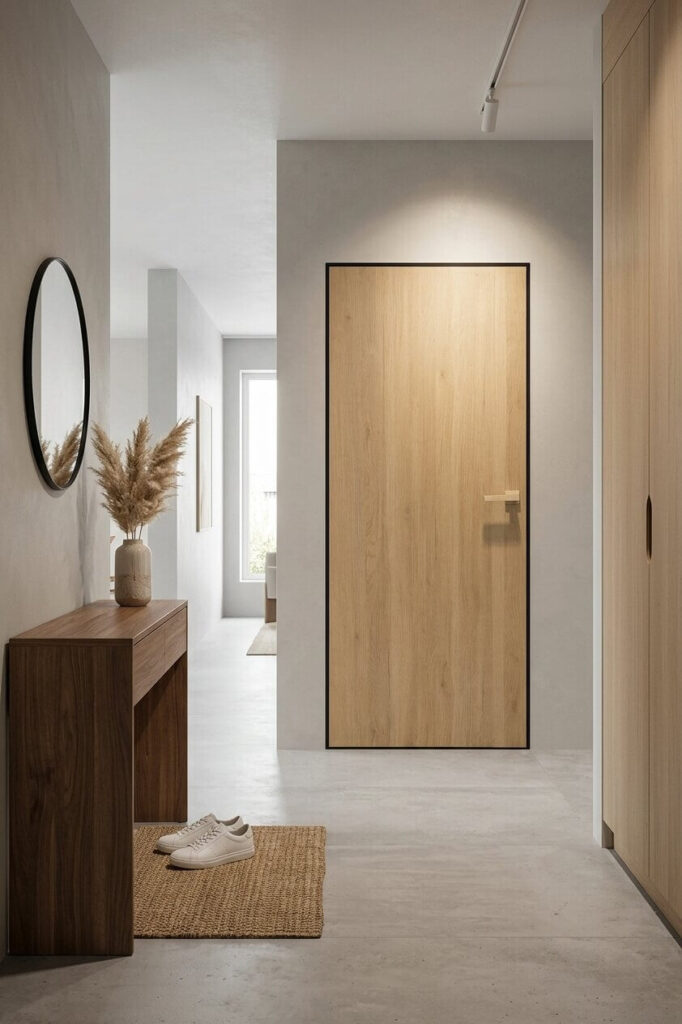
Flush doors, especially frameless ones, are kind of the quiet heroes in small interiors. No trims, no raised panels, no extra lines. Just a smooth surface aligned with the wall.
That continuity matters. Your eye doesn’t stop at every doorway, which makes the space feel more open. Subtle effect, but consistent.
When Sliding Doors Are a Smart Solution
Sliding doors aren’t always necessary, but when they are, they really help.
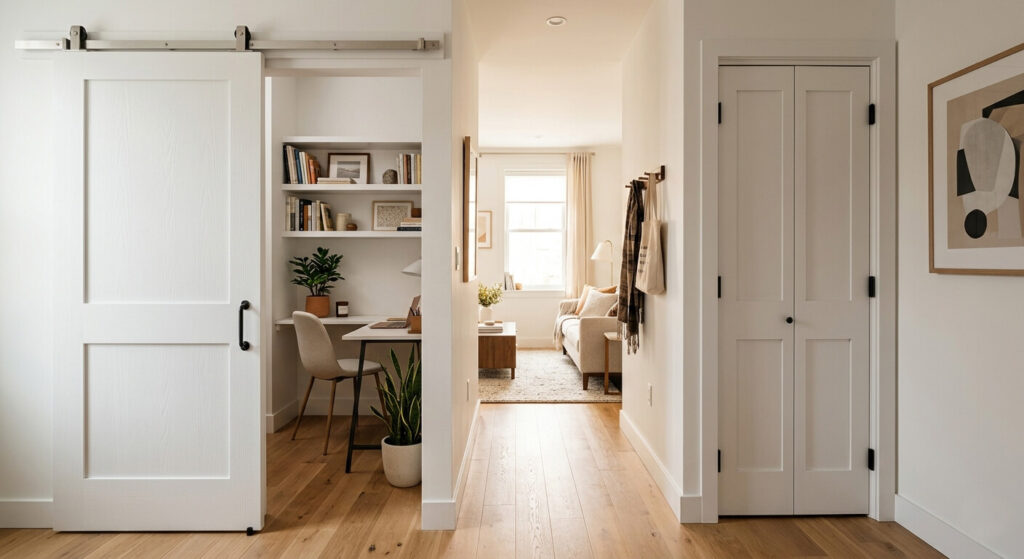
If you’ve got a tight hallway or a room where a swinging door eats up usable space, sliding systems make sense. No swing radius, no clearance issues.
That said — installation needs to be precise. Tracks, alignment, wall structure. Not something you want done halfway. We’ve seen poorly installed sliding doors, and they don’t age well.
With proper setup, like what Diana’s Doors typically handles, you get smooth operation and clean integration. Especially when combined with modern finishes or glass panels.
What Colors and Finishes Work Best in Compact Interiors
Light tones are top-tier, sure. But it’s not just about picking white and calling it a day.
Matte finishes tend to work better in small spaces since they reduce glare and feel softer. Gloss can work too, but usually in very controlled designs.
Wood textures also are a good option, as long as they’re not too dark or heavy. Natural oak tones, light walnut — those bring warmth without closing in the space.
And consistency helps. Keeping doors within the same finish family across the apartment avoids visual fragmentation. One less thing for your eye to process.
Mistakes to Avoid in Small Rooms
The biggest mistake is when doors are either oversized or overly decorative. They draw too much attention and break the flow of the space.
Ignoring hardware is another common mistake. Bulky hinges, loud locks — they add visual and functional noise. Modern solutions like hidden hinges and magnetic locks keep things clean and quiet.
Another mistake we encounter quite often is skipping proper measurement. In small spaces, even minor misalignment stands out. Gaps, uneven edges — it all becomes more noticeable.
That’s why on-site measurement and professional installation matter. Diana’s Doors handles both, which helps avoid those small but annoying issues.
Smart Planning Tips Before Installation
Before choosing anything, take a step back and look at how you move through your space. Where do doors open? Where do they block light? Where do they interrupt flow?
Think about daily use. Bedroom doors should offer privacy and sound control. Living areas benefit from openness. Hallways need efficiency.
Then get a consultation. Have someone measure, suggest options, and explain what works best for your layout. It’s a simple step, but it prevents costly adjustments later.
If you’re planning to upgrade your interior doors, Diana’s Doors can help with product selection, custom sizing, and professional installation in San Diego.